Landschaft im Abendrot — History & Facts
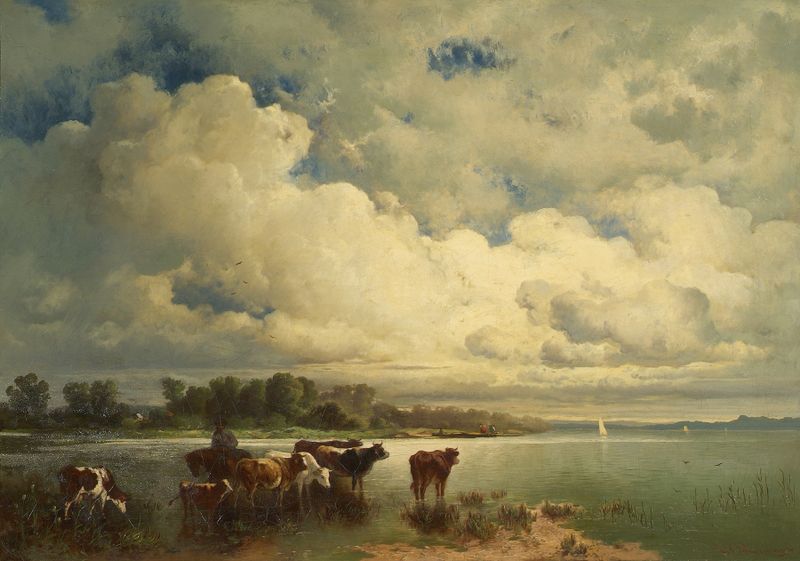
Did the painter know this moment would outlive them? In the fading light, echoes of joy and melancholy intermingle, inviting us into a world where time stands still, yet vibrates with the pulse of nature’s ecstasy. Look to the left, where a cascade of warm oranges and deep reds paint the sky, blending seamlessly into the tranquil blues of the approaching night. The horizon, a delicate line of earth and sky, invites the gaze to linger, while silhouettes of trees stand like sentinels against the vivid backdrop. Notice how the brushstrokes evoke both movement and stillness, a deliberate contrast that captures the fleeting beauty of twilight.
The rich pigments create a sense of warmth, almost palpable, encouraging the viewer to breathe in the cool evening air. Beneath this captivating surface lies a profound exploration of transience and permanence. The vibrant colors whisper of the joy found in ephemeral moments, while the looming darkness hints at the inevitable passage of time. The trees, steadfast and strong, symbolize resilience amidst the changing seasons, embodying the tension between celebration and loss.
This balance invites contemplation, urging us to reflect on our own experiences of fleeting joy. Created during a period of artistic exploration, the work emerged from an artist deeply engaged with the natural world. Schweninger, working in the late 19th century, was influenced by the Romantic movement, which emphasized emotion and the sublime in nature. As Europe grappled with industrialization, his landscapes offered a sanctuary, a reminder of beauty that transcended the human experience.