Mariazeller Wallfahrer in Kapfenberg rastend — History & Facts
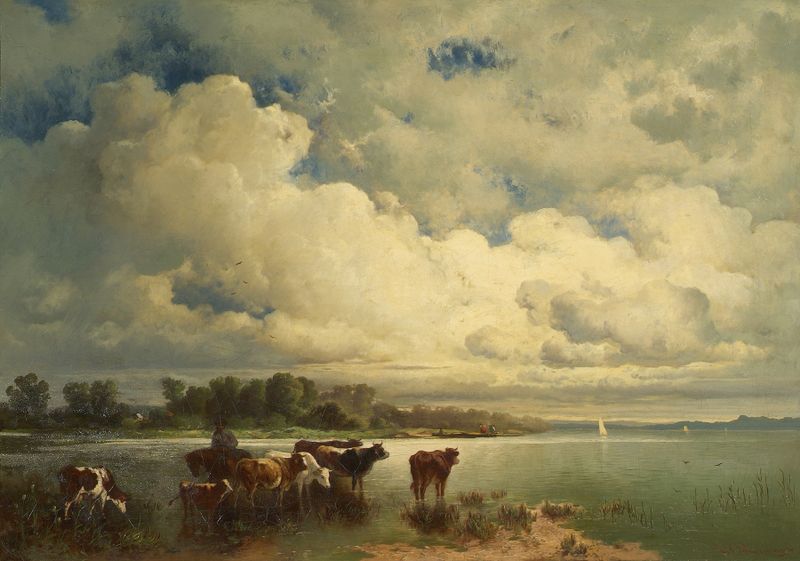
In a world swirling with chaos, the act of capturing a moment can feel like defiance against the inevitable madness of existence. Look to the center of the canvas, where weary travelers pause—a moment suspended in time. The rich, earthy tones of their garments blend harmoniously with the verdant backdrop, imbuing the scene with a sense of tranquility amidst their fatigue. Notice how the light softly bathes their faces, revealing a spectrum of emotions—from exhaustion to quiet reflection.
The gentle brushstrokes lend a tactile quality to the fabric of their attire, emphasizing the gravity of their pilgrimage and the weight of their journey. In the edges of the painting, observe how the surrounding landscape seems to echo the travelers' inner turmoil. The trees, though lush and inviting, are slightly bent, as if bowing to an unseen force, perhaps a reminder of nature's wildness and the mental struggles faced by humankind. This subtle contrast accentuates the serenity enjoyed by the pilgrims, creating a dialogue between madness and peace.
Each figure, lost in contemplation, embodies a tension between hope and despair, a universal experience reflected through their shared silence. Created in 1857, this work emerged during a time of great transformation for the artist, who was deeply influenced by the emotional weight of Romanticism while grappling with his own artistic identity. Schweninger, painting in Kapfenberg, found inspiration in the everyday yet profound struggles of humanity, a theme that resonated throughout the art world of his time, where both turmoil and beauty coexisted in the search for meaning.