
Blick vom Cobenzl auf den Kahlenberg bei Wien — History & Facts
Can paint confess what words never could? In the delicate strokes of this piece, Blick vom Cobenzl auf den Kahlenberg bei Wien, a slow unraveling of nature’s narrative unfolds, whispering tales of decay and renewal. Look to the horizon first, where the vast expanse of the sky meets the undulating hills, bathed in the soft, golden light of dusk. The artist’s palette is a symphony of muted earth tones, allowing the vibrancy of verdant greens and subtle browns to emerge through the brushwork. Notice how the composition leads the eye toward the Kahlenberg’s silhouette, its rugged edges softly softened by the fading light, invoking a sense of calm before nightfall. Beneath this serene surface lies the tension of impermanence.
The delicate interplay of light and shadow reveals the ravages of time, suggesting that what’s beautiful can also decay. Look closely at the interplay of the trees; their wilting branches hint at a slow decline, yet they remain resolute, standing against the twilight. This juxtaposition of vitality and deterioration encapsulates the essence of both nature and human existence — a reminder that beauty thrives in the cycle of life. In 1908, the artist was immersed in the artistic circles of Vienna, where the burgeoning modernist movements began to influence traditional landscapes.
This painting emerged during a transforming era in art, as the world grappled with change following an industrial revolution and the looming shadows of conflict. Suppantschitsch’s work reflects not just the fleeting beauty of a landscape, but also the complex relationship between humanity and the natural world, echoing a quiet lament for what is inevitably lost.
More Artworks by Maximilian Suppantschitsch
Browse all →
Wien vom Bisamberg
Maximilian Suppantschitsch
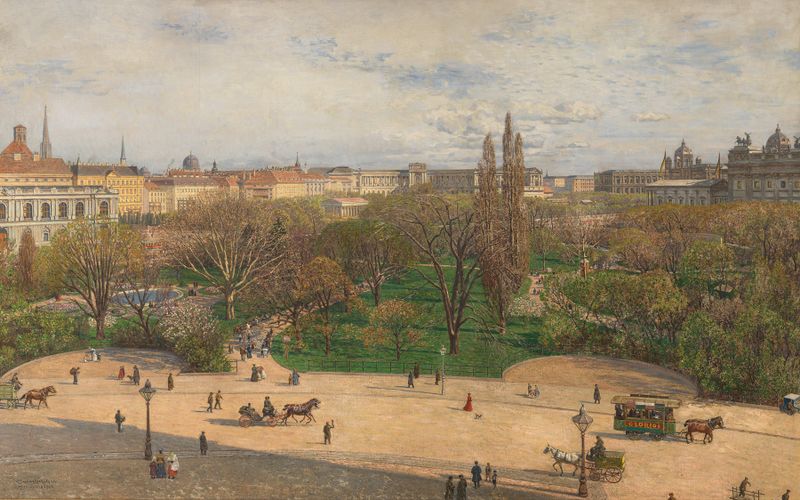
Blick vom Rathaus auf den neuen Trakt der Hofburg und dessen Umgebung
Maximilian Suppantschitsch

Franz-Josephs-Kai mit Donaukanal
Maximilian Suppantschitsch
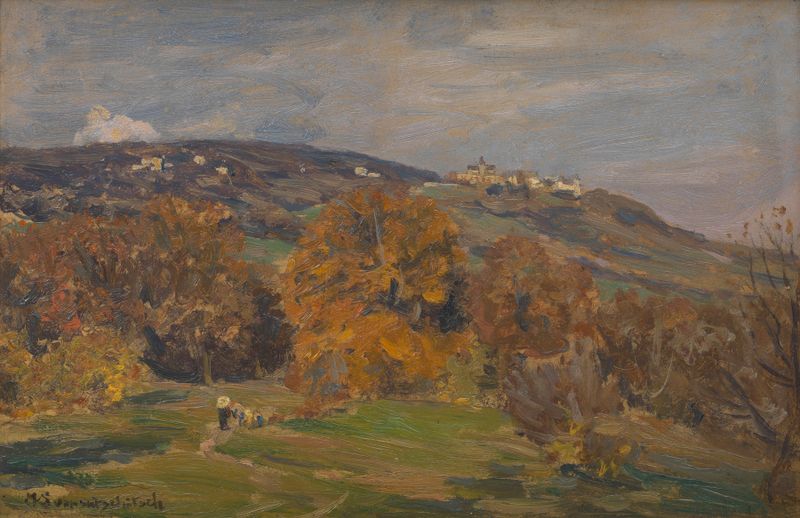
Der Kahlenberg vom Kobenzl aus
Maximilian Suppantschitsch
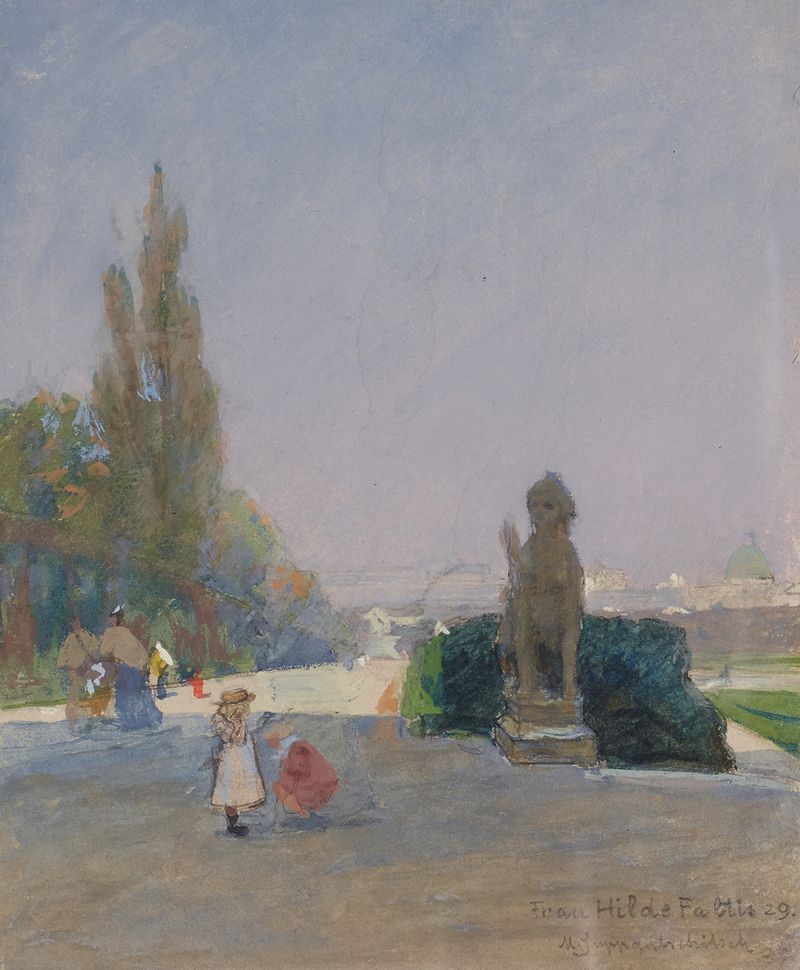
Blick vom Oberen Belvedere auf Wien
Maximilian Suppantschitsch
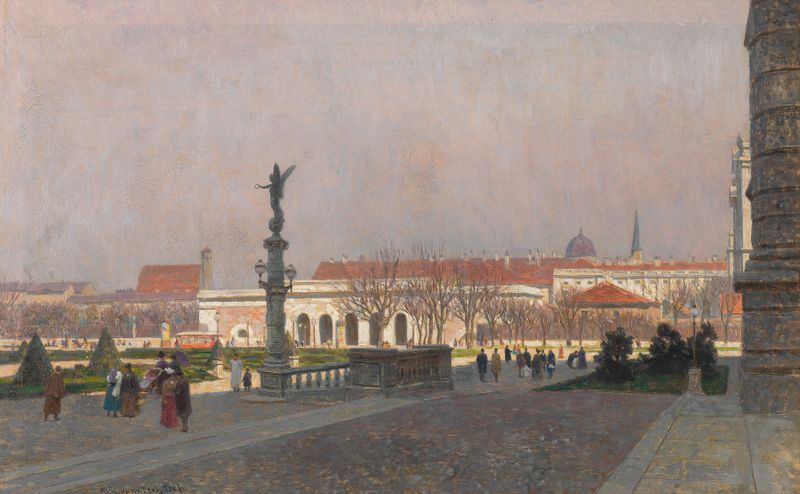
Blick auf die Hofburg vom Kunsthistorischen Museum
Maximilian Suppantschitsch
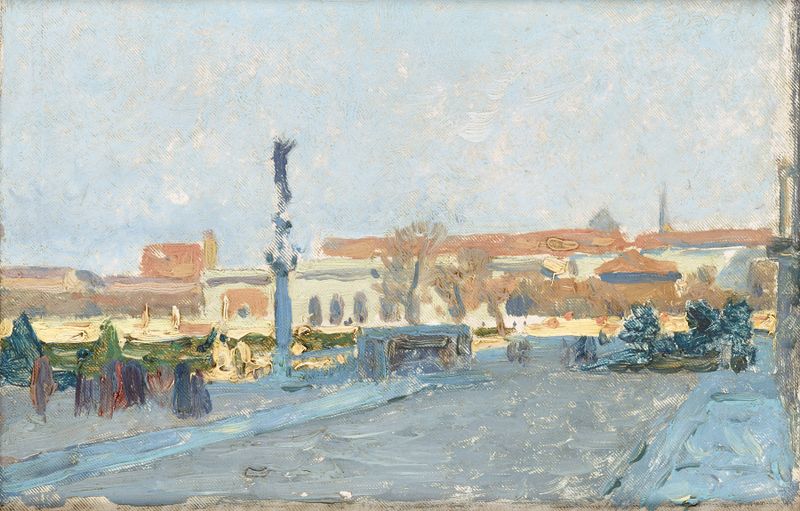
Blick auf Wien vom äußeren Burgtor
Maximilian Suppantschitsch

Blick auf den Ring gegen das Rathaus und Parlament
Maximilian Suppantschitsch
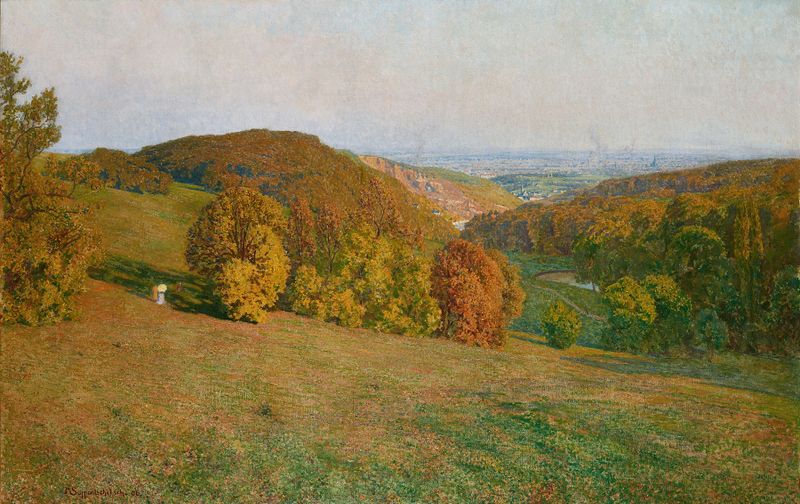
Wien vom Kobenzl aus
Maximilian Suppantschitsch
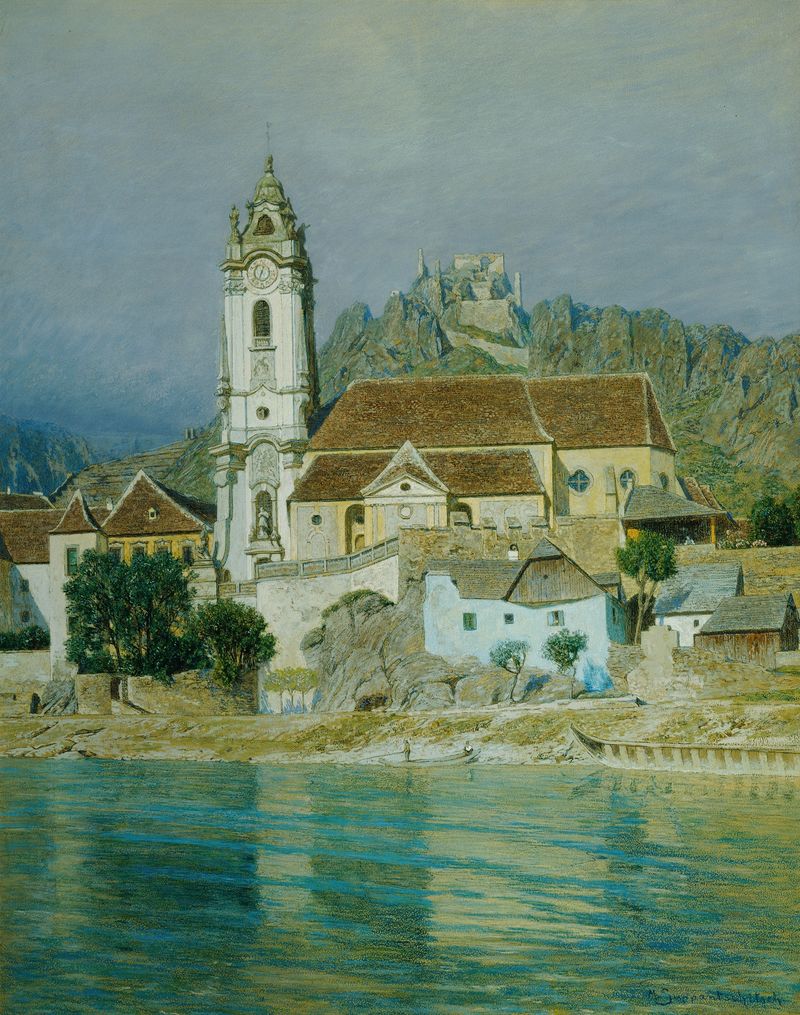
Die Stiftskirche in Dürnstein
Maximilian Suppantschitsch





