Blue Sea — History & Facts
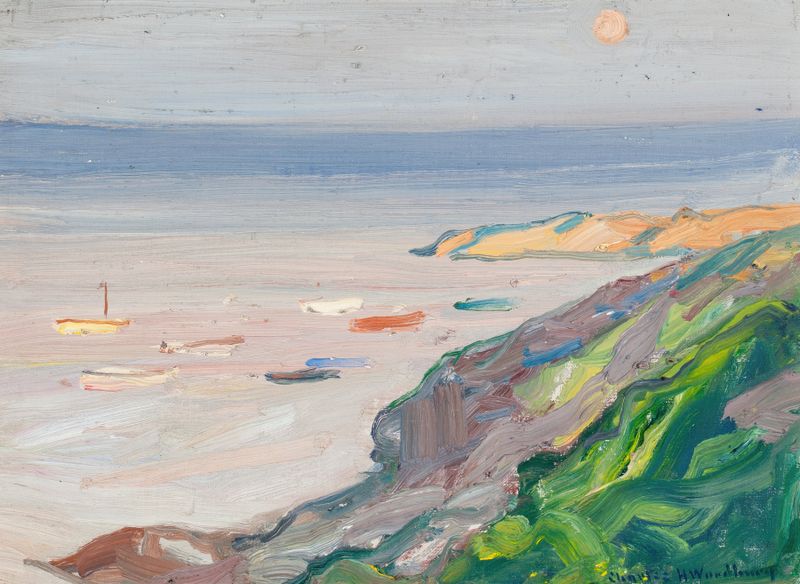
Could a single brushstroke hold eternity? In Blue Sea, the solitude of the ocean unfolds, revealing layers of longing and isolation that resonate deeply within the viewer’s heart. Look to the vast expanse of blue that dominates the canvas, where the horizon melds into the sky in a seamless embrace. The artist employs a rich palette of cobalt and cerulean, inviting you to trace the subtle shifts of color that suggest both tranquility and depth. Notice how the gentle waves ripple across the foreground, each brushstroke meticulously crafted, conveying movement yet evoking an immutability that speaks to the eternal nature of the sea. In the interplay of light and shadow, there lies an emotional tension, a juxtaposition between the serene beauty of the water and an underlying sense of loneliness.
The absence of human figures amplifies the feeling of isolation, suggesting a yearning for connection amidst the vastness. Each wave carries a whisper of solitude, while the distant horizon hints at uncharted possibilities—an invitation to reflect on one’s own experiences of longing and introspection. Created in 1923, Woodbury painted Blue Sea during a period marked by a growing interest in Impressionism and the exploration of landscapes. Living in Maine, he sought to capture the essence of the natural world through his unique technique, which blended impressionistic brushwork with a modern sensibility.
This artwork reflects not only personal contemplation but also engages with broader artistic movements of his time, underscoring the complexities of human emotion against the grandeur of nature.