The Sea — History & Facts
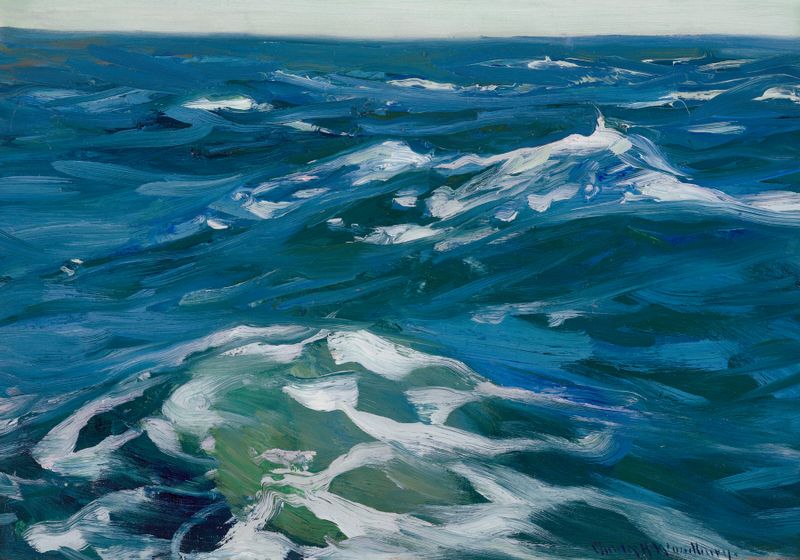
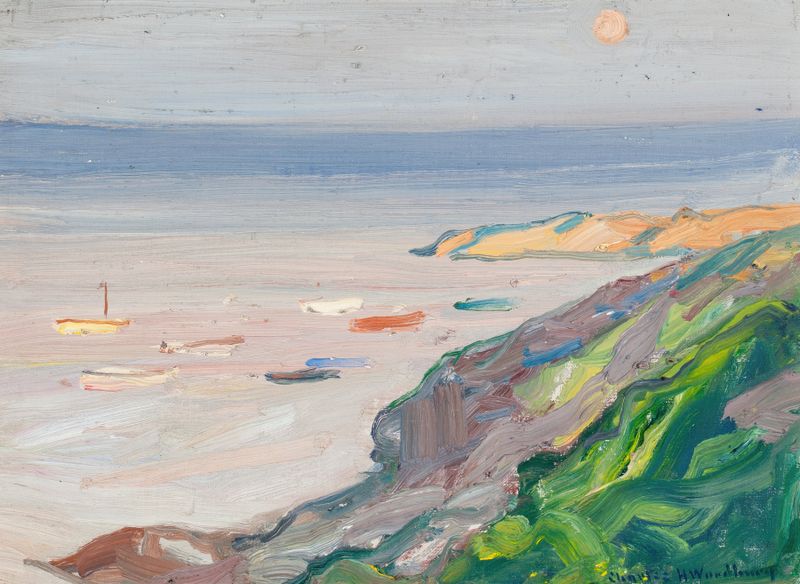
Did the painter know this moment would outlive them? In The Sea, a sense of ephemeral beauty captures the viewer’s heart, inviting us to ponder the transient nature of experience and memory. Look to the left at the gentle curve of the shoreline, where soft waves kiss the sand, outlined in delicate strokes of white that dance against the deep, calming blues of the ocean. The horizon, a blend of cerulean and aquamarine, draws the eye upward, creating a seamless transition between sky and water. Notice how the sun casts a warm golden glow, illuminating the scene with a nostalgic warmth that compels the viewer to step closer, as if to feel the whisper of a breeze carried through time. Yet, beneath the serene surface, there is an emotional tension nestled in the contrasting depths of color.
The idyllic beach scene belies the inevitable pull of the tide, a reminder of life’s relentless ebb and flow. Here, in this moment frozen on canvas, one can sense the interplay of solitude and connection, of reminiscence and longing. The delicate brushwork evokes fleeting memories, suggesting voices and laughter that drift like distant echoes across the water. Charles Herbert Woodbury created The Sea during a time when American Impressionism was flourishing, around the late 19th to early 20th century.
As an influential figure based in Massachusetts, he was deeply engaged in exploring plein air techniques, capturing the essence of light and atmosphere. This period in his life was marked by an exploration of both personal reflection and the burgeoning art movement, where artists sought to convey emotional truths through the study of natural scenery.