
Blumenwiese bei Weßling — History & Facts
Could beauty survive in a century of chaos? In the quiet embrace of Blumenwiese bei Weßling, a serene landscape transcends the tumult of its time, inviting reflection on the delicate balance between nature’s splendor and the void that often follows human conflict. Look to the lower part of the canvas, where a vibrant tapestry of wildflowers spills across the foreground, their colors pulsating with life against the muted backdrop. Notice how the brushwork captures the gentle sway of the blooms, each petal rendered with soft precision, as if they dance in harmony with the breeze. The light falls dappled through the trees beyond, adding depth and casting ephemeral shadows that suggest a moment frozen in tranquility. Yet, beneath this idyllic surface, a profound emptiness lingers.
The expansive sky looms overhead, vast and unyielding, offering a stark contrast to the intricately detailed flowers. This juxtaposition reflects a tension between the richness of life below and the overwhelming silence of the sky, evoking feelings of solitude and longing. The viewer is drawn into a contemplation of the fleeting nature of beauty amidst the backdrop of existential uncertainty. Created between 1915 and 1920, Blumenwiese bei Weßling emerged from the heart of a Europe embroiled in the chaos of World War I.
Alexander Koester painted this work during a time when artists sought solace in nature as a respite from the devastation around them. The era was marked by a longing for peace and healing, captured poignantly in the gentle movements of the flowers that populate his canvas.
More Artworks by Alexander Koester
Browse all →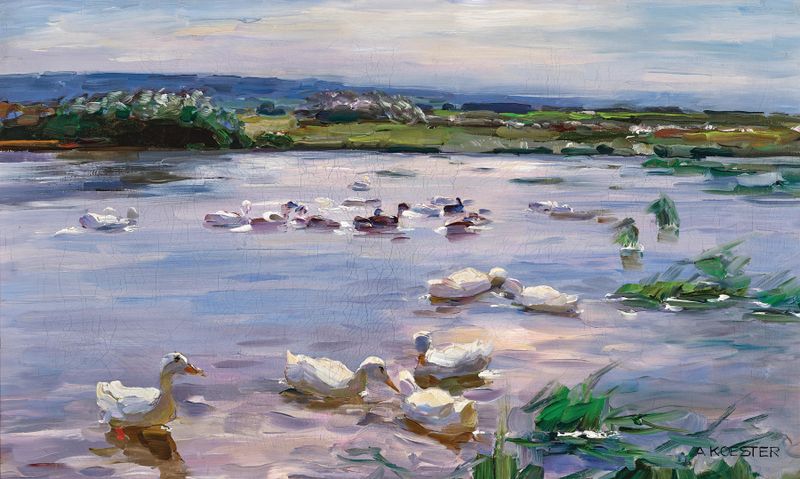
Ducks on the Lakeside
Alexander Koester

Teichblüten – Altwasser bei Brixen
Alexander Koester

See mit Wetterwolken
Alexander Koester

A Wayside Shrine
Alexander Koester
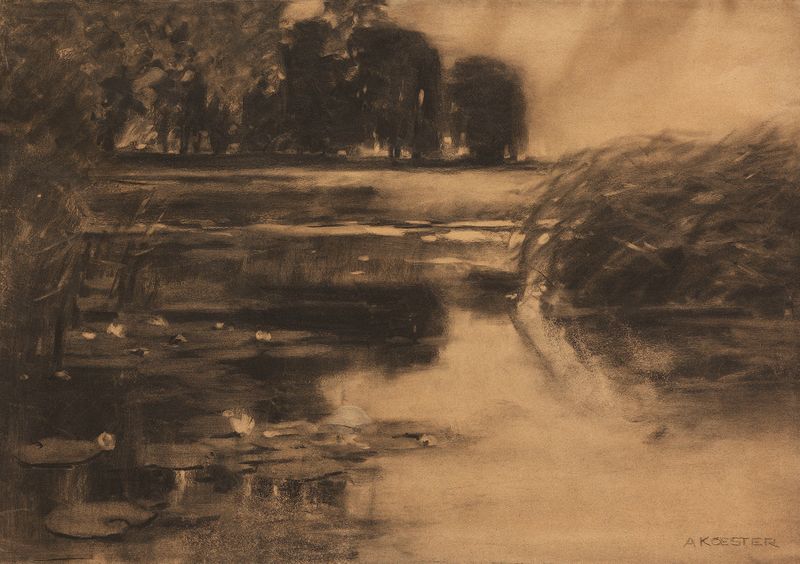
Wasserlandschaft
Alexander Koester
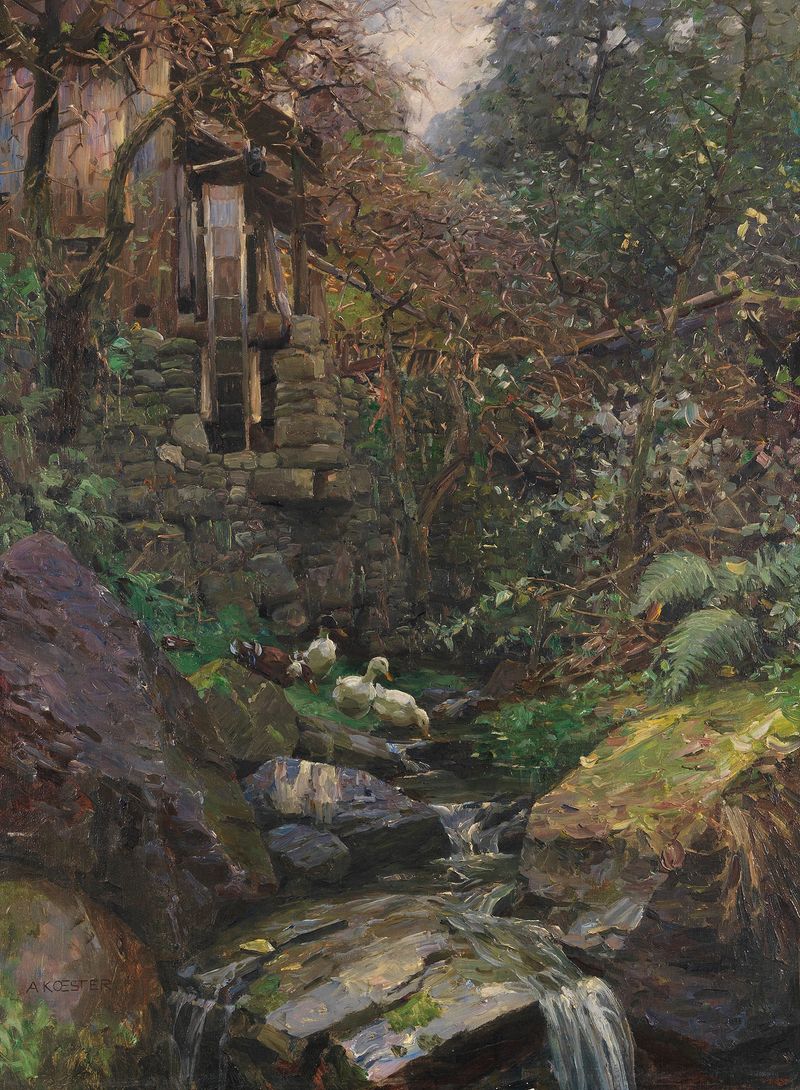
Im Mühlengrund
Alexander Koester
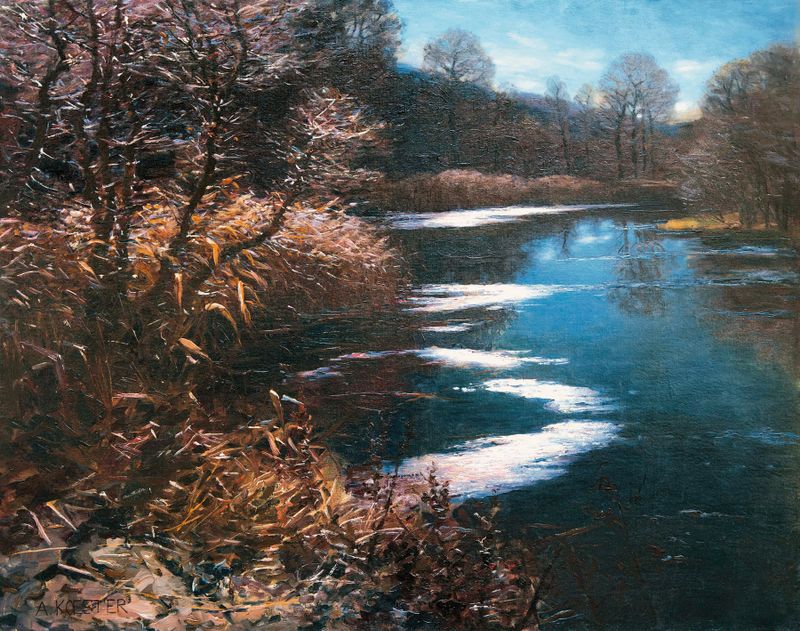
Altwasser bei Brixen
Alexander Koester

Reichenau, Weiden am See, Sonne
Alexander Koester
Segelboot, Holland
Alexander Koester
Teich, Viktring
Alexander Koester





