
Wasserlandschaft — History & Facts
Shadows weave silently through the shimmering water, hinting at stories untold beneath the surface. In this vibrant composition, the delicate balance between light and dark reveals both the serenity and the turmoil of nature. Look to the lower left of the canvas; there, the sunlight dances upon the water, creating a ripple of golden hues that beckon the eye. The brushwork is both fluid and deliberate, embodying the essence of the water’s movement while drawing attention to the reflective quality that mirrors the clouds above.
Notice how the deep blues and greens contrast with the bright whites of the sky, evoking a sense of depth and tranquility, yet hinting at the underlying currents swirling beneath. The interplay of shadow and light speaks volumes about the dual nature of existence. The luminous reflections suggest moments of joy and peace, while the deeper tones lurking in the corners of the canvas whisper of hidden depths—perhaps the struggles that lie just beneath the serene facade. This tension between beauty and darkness captures a profound emotional resonance, challenging the viewer to confront the complexities of both nature and the human experience. In the early 20th century, Wasserlandschaft was painted during a period of great transformation in the art world.
Alexander Koester, operating amidst the rise of modernism in Germany, sought to explore the emotive qualities of nature through a distinctive Impressionist lens. His work was increasingly informed by an interest in light and form, reflecting the changing perceptions of beauty during a time when artists were beginning to break free from traditional constraints.
More Artworks by Alexander Koester
Browse all →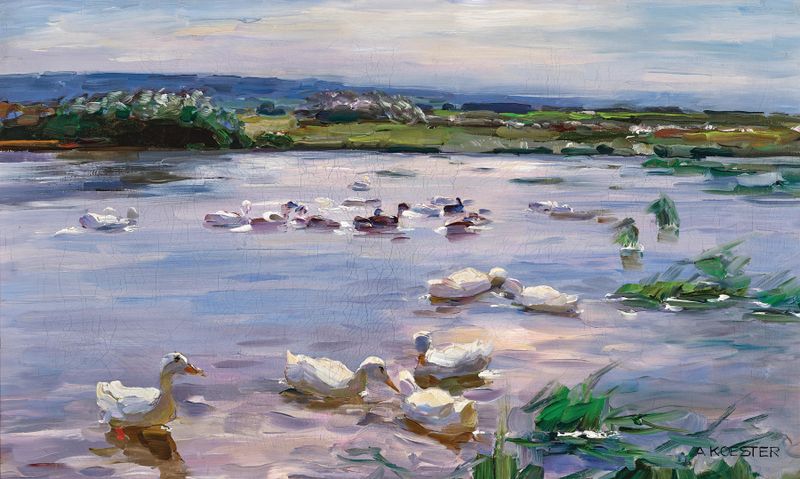
Ducks on the Lakeside
Alexander Koester

Teichblüten – Altwasser bei Brixen
Alexander Koester

See mit Wetterwolken
Alexander Koester

A Wayside Shrine
Alexander Koester
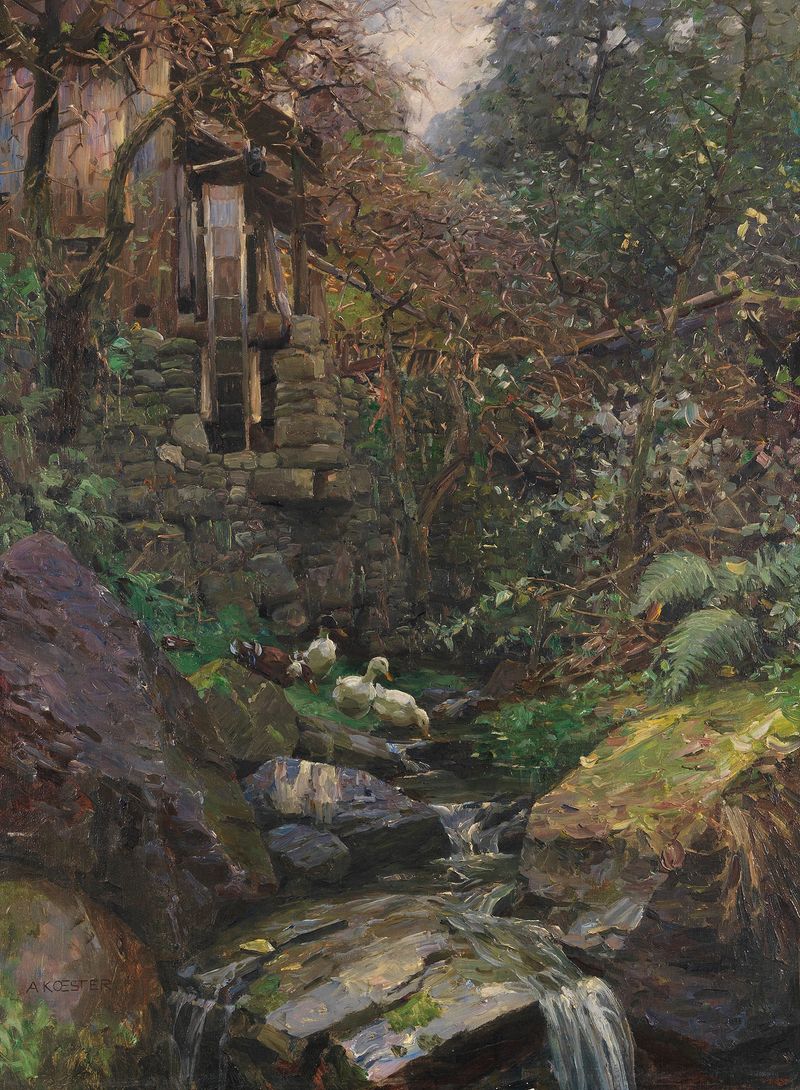
Im Mühlengrund
Alexander Koester
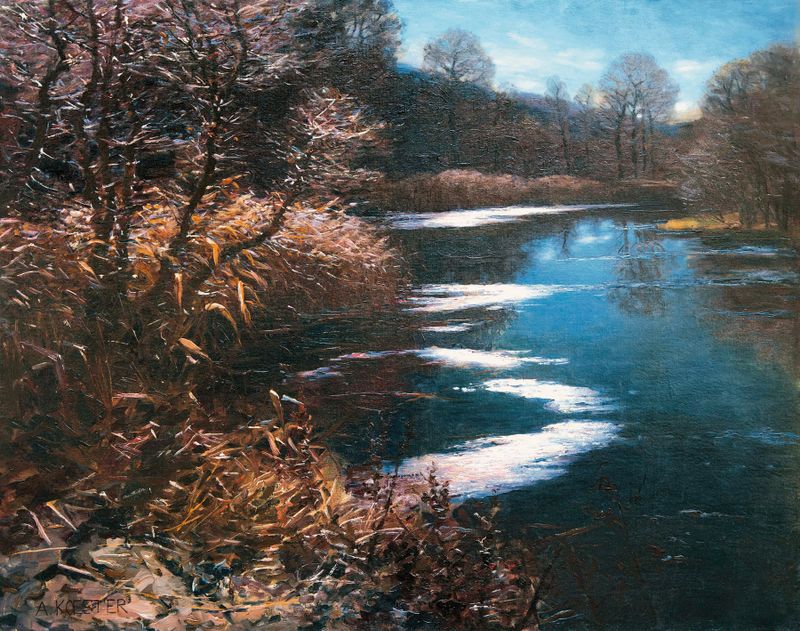
Altwasser bei Brixen
Alexander Koester
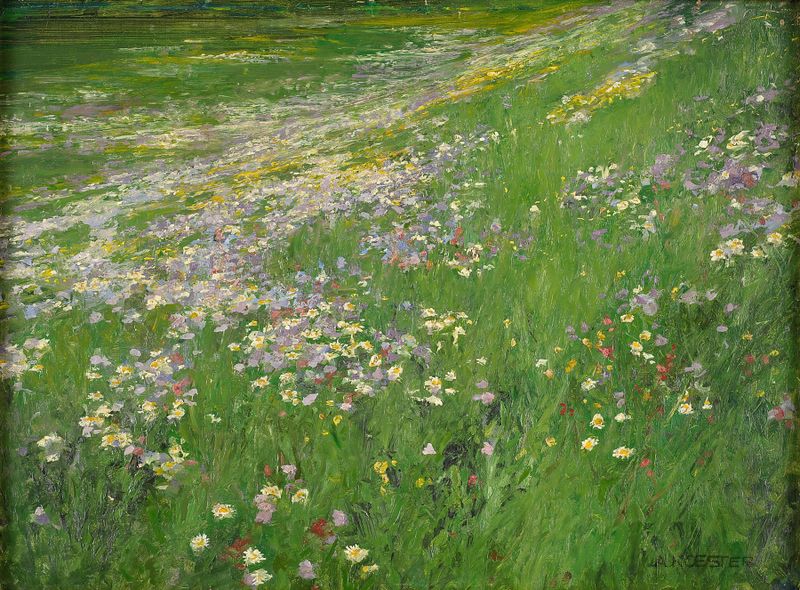
Blumenwiese bei Weßling
Alexander Koester

Reichenau, Weiden am See, Sonne
Alexander Koester
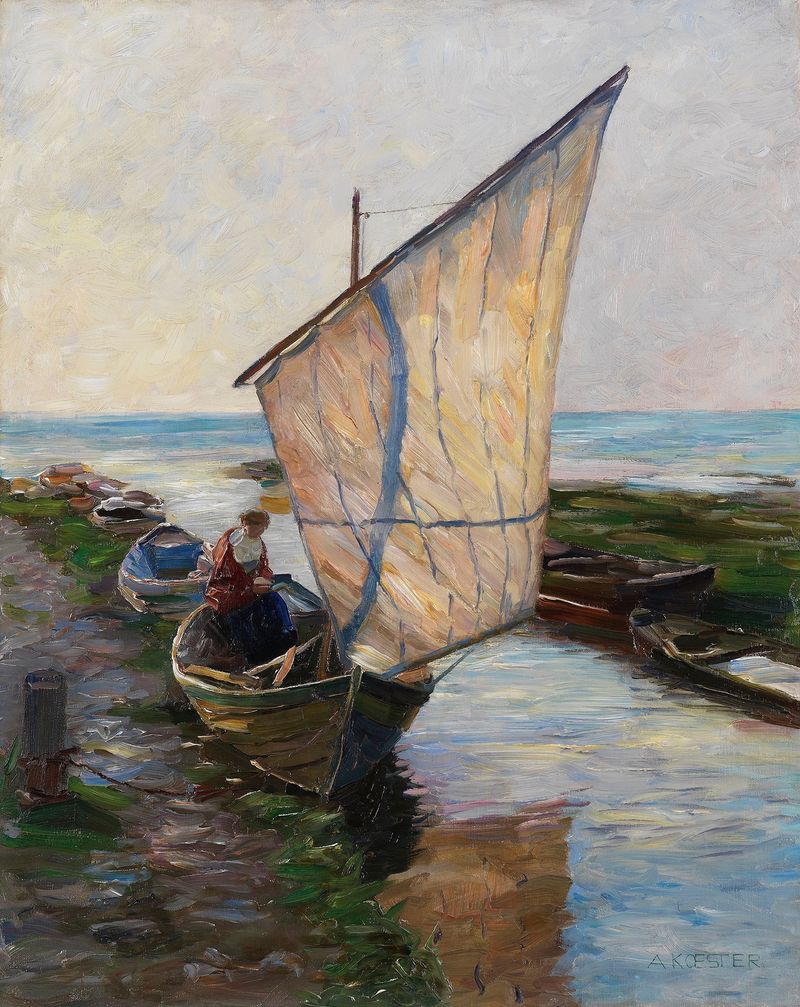
Segelboot, Holland
Alexander Koester
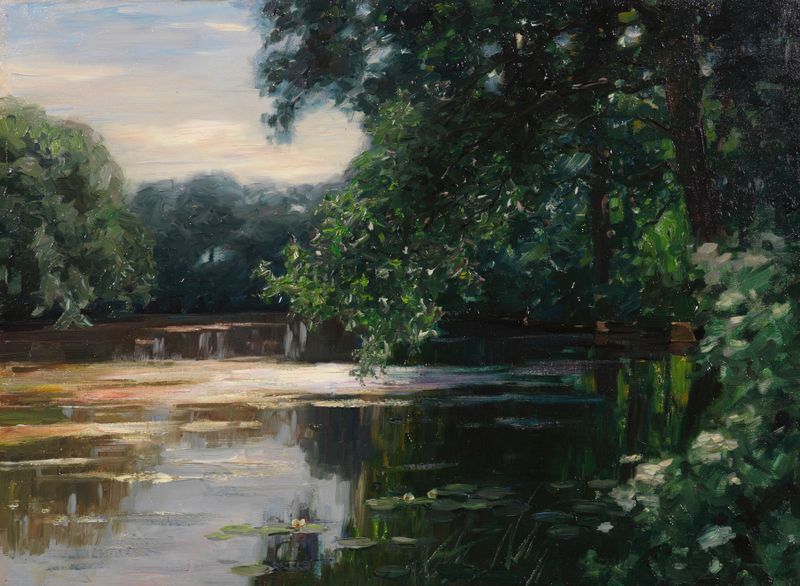
Teich, Viktring
Alexander Koester





