Boat Shed — History & Facts
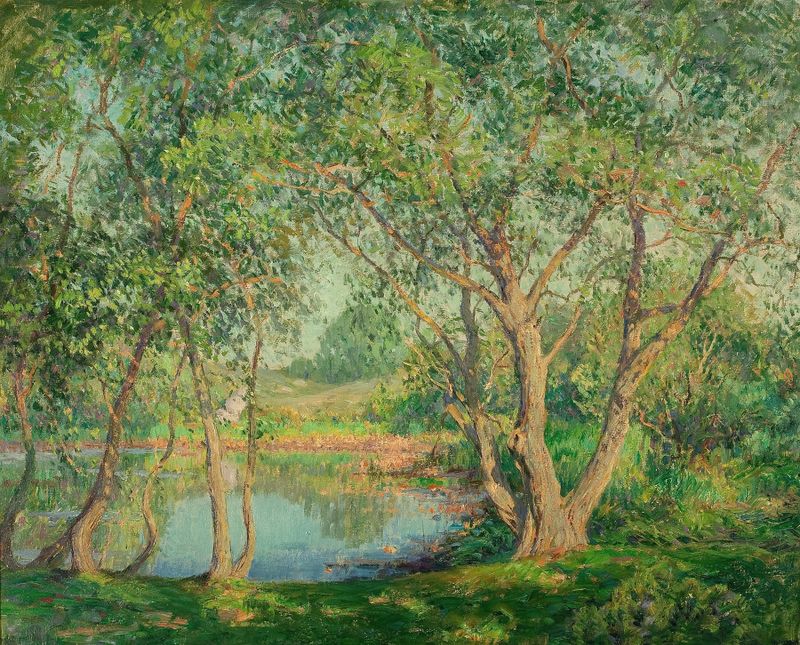
What if beauty was never meant to be finished? In the delicate brushwork of this tranquil landscape, the scene invites contemplation, a moment where time seems to dissolve. Look to the center, where a modest boat shed nestles against the water's edge, its crisp lines framed by lush greenery. Notice how the dappled light filters through the leaves, casting playful shadows that dance across the rippling surface of the lake. The vivid greens and earthy browns create a harmonious palette, evoking a sense of serenity, while gentle strokes imbue the scene with life and texture, allowing the viewer to almost hear the soft lapping of water. Beneath the surface of this idyllic setting lies a deeper narrative.
The juxtaposition of the sturdy shed against the fluidity of the water reflects the tension between permanence and transience. Each brushstroke seems to whisper the fleeting nature of beauty—an existence poised between the tangible and the ephemeral. This sense of transcendence not only captures the essence of the natural world but also hints at the artist’s yearning to immortalize a moment that must inevitably fade. In 1909, Wilson Henry Irvine painted this work during a pivotal time in American art, as Impressionism gained prominence and artists began exploring the interplay of light and atmosphere.
Living in California, he was deeply influenced by the local landscape and the movement towards capturing natural beauty with immediacy. This painting represents his commitment to translating the ephemeral experiences of nature into something lasting, embracing both the serenity and the inevitable passage of time.