Summer Day at the Harbor — History & Facts
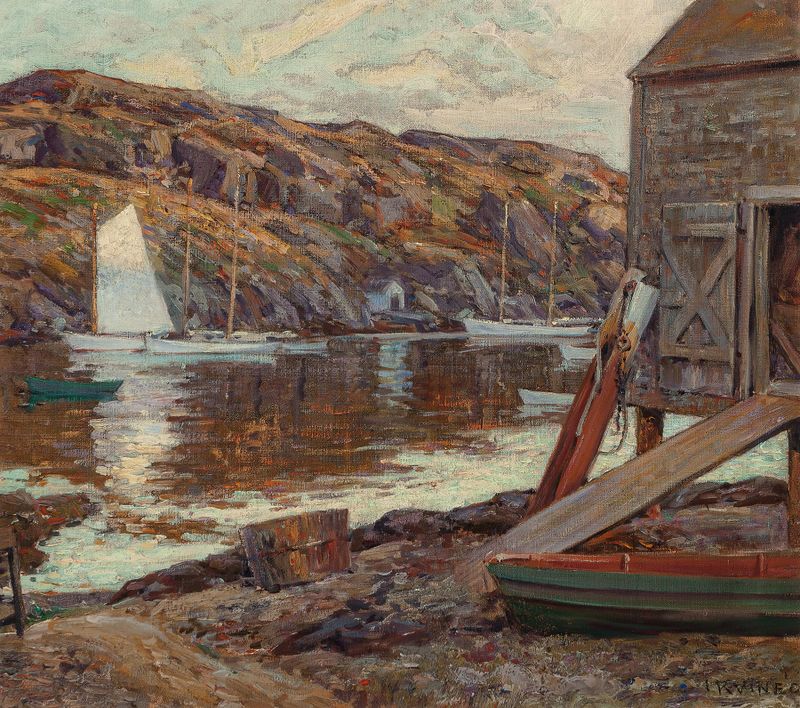
In the quiet embrace of a harbor, the weight of unspoken emotions lingers in the air, inviting viewers to reflect on the nature of loss and longing. Look to the foreground, where vibrant boats rest gently on the glistening water, their vivid colors mirroring the blue skies above. Notice how the dappled sunlight dances across the surface, creating a shimmering pathway that draws the eye deeper into the composition. The soft brushstrokes evoke a sense of warmth, contrasting with the stillness of the scene, while the distant horizon hints at something beyond reach—a paradox of beauty intertwined with a profound sense of yearning. The emotional tension in this work lies in the juxtaposition of tranquility and solitude.
Each vessel, though appearing lively, rests in stillness, as if mourning their own journeys and stories lost to time. The contrast between the lively hues of the boats and the muted tones of the background suggests the fragility of cherished moments, while the absence of human figures amplifies the feeling of isolation—the harrowing silence speaks of unuttered grief. Created during a period when Wilson Henry Irvine was deeply engaged with the Impressionist movement, Summer Day at the Harbor showcases his mastery in capturing fleeting moments of nature. Though the exact date of this piece remains unknown, Irvine was active in the early 20th century, a time when American artists were increasingly exploring the interplay of light, color, and emotion, influenced by the changing tides of the world around them.