Hidden Lake — History & Facts
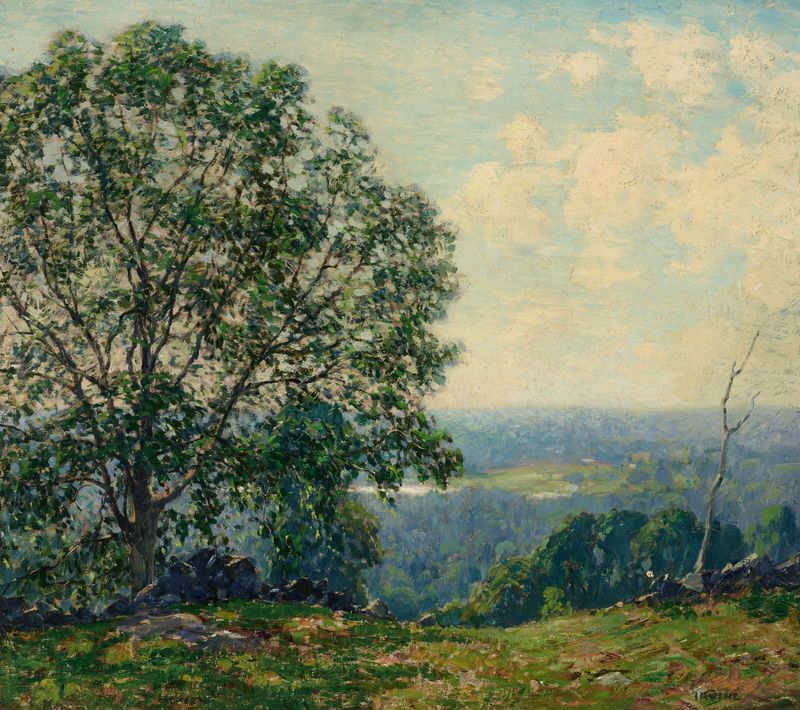
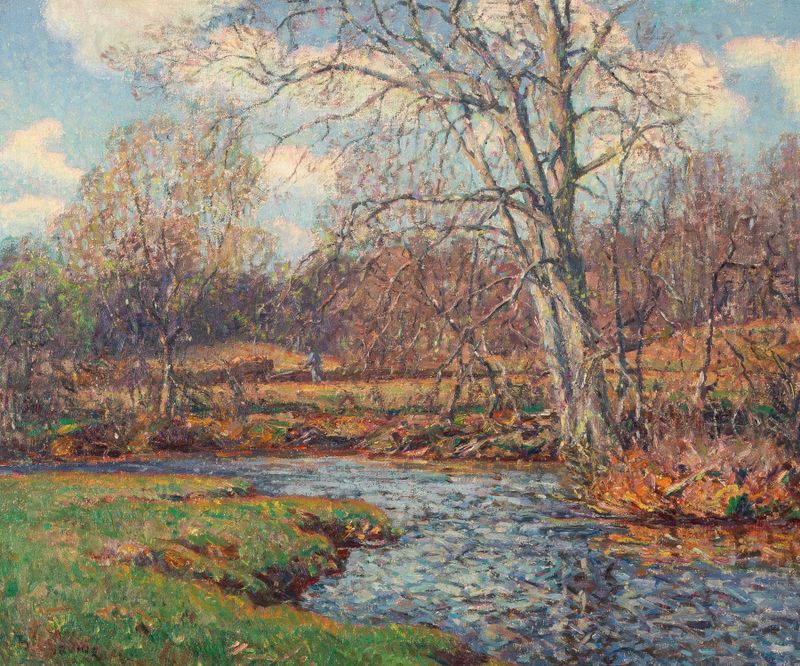
What secret hides in the quiet of the canvas? In Hidden Lake, a serene revelation unfolds, inviting the viewer to delve deeper into its tranquil depths. Look to the center where the water's surface mirrors the soft blues and greens of the surrounding landscape, drawing your gaze into a meditative calm. Notice how the gentle brushstrokes create a delicate interplay of light and shadow, illuminating the trees that fringe the lake's edge. The composition promotes a sense of balance, with the lush greenery embracing the water, while hints of golden sunlight catch fleeting glimpses across the surface, suggesting life beneath the stillness. This artwork whispers of hidden emotions—the stillness of the lake speaks to a moment of introspection, while the vibrant foliage hints at the vitality of nature's cycles.
The contrast between the vivid colors of the trees and the muted palette of the water hints at a deeper relationship between chaos and tranquility, urging the viewer to reflect on their own journey within this quiet space. Each stroke, meticulously placed, becomes a bridge between the outer world and inner contemplation. Wilson Henry Irvine painted Hidden Lake in a period marked by the Impressionist movement, which sought to capture light and atmosphere. During this time, he was creating a body of work that emphasized natural beauty and emotional resonance, navigating his own experiences as he sought to translate the profound stillness of nature onto canvas.
This painting exemplifies his dedication to capturing fleeting moments, revealing the serene complexity found in the stillness of a hidden retreat.