Boats on Beach — History & Facts
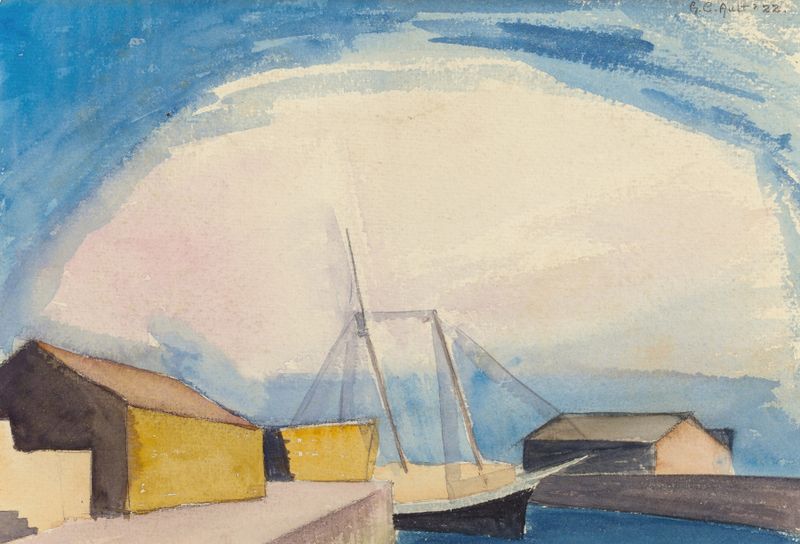
When did color learn to lie? The vibrant hues of the canvas beckon with a promise of hope, yet conceal an uncertainty beneath their surface. Look to the foreground, where the two boats rest half-buried in the sands, their weathered surfaces painted in rich, contrasting colors. The bright reds and blues contrast sharply against the muted browns and grays of the beach, drawing the eye immediately to their presence. Notice how dappled sunlight plays upon the boats, casting soft shadows that hint at the day's warmth, while the background transitions into a hazy blend of sky and sea, creating a serene yet fleeting moment. Delve deeper into the painting, and you’ll find a sense of duality; the boats are both inviting and abandoned, embodying the tension between nostalgia for past journeys and the stillness of a future that seems uncertain.
The gentle waves lapping at the shore suggest movement and continuity, yet the boats' inertness evokes a sense of longing, an echo of adventures once embarked upon. This juxtaposition speaks to the human experience, where hope and despair coexist, urging us to reflect on our own journeys. In 1921, George Copeland Ault created this piece during a period of personal struggle and artistic exploration. Living in New York, he was drawn to capturing the American landscape, reflecting a time when the post-war world was grappling with change.
Ault's work often combined realism with a dreamlike quality, and Boats on Beach serves as a poignant reminder of the intersections between abandonment and the enduring call of adventure.