Sailboat (Lumber Schooner and Wharves) — History & Facts
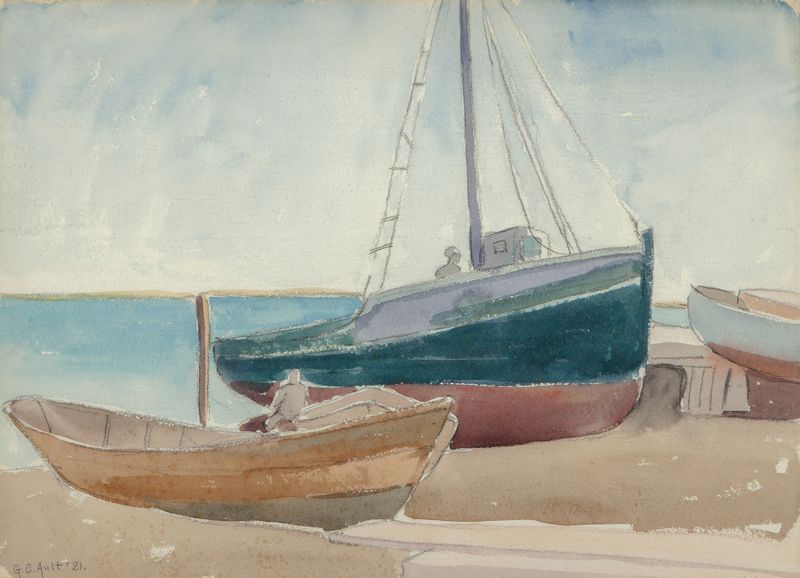
In a world filled with chaos and imbalance, the tranquil depiction of a sailboat amid wharves invites contemplation of harmony in the simplest scenes of life. Look to the left at the gentle curve of the sailboat’s hull, its dark silhouette contrasting against the soft pastel sky. Notice how the warm hues of yellow and orange blend seamlessly, capturing the fleeting moment of dawn or dusk. The meticulous brushwork dances across the canvas, creating a fluid connection between the boat and the surrounding structures, while the reflective water mirrors an untroubled sky, drawing the eye toward the horizon and beyond. Delve deeper into the composition, and you’ll find a quiet tension in the juxtaposition of man-made wharves and the organic shape of the sailboat.
The angled lines of the docks create a sense of stability, yet the fluidity of the water challenges this groundedness, symbolizing the perpetual struggle between nature and industry. The piece speaks to the delicate balance we navigate in our daily lives: the interplay between human ambition and the serenity of the natural world. In 1922, Ault painted this work during a period of introspection, following his struggle with mental health. As he sought solace in the quietude of the maritime landscape, the art world was shifting toward modernism, and Ault's embrace of realism provided a counterpoint to the tumult of his time, grounding him amidst the evolving artistic landscape.