Bords de rivière — History & Facts
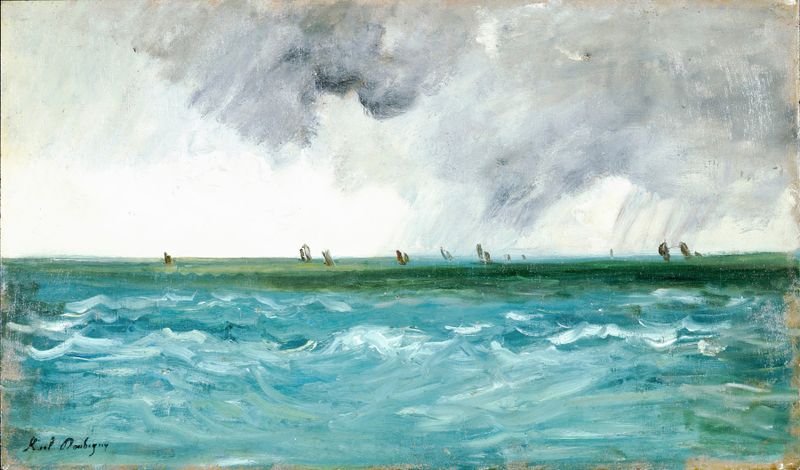
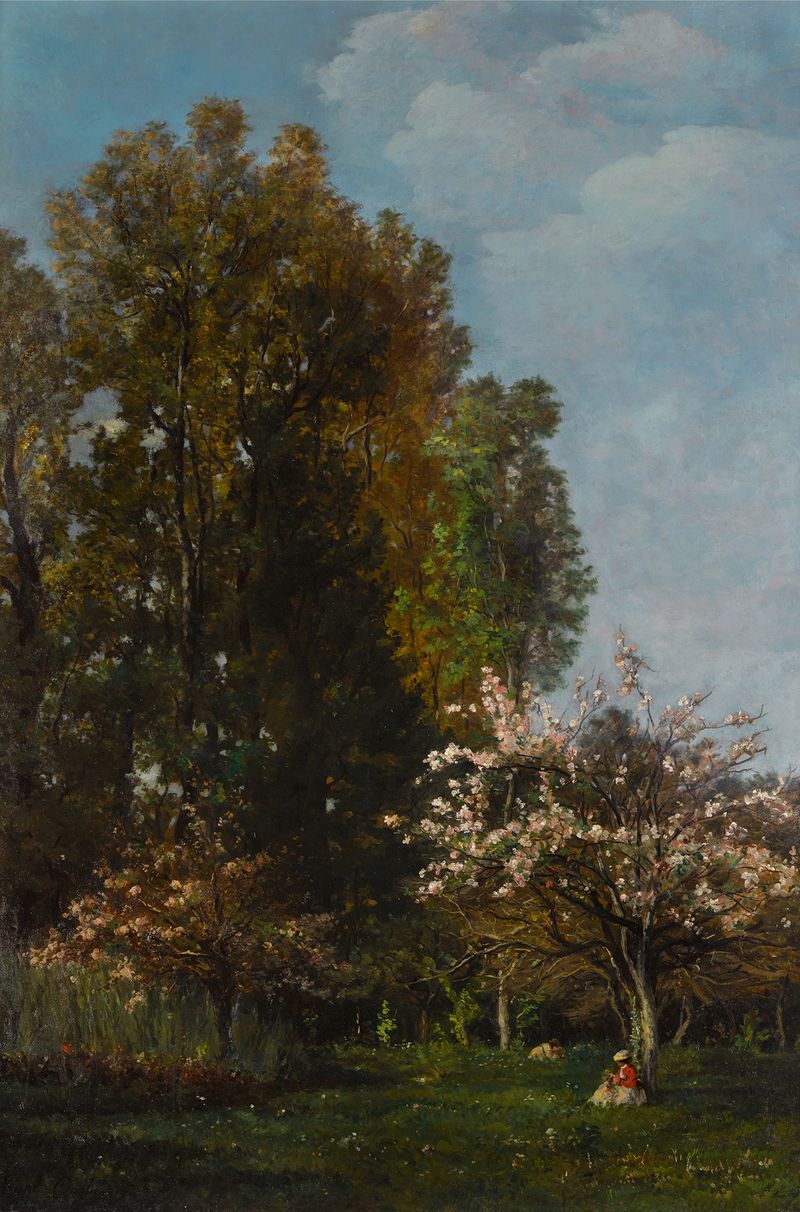
What if beauty was never meant to be finished? In Bords de rivière, the artist captures a moment that lingers between completion and the ephemeral, hinting at the legacy left behind by nature’s enduring charm. Each brushstroke resonates with an unspoken dialogue about the cycles of life, inviting viewers to consider the fleeting beauty that surrounds us. Look to the foreground, where the calm waters of the river gently reflect the dappled light filtering through the trees. The soft greens and blues dominate the palette, evoking a serene atmosphere, while the delicate brushwork suggests the rustling leaves in the breeze.
Notice how the composition leads your eyes across the tranquil surface, drawing you into the harmonious interplay of light and shadow, embodying a perfect moment caught in time. Beneath the serenity lies a subtle tension: the inevitability of change. The riverbanks, lush yet slightly untamed, signify the delicate balance between nature’s beauty and its transient nature. The layering of hues hints at the passage of time, evoking a sense of nostalgia for fleeting moments.
With every glance, one feels the pull of memories, a silent reminder of the impermanence that defines both life and art. In 1881, while residing in France, Karl Daubigny painted this piece during a period marked by artistic exploration and the Impressionist movement’s rise. His works often reflected a deep connection to nature, speaking to the world around him amid the changing tides of societal progress. This painting is a testament to his ability to capture both the beauty and complexity of the natural world, leaving a legacy that resonates across generations.