Shepherdess On The Banks Of The River — History & Facts
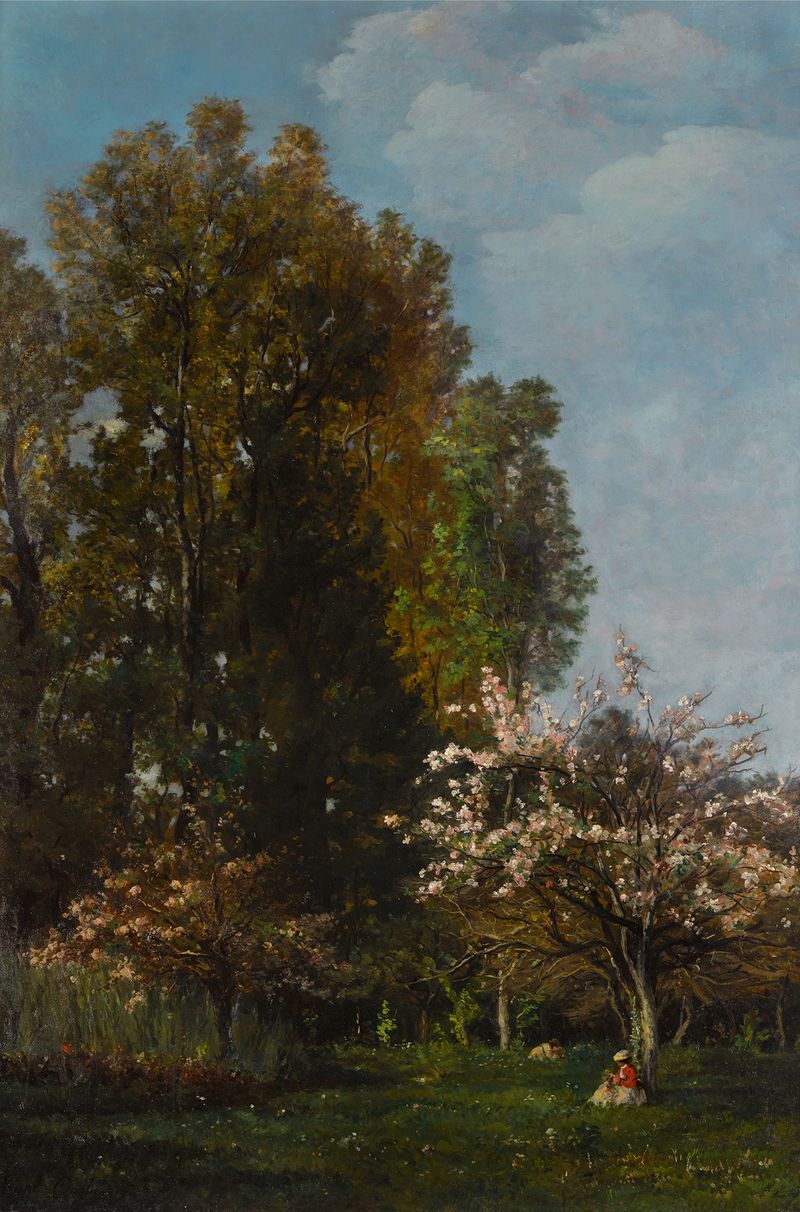
When did color learn to lie? In the lush embrace of nature, where the vibrancy of hues intertwines with the heart's yearning, a quiet longing seems to resonate through the canvas. Look to the soft greens and gentle browns that dominate the landscape, guiding your eyes toward the young shepherdess standing near the riverbank. Notice her serene expression and the slight flutter of her drapery in the breeze, capturing a moment of stillness amidst nature's pulse. The light spills delicately, illuminating her figure while casting shadows that hint at the deeper emotions woven into the scene.
Daubigny's mastery lies in this delicate balance of light and shadow, creating an atmosphere of tranquility that masks an undercurrent of desire. As you explore further, subtle details emerge — the shepherdess's gaze that drifts beyond the horizon, the restless water reflecting both her beauty and her solitude. These elements suggest an intricate relationship between the figure and her surroundings, where nature acts as both companion and barrier to her unspoken dreams. The contrast between her poised stance and the flowing, unbridled river evokes a tension, a longing for freedom that remains tantalizingly out of reach. Created during a period marked by changing artistic currents, the piece reflects Daubigny’s immersion in the Barbizon School during the mid-19th century.
Working in France, he sought to capture the essence of rural life, navigating between realism and impressionism. In a world growing increasingly industrialized, this painting stands as a poignant reminder of nature’s beauty and the complex emotions that dwell within.