Bords de l’Oise — History & Facts
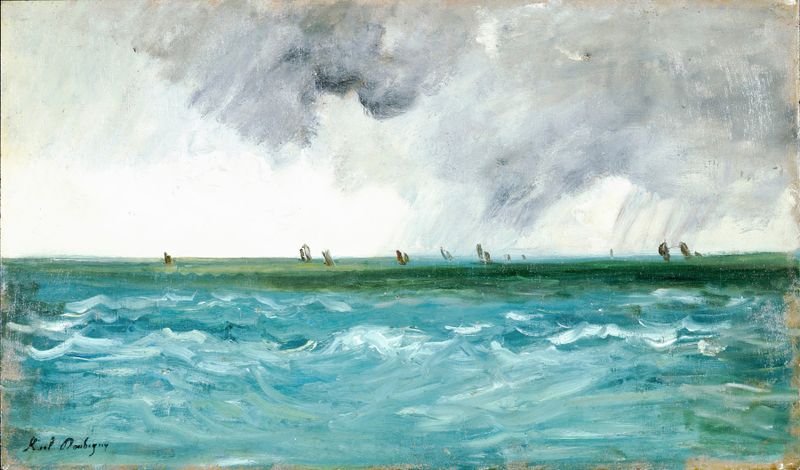
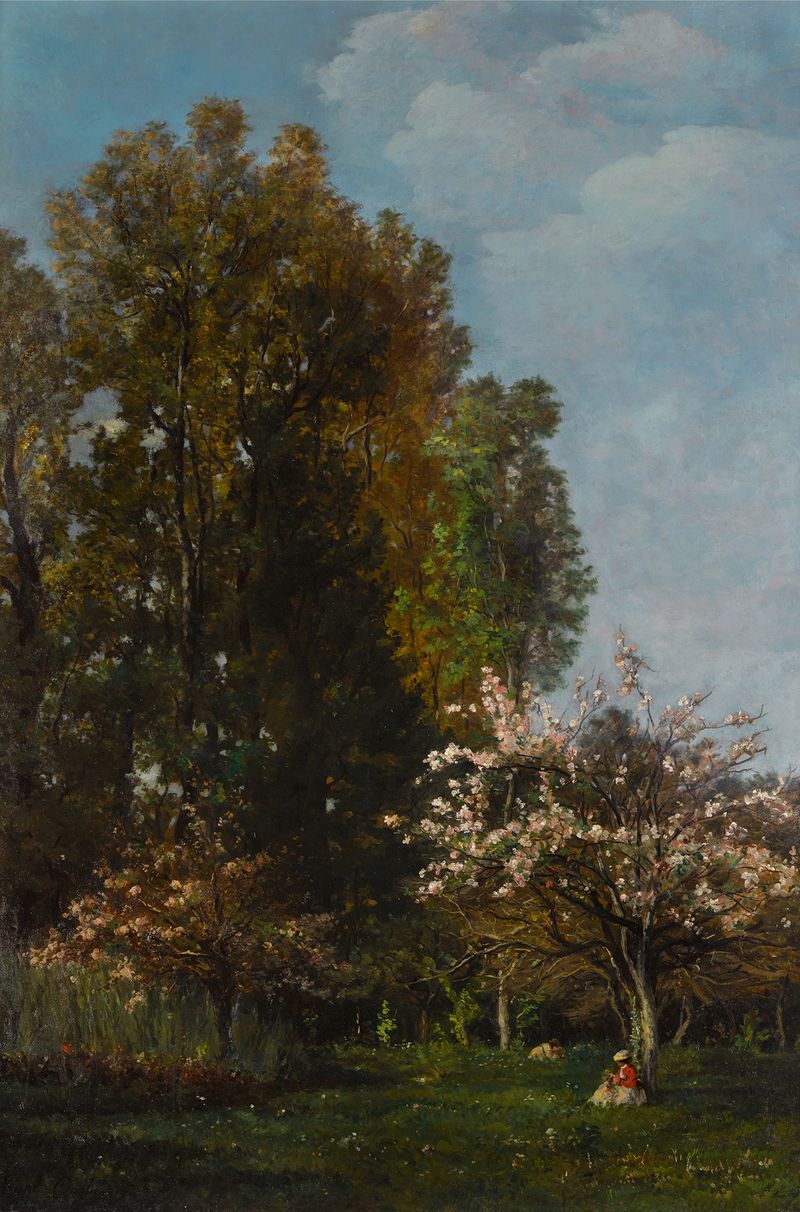
What if silence could speak through light? In this tranquil scene of riverside calm, the essence of a dream is woven into the canvas. Look to the left at the gentle curve of the riverbank, where soft greens and muted blues blend seamlessly. Notice how the dappled sunlight dances across the water's surface, creating a shimmering path that invites the viewer to wander deeper into this serene landscape. The slightly blurred outlines of trees and distant hills evoke a sense of harmony, as if nature itself breathes quietly, allowing your gaze to rest in the soft embrace of the colors. As you absorb the peaceful ambiance, consider the emotional weight carried by the delicate brushstrokes.
The juxtaposition of stillness and movement—a single boat gliding along the water—hints at a yearning for freedom amidst the quiet confines of the natural world. The warm tones in the sky contrast with the cooler shades below, suggesting the fleeting nature of time, perhaps a fleeting moment of introspection in the beauty of life. Each element, from the wispy clouds to the reflections in the water, whispers of tranquility and contemplation, pulling the viewer into an almost meditative state. Created in 1870, this work emerged during a period when Karl Daubigny was deeply immersed in the Barbizon School, a movement focused on the natural beauty of rural landscapes.
Living in France, he explored the intimate relationship between light and nature, capturing the ephemeral qualities of the moment. This painting reflects his mastery of impressionist techniques, showcasing an era where artists began to break away from traditional academic conventions in search of new expressions of beauty.