Bosky Landscape With Figures — History & Facts
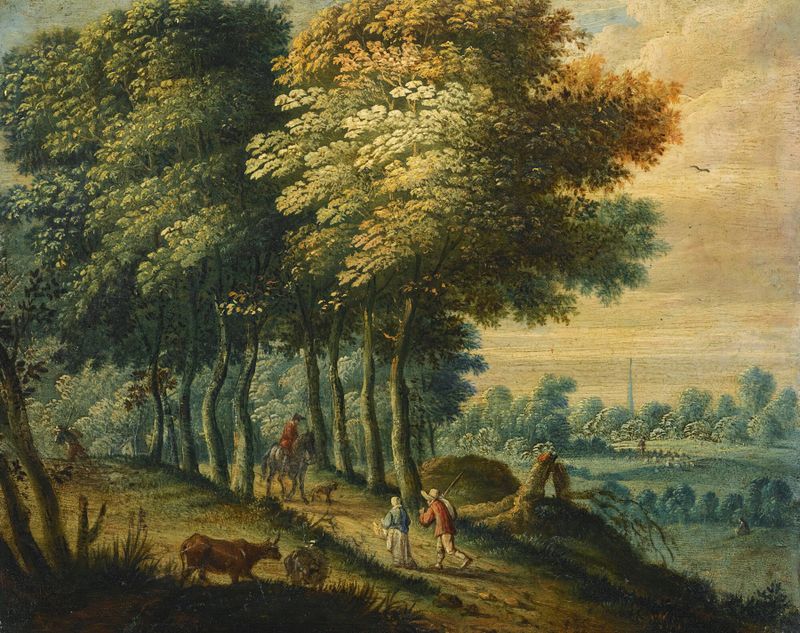
Is this a mirror — or a memory? The interplay of light and shadow in this enchanting work invites the viewer to explore the depths of their own recollections, revealing the layers of time that shape our existence. Look to the left, where the dappled sunlight breaks through the lush foliage, illuminating the figures nestled within the bosky landscape. The soft greens and earthy browns create a harmonious palette that breathes life into the scene. Notice how the trees frame the figures, guiding your gaze while their postures — a blend of leisure and contemplation — evoke a sense of tranquility amidst nature’s embrace. As you explore further, consider the delicate shadows that stretch across the ground, hinting at the passage of time.
The juxtaposition of light and dark not only highlights the serenity of the moment but also suggests an underlying tension — the fleeting nature of joy, the inevitability of change. Each figure, frozen in a moment of quiet reflection, embodies the delicate balance between presence and absence, inviting a personal connection to the viewer’s own memories. Created in the second half of the 17th century, this piece exemplifies the Flemish School's deep appreciation for nature and human emotion. The artists of this period were often influenced by the socio-political climate of Europe, marked by both religious strife and burgeoning trade.
This work stands as a testament to a time when artists sought solace in the beauty of landscapes, manifesting profound introspection through their brushstrokes.