Boslandschap met stier — History & Facts
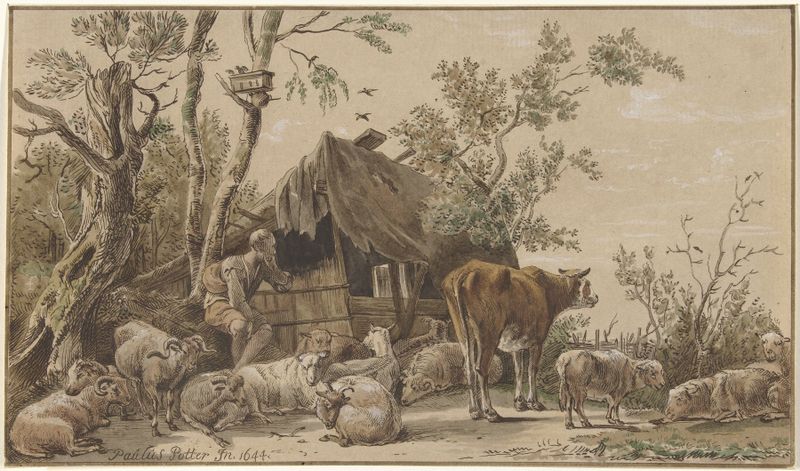
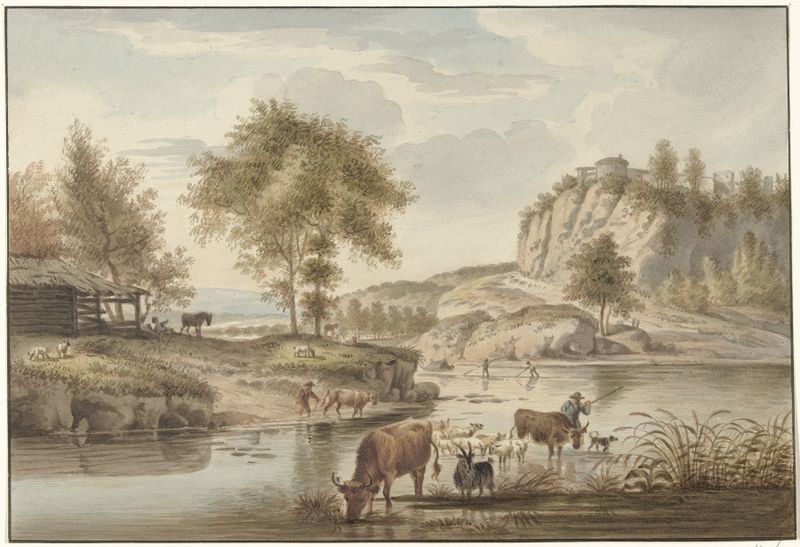
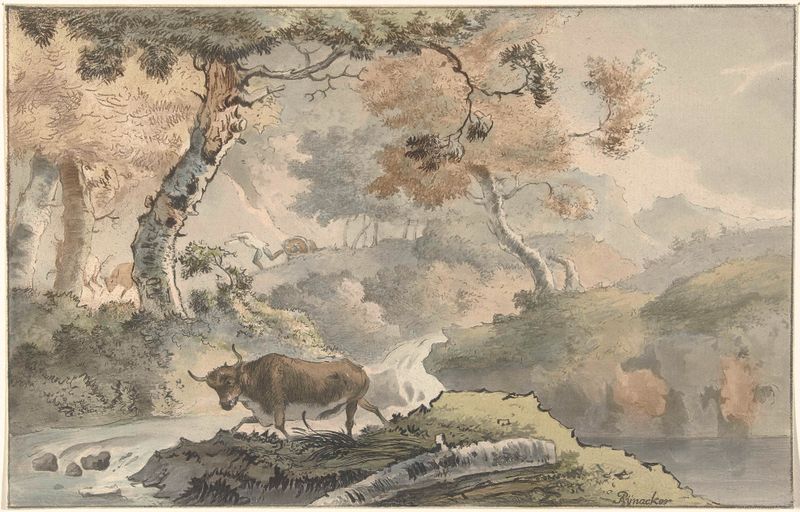
Did the painter know this moment would outlive them? In Boslandschap met stier, the quiet presence of a bull amidst the serene landscape speaks volumes of the grief and resilience tethered to nature's timeless rhythm. Look to the left at the bull, its sturdy frame rooted in the earth, contrasting with the delicate sways of the trees. The brushwork evokes a sense of movement, as though the gentle breeze whispers secrets to the leaves. Notice the soft play of light that filters through the canopy, illuminating patches of grass below, painting a tableau that is both tranquil and afire with unspoken emotion.
The earthy palette of greens and browns anchors the scene, while hints of blue sky peek through, offering moments of hope. Yet, beneath this pastoral beauty lies an undercurrent of melancholy. The solitary bull, while majestic, seems to embody loneliness, a metaphor for the inevitable passage of time and the weight of grief. The surrounding landscape, lush yet isolated, reflects the tension between nature’s splendor and the solitude felt by its inhabitants.
Each element in the composition speaks to the transience of life, urging the viewer to contemplate what lingers beyond the visible. In 1821, Christiaan Josi painted this work during a period marked by personal loss and the evolving landscape of Romanticism. As he navigated his own grief, the influence of contemporary artists seeking to capture emotional depth in nature became increasingly evident. Created in the Netherlands, a nation grappling with social change, this piece encapsulates a moment where the artist’s inner turmoil merged with the tranquil yet evocative beauty of the natural world.