Herder bij stal — History & Facts
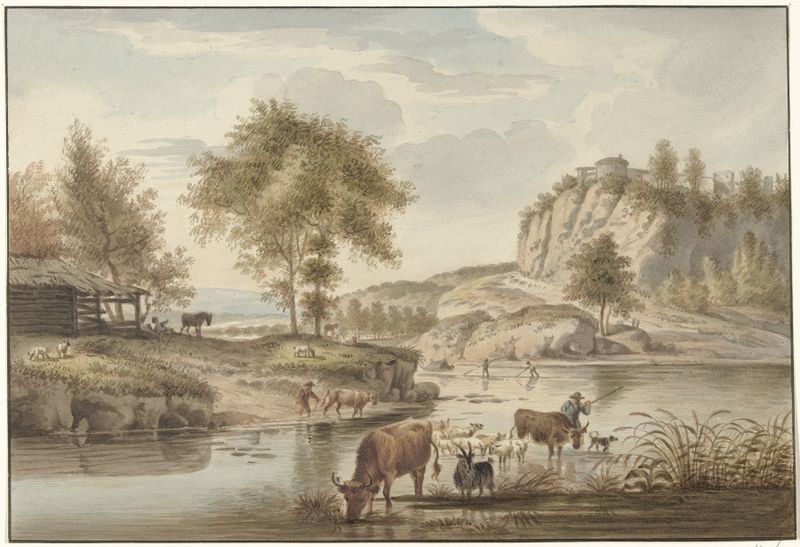
Where does light end, and longing begin? In the quiet embrace of Herder bij stal, that question reverberates through the stillness of the moment. Focus on the gentle embrace of twilight as it streams through the stable's opening, casting soft shadows that dance across the worn wooden floor. The herder stands in serene solitude, his figure a calm contrast to the rustic chaos of the nearby livestock. Note the way the ochres and muted greens blend seamlessly, igniting a sense of nostalgia as they depict the unadorned simplicity of rural life.
The painter’s brushstrokes convey both the texture of the herder's garments and the warmth of the scene, inviting you to step closer. Yet, beneath this tranquility lies an undercurrent of tension. The herder’s downcast gaze implies a world of unspoken burdens and longing—a yearning that goes beyond mere coexistence with the animals. The fleeting light hints at the ephemeral nature of both time and life itself, suggesting that chaos is an inherent part of this serene existence.
Each element—the herder’s posture, the stillness of the animals, the encroaching shadows—plays a distinct role in unearthing deeper truths about our relationship with nature and responsibility. Created in 1821, this work reflects Christiaan Josi's life in the Netherlands, where he was immersed in the emerging Romantic movement, grappling with themes of emotion and nature's beauty. During this period, the artist was influenced by the broader societal shifts and evolving depictions of rural life, culminating in a poignant portrayal that resonates with both personal and collective experiences.