Riviergezicht met vee — History & Facts
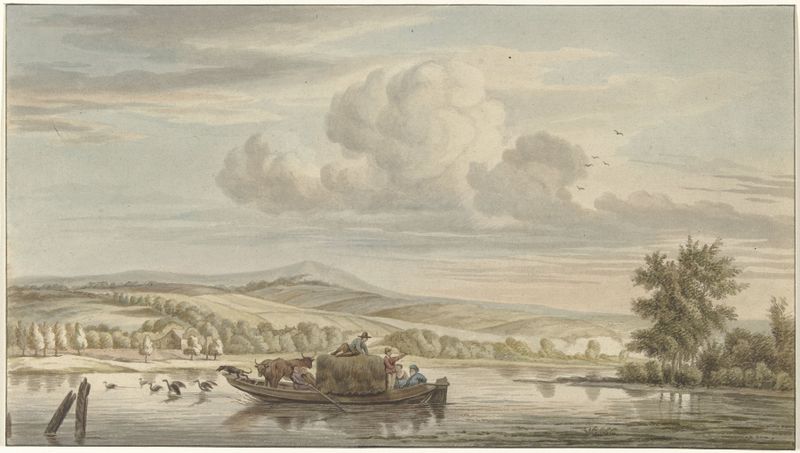
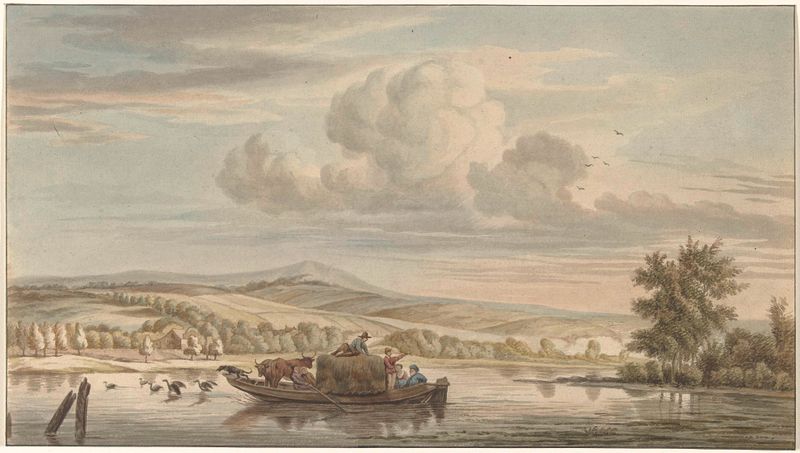
What if silence could speak through light? In Riviergezicht met vee, a tranquil landscape emerges, imbued with whispers of memory and time. The subtle interplay of shadow and illumination invites viewers to ponder the narratives hidden in the gentle ripples of the water and the languid forms of the grazing cattle. Look to the left at the soft curve of the river, where a delicate reflection captures the fading sunlight. Notice how the color palette—a blend of earthy greens and warm ochres—creates a harmony that resonates with the viewer's sense of peace.
The artist’s meticulous brushwork not only defines the contours of the landscape but also evokes a serene atmosphere, drawing your gaze toward the horizon where the sky meets the earth. Beneath the placid surface lies a tension between nature and human presence. The cattle, both vulnerable and vital, symbolize the connection between the land and its caretakers, suggesting an enduring bond with the environment. The stillness of the scene contrasts with the fleeting nature of time, creating a poignant reminder of life's transience and the quiet resilience of the natural world. In 1821, Christiaan Josi painted this work during a period of personal exploration and artistic maturation in the Netherlands.
Emerging as an important figure in Dutch landscape painting, he was influenced by earlier masters while striving to carve his own aesthetic identity. This piece reflects the era's shift towards a more introspective appreciation of rural life, encapsulating a moment in time when harmony with nature was both a subject of admiration and a necessity of existence.