Boy with a Bucket Standing by a River Bank — History & Facts
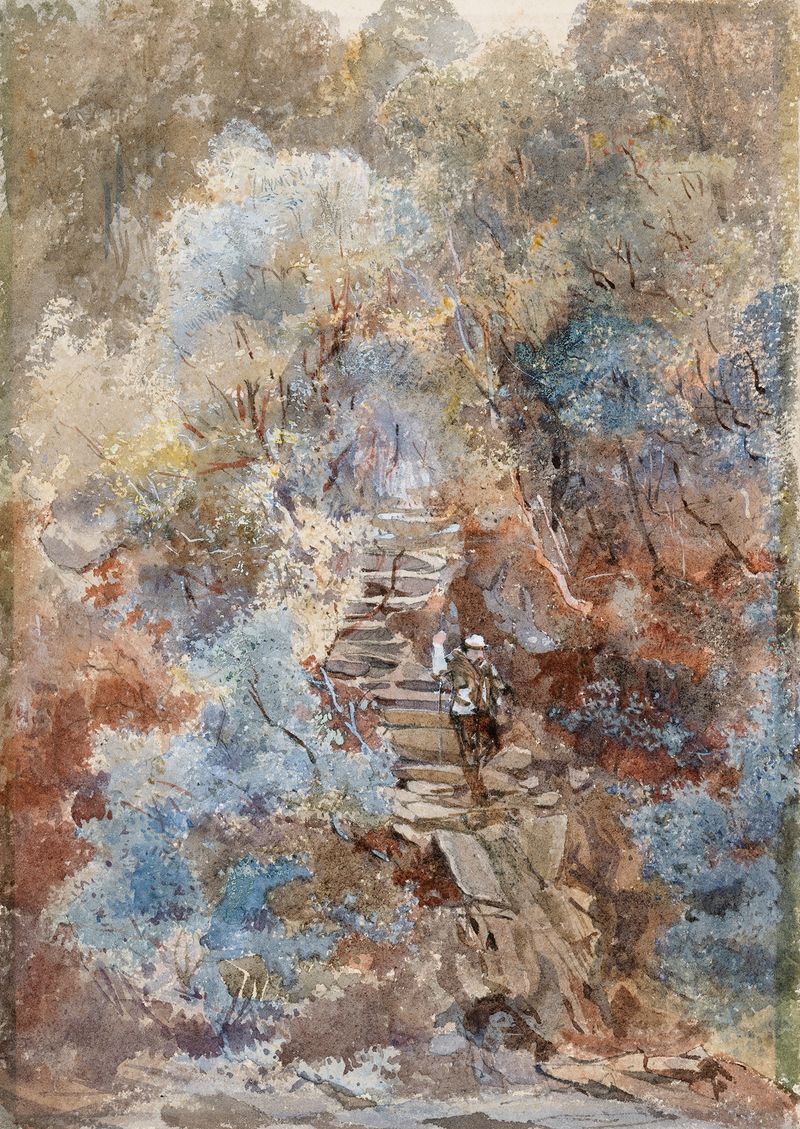
Where does light end, and longing begin? In the quiet embrace of a forgotten riverside, it’s a question that resonates deeply within the heart of Frances 'Fanny' Wilmot Currey’s Boy with a Bucket Standing by a River Bank. Focus first on the boy's figure, poised by the water's edge, his silhouette sharply defined against the shimmering surface. The golden light dances playfully on the river, illuminating his face with a soft glow, highlighting both innocence and introspection. The bucket, clutched tightly in his small hands, holds not just the promise of water but the weight of unspoken dreams.
Notice how the gentle curves of the riverbanks cradle him, forming a tender yet isolating space that echoes the vastness of the world around him. This scene, while seemingly simple, exudes a poignant tension between fulfillment and emptiness. The boy’s contemplative stance hints at childhood curiosity intertwined with a deeper yearning, as if he is both seeking and waiting. The contrast of vibrant colors in the landscape with the boy's subdued clothing underscores his solitary experience, suggesting a moment suspended in time—caught between the innocence of youth and the complexities of life yet to come. In 1879, Currey painted this piece during a time when she was establishing her presence in a male-dominated art world.
Living in England, she was influenced by the emerging Impressionist movement, seeking to capture fleeting moments of nature and emotion. This work reflects her unique perspective, embodying both the serenity of the environment and the intricate emotional landscape of childhood, revealing her growing mastery of light and form.