Breh Latorice — History & Facts
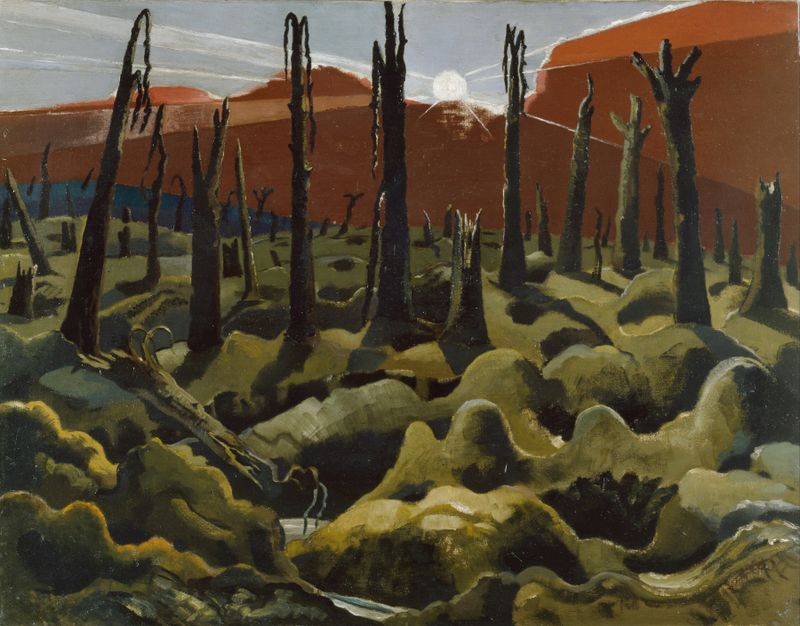
In the delicate brushstrokes of decay lies a poignant reminder of impermanence, a lingering whisper of beauty lost to time. Look to the center of the canvas where fractured forms and muted colors collide. The artist employs a palette of browns and grays, capturing the essence of decay in both the subject and the surroundings. Notice how the light, filtered through a haze of patina, caresses the surfaces, revealing textures that evoke nostalgia and melancholy.
Each detail invites the viewer to dwell on the passage of time, as shapes dissolve into shadowy echoes of their former selves. Beneath this visual disintegration, one can sense a profound commentary on life’s transience. The juxtaposition of vibrant elements fighting against the inevitable decay speaks to the tension between existence and oblivion. The intricate patterns of erosion symbolize not only the physical deterioration but also the psychological impact of witnessing beauty fade—a reminder that even the most splendid moments are fleeting. During the years 1920 to 1925, Jozef Teodor Mousson was deeply engaged in exploring the themes of decay and renewal while living in a post-war Europe struggling with its own scars.
This era marked a turning point in modern art, as artists began to question traditional representations in favor of a more abstract exploration of existence. Mousson’s work reflects this shift, encapsulating the essence of an age grappling with memory, loss, and the passage of time.
More Artworks by Jozef Teodor Mousson
Browse all →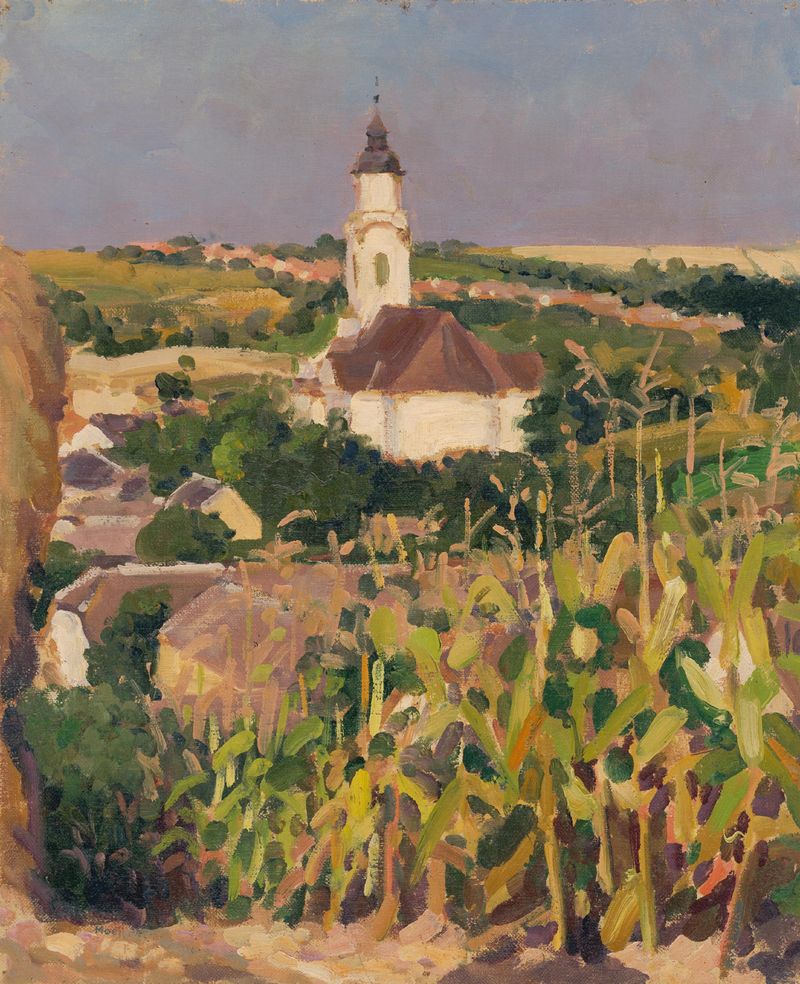
Eastern Slovakia Village
Jozef Teodor Mousson
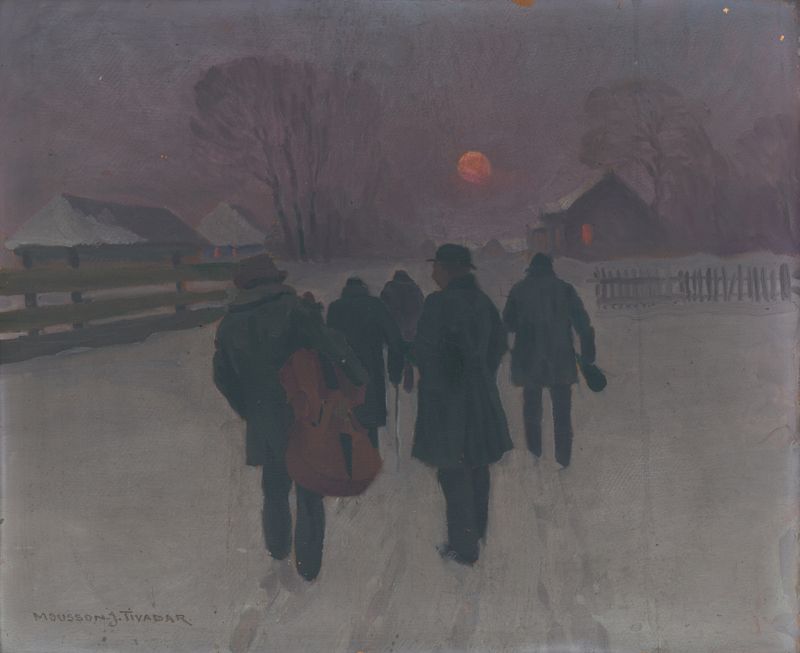
Musicians Returning in the Early Morning through Snowed Landscape
Jozef Teodor Mousson

Na pobreží
Jozef Teodor Mousson

V zime na dedine
Jozef Teodor Mousson

Trh v Michalovciach II.
Jozef Teodor Mousson
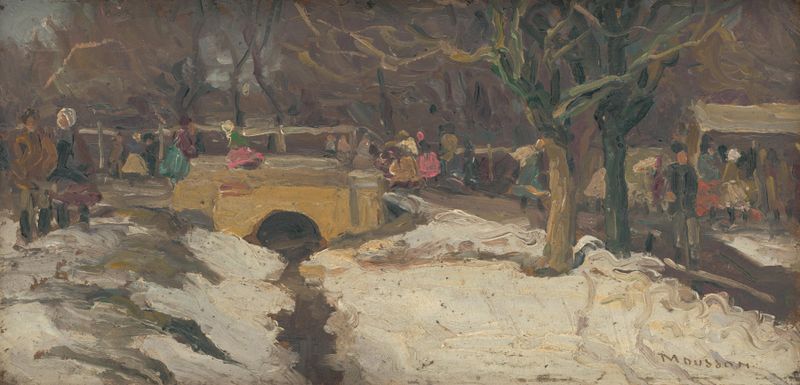
Market
Jozef Teodor Mousson
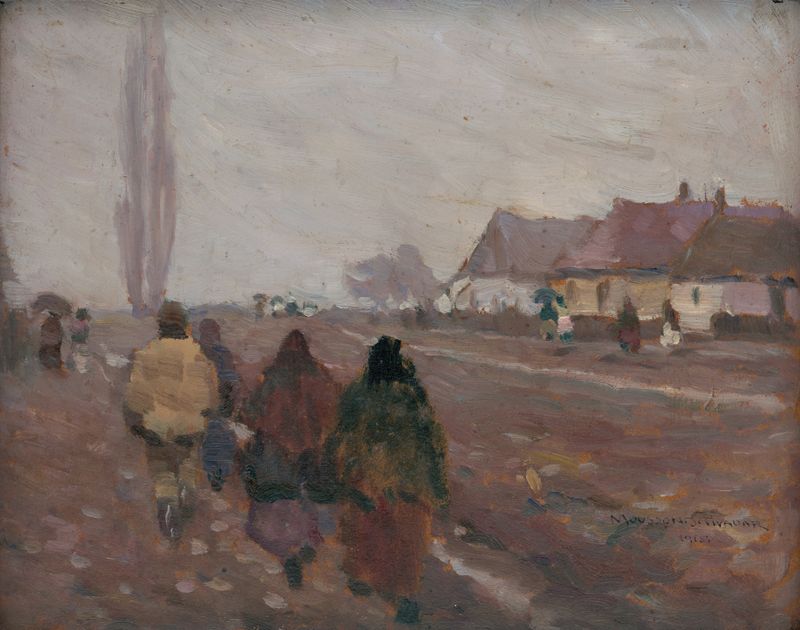
On the Road from the Michalovice Market
Jozef Teodor Mousson

Potato Digging
Jozef Teodor Mousson

Na dedine
Jozef Teodor Mousson
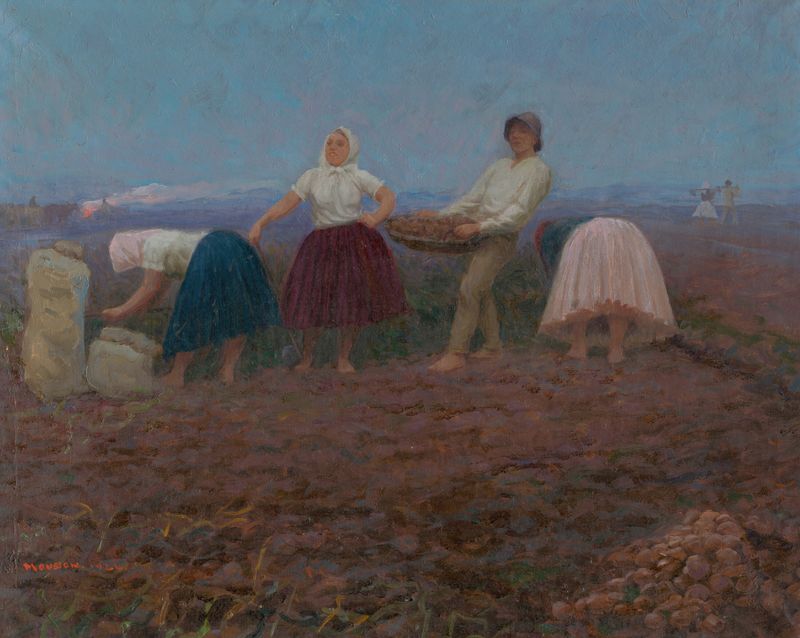
Potato picking
Jozef Teodor Mousson