
V zime na dedine — History & Facts
In the stillness of winter, we are often confronted with the echoes of violence buried beneath the surface of serene landscapes. Focus on the foreground, where a cluster of figures huddles together against the piercing cold. Notice how the muted palette of blues and grays envelops them, each stroke whispering tales of hardship. The delicate contrast between the icy ground and the warmth of their breath creates a palpable tension.
The distant, snow-capped mountains loom ominously, suggesting an unyielding presence that contrasts sharply with the intimacy of the gathered community. Delve deeper into the interplay of light and shadow; the dim illumination seems to reveal the unspoken stories held in the faces and gestures of the villagers. The slightly hunched shoulders and downcast gazes convey a collective grief, hinting at past traumas. Each brushstroke serves not only to depict a winter day but also to invoke the haunting specter of violence, reminding us that beneath the surface of tranquility lies a history that cannot be ignored. In 1919, during a time of renewal and recovery after World War I, the artist found himself in a world reshaped by conflict.
Living in the aftermath of the war, Mousson painted this piece in Slovakia, capturing not just the beauty of the snow-covered village but also the emotional scars left by turmoil. His work stands as a testament to resilience, illustrating how even in the coldest of winters, the human spirit perseveres, remembering what history tries to conceal.
More Artworks by Jozef Teodor Mousson
Browse all →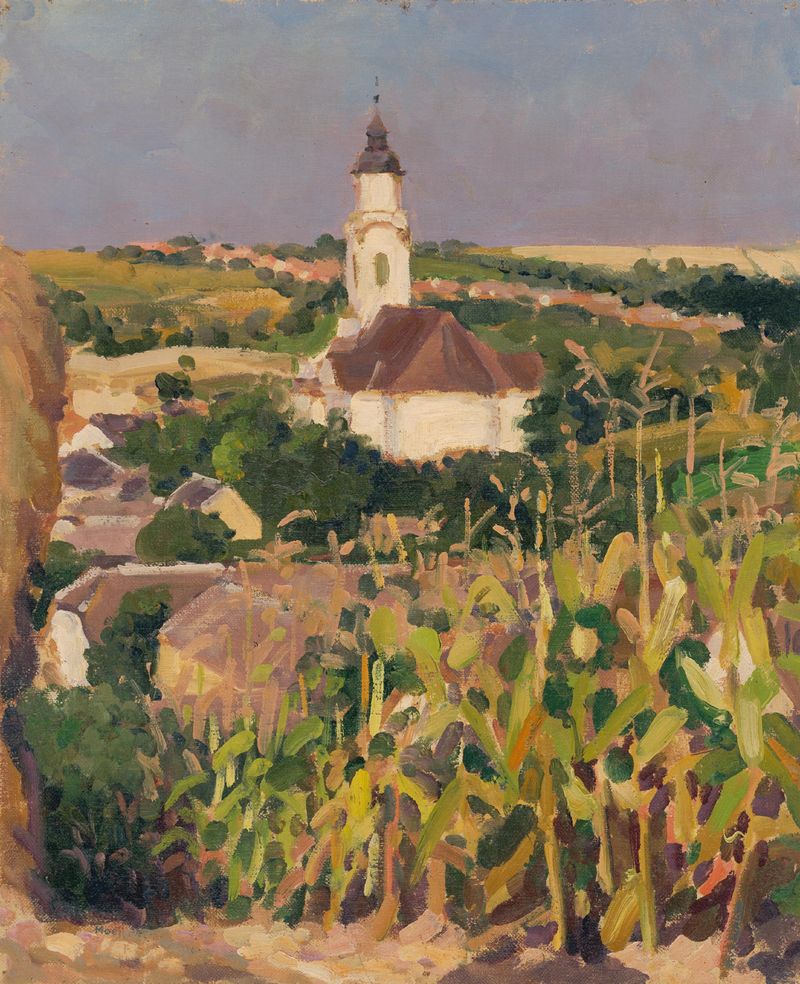
Eastern Slovakia Village
Jozef Teodor Mousson
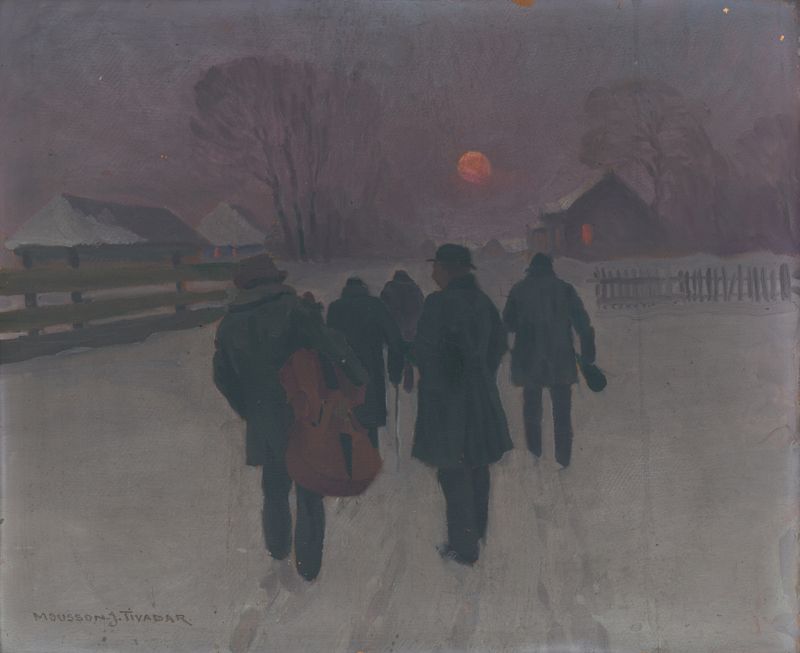
Musicians Returning in the Early Morning through Snowed Landscape
Jozef Teodor Mousson

Na pobreží
Jozef Teodor Mousson

Trh v Michalovciach II.
Jozef Teodor Mousson
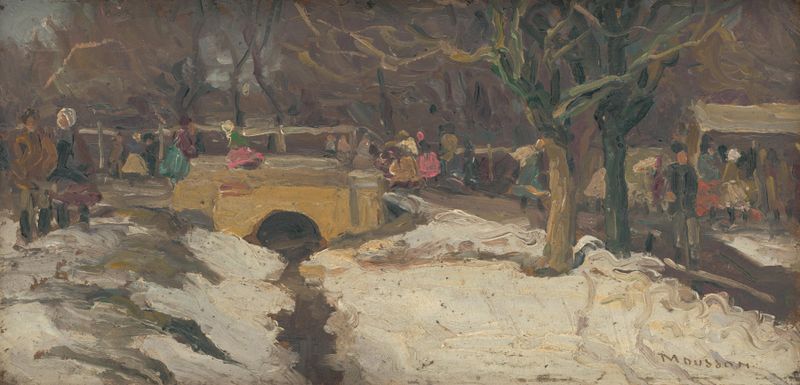
Market
Jozef Teodor Mousson
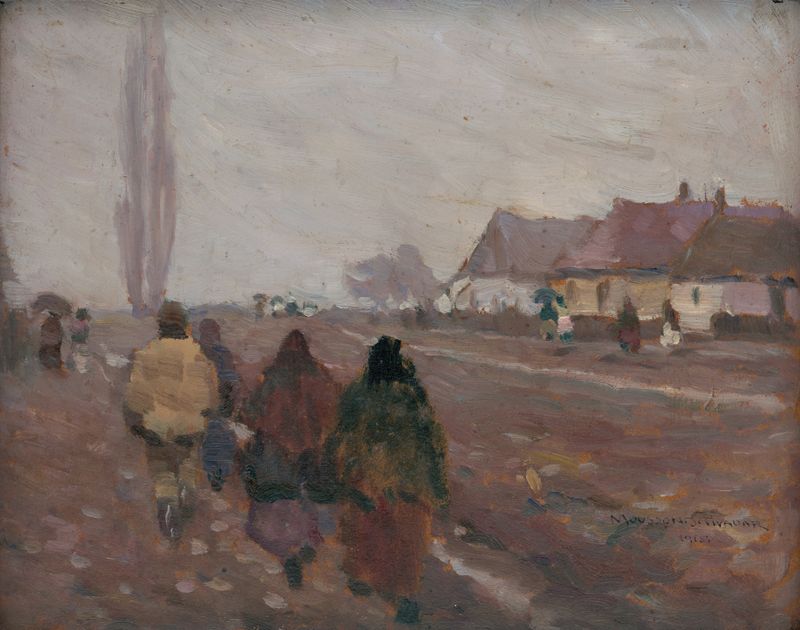
On the Road from the Michalovice Market
Jozef Teodor Mousson

Potato Digging
Jozef Teodor Mousson

Na dedine
Jozef Teodor Mousson
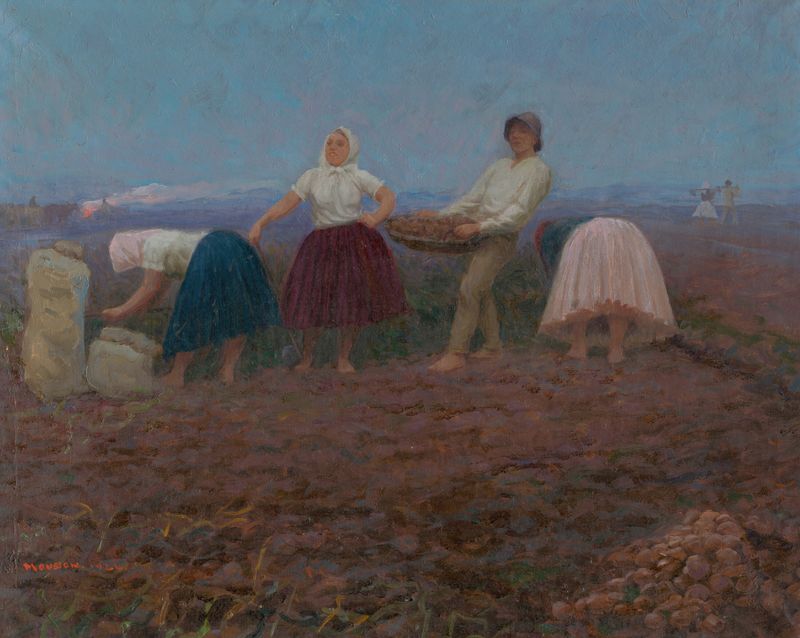
Potato picking
Jozef Teodor Mousson
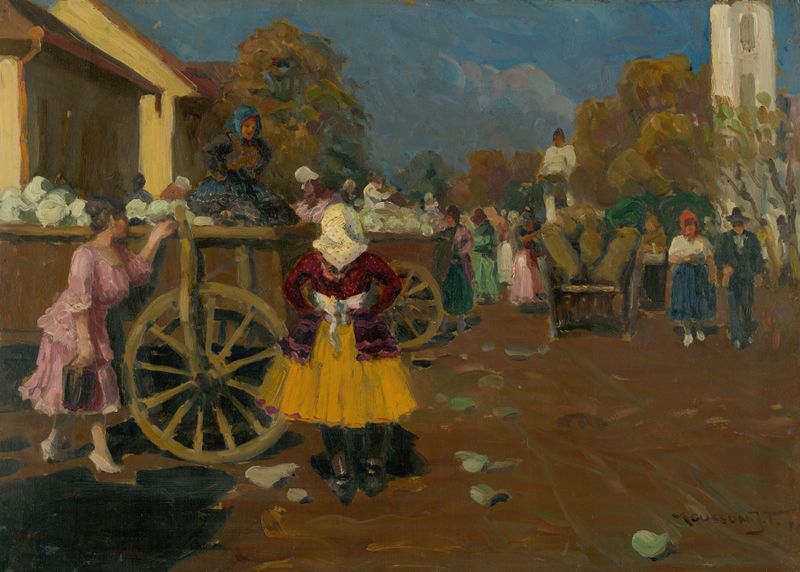
Trh v Michalovciach I.
Jozef Teodor Mousson





