Bridal Homecoming at Lake Hornavan — History & Facts
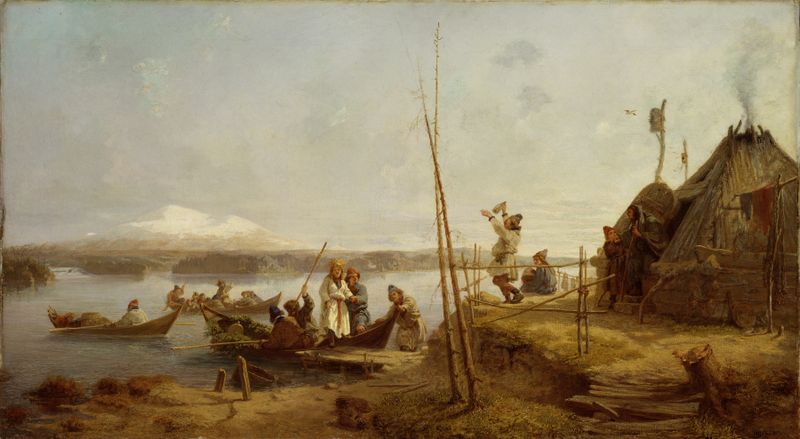
In the quiet embrace of a moment caught between joy and sorrow, the essence of loss reverberates through the canvas, inviting the viewer to explore the depths of human emotion. To truly appreciate this work, look to the gentle curves of the bride's silhouette, framed against the serene expanse of Lake Hornavan. The interplay of soft pastels and earth tones brings a sense of warmth, yet hints at an underlying melancholy. Notice how the light dances upon the water, reflecting the bride's gown, suggesting a fragile connection between her joyous occasion and the poignancy of what has been left behind.
The composition draws the eye toward her expression—an enigmatic blend of hope and introspection. Beneath the surface, the painting resonates with themes of transition and bittersweet nostalgia. The juxtaposition of the bride's radiant presence against the tranquil lake encapsulates the moment of coming home, yet evokes a lingering sense of absence. Small details, like the delicate flowers in her hair and the distant figures, subtly reinforce the notion of a community witnessing her return, perhaps hinting at the sacrifices and losses endured along the way.
These contrasts provide a rich emotional tapestry, inviting reflection on the dual nature of beginnings and endings. Johan Fredrik Höckert painted this piece during a time rich with changes in the art world, as the 19th century sought to capture the essence of everyday life and emotion. While the exact date remains unknown, Höckert's engagement with natural landscapes and human experiences reflects a broader movement in Swedish art, emphasizing local themes infused with personal significance. The artist, navigating his own life, may have felt the echoes of loss and belonging that permeate this poignant work.