Brook in the Forest — History & Facts
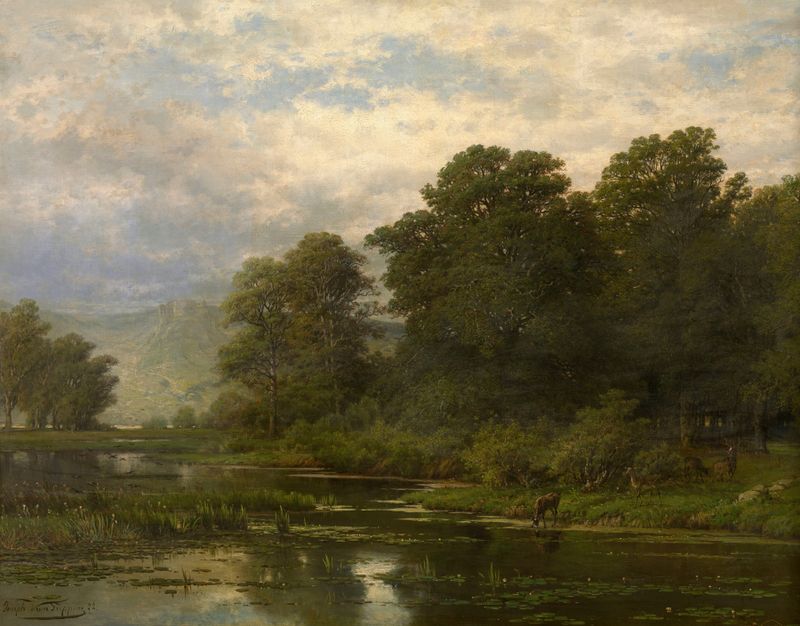
In Brook in the Forest, the viewer is invited to experience awe, as if standing on the precipice of nature’s magnificence. Look to the center of the canvas, where the gentle brook flows serenely, cradled by a lush, verdant landscape. Notice how the dappled sunlight filters through the canopy above, creating an interplay of light and shadow that dances across the water’s surface. The painter’s meticulous technique reveals a rich palette, from the deep greens of the foliage to the soft blues and whites of the flowing water, drawing the eye toward the heart of this tranquil scene. Delve deeper, and you will find subtle tensions within this harmonious composition.
The juxtaposition of the stillness of the brook against the vibrant life of the surrounding forest evokes a sense of serenity entwined with movement. Each reflection and ripple in the water seems to whisper stories of the past, connecting the viewer to the timeless beauty of nature. The presence of the trees, both sturdy and delicate, symbolizes resilience and fragility, reminding us of the delicate balance within the natural world. In 1873, Joseph Van Luppen created this enchanting piece while residing in Europe, a time when the art world was burgeoning with movements that celebrated the beauty of landscapes.
With the influence of Romanticism and its emphasis on nature's sublimity, the artist encapsulated a moment of quiet reflection, revealing his deep connection with the woods that thrived around him. This artwork resonates with the viewer, echoing the sentiment of an artist in awe of the world he so lovingly depicted.