Landscape — History & Facts
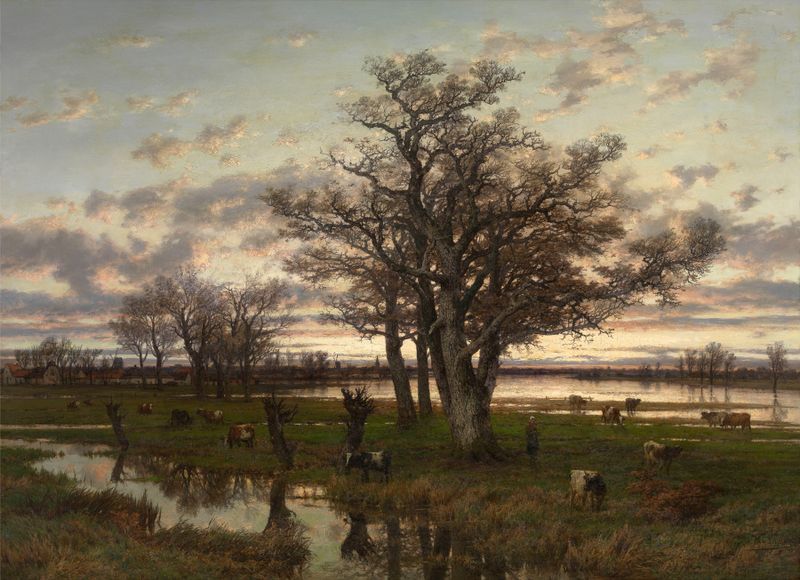
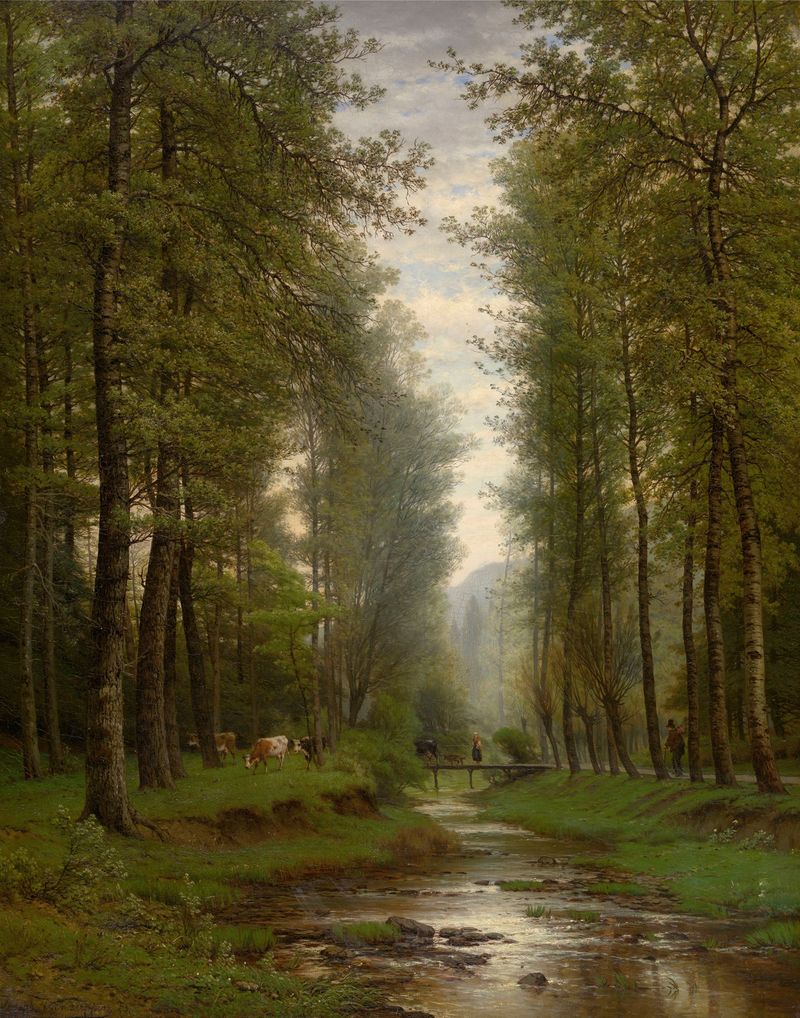
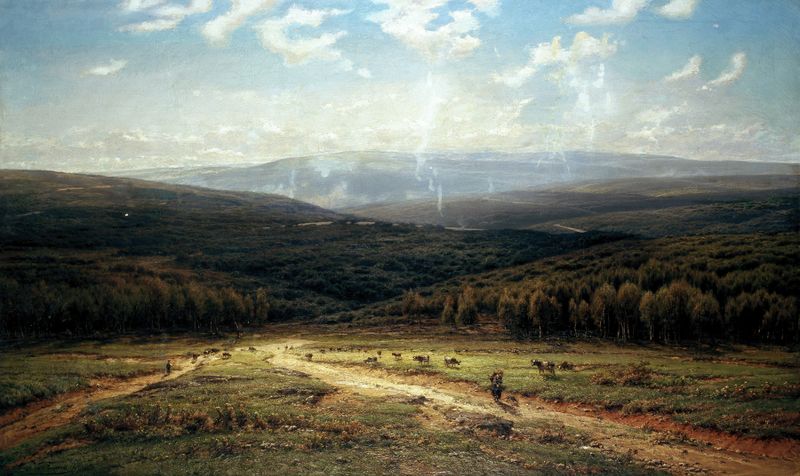
In the stillness of this landscape, silence envelops the viewer like a velvet cloak, whispering secrets of nature’s beauty intertwined with sorrow. Look to the foreground, where a winding path leads you deeper into the scene, drawing your eye toward the horizon. The lush greens of the grass contrast strikingly against the muted blues and grays of the sky, suggesting a world caught between serenity and impending shadow. Notice how the brush strokes vary in texture; Van Luppen’s delicate touch gives life to the leaves while the heavier strokes of the clouds evoke a sense of foreboding, hinting at emotions that lie beneath the surface. Within the interplay of light and shadow, there lies a tension between hope and despair.
The golden hues of sunset illuminate patches of the landscape, but the encroaching darkness in the corners suggests a deeper struggle. Small details, such as the solitary figure in the distance, amplify this dichotomy—evidence of human presence stands quietly amidst nature's grandeur, evoking feelings of isolation and introspection. In 1872, Joseph Van Luppen was establishing his reputation as a landscape painter, deeply influenced by the romantic themes of his era. Working from his studio in Belgium, he sought to capture the essence of the natural world, reflecting both its beauty and complexities.
It was a time when artists were beginning to explore emotional depth in landscape painting, pushing boundaries and inviting viewers to contemplate their inner landscapes alongside the outer.