
Buildings on the East Side of Regent’s Street — History & Facts
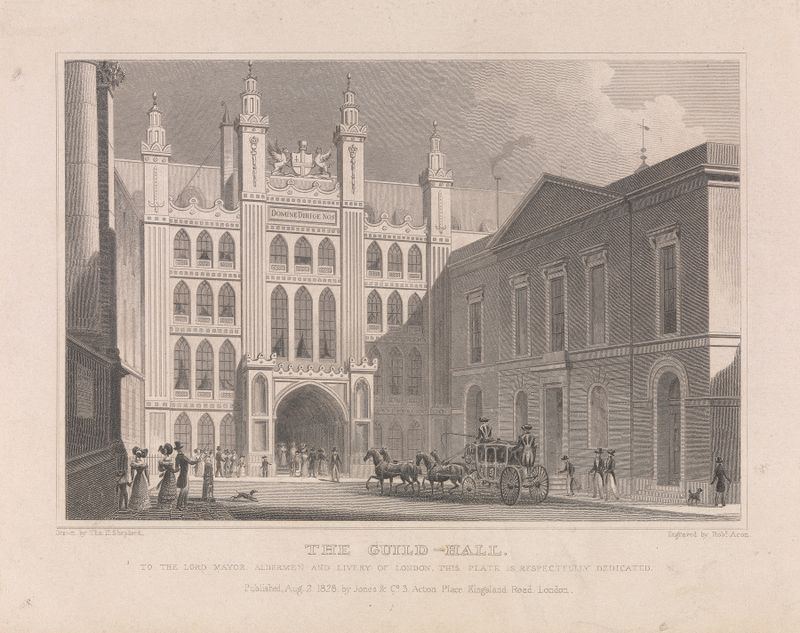
Could beauty survive in a century of chaos? The question lingers as we gaze upon the intricate urban landscape that unfolds in the heart of London. Here, a moment frozen in time invites contemplation of desire—both for architecture and the fleeting essence of life itself. Look to the center of the canvas, where the stately facades of buildings rise proudly against the soft expanse of the sky. The warm hues of ochre and terracotta contrast beautifully with the cool blues and grays, evoking a sense of harmony amidst the bustling city.
Notice how light dances across the windows, hinting at the lives within, while the meticulously rendered details of the brickwork reflect Acon’s technical mastery. Your eyes are compelled to wander along the edges, where the delicate interplay of shadow and light weaves a narrative just outside the frame. Yet, beneath the surface of this charming scene lies a complex interplay of aspirations and disillusionment. The surrounding chaos of urban life is palpable, as the figures meandering through the streets appear both connected to and isolated from their surroundings.
Each passerby embodies a longing for something greater, a desire to transcend the mundane—a reminder that beauty often thrives amid tumult. The vibrant colors and lively details contrast with the underlying struggles of a society in transition, highlighting the duality of progress and tradition. In 1828, during his time in London, Robert Acon captured the spirit of a city in flux. The Romantic movement was gaining momentum, as artists sought to express emotions and the sublime in their works.
Amidst the industrial revolution's rise, Acon’s focus on architecture reflected both a celebration of beauty and a yearning for connection in a rapidly changing world, as he navigated the tensions between urbanization and the human experience.
More Artworks by Robert Acon
Browse all →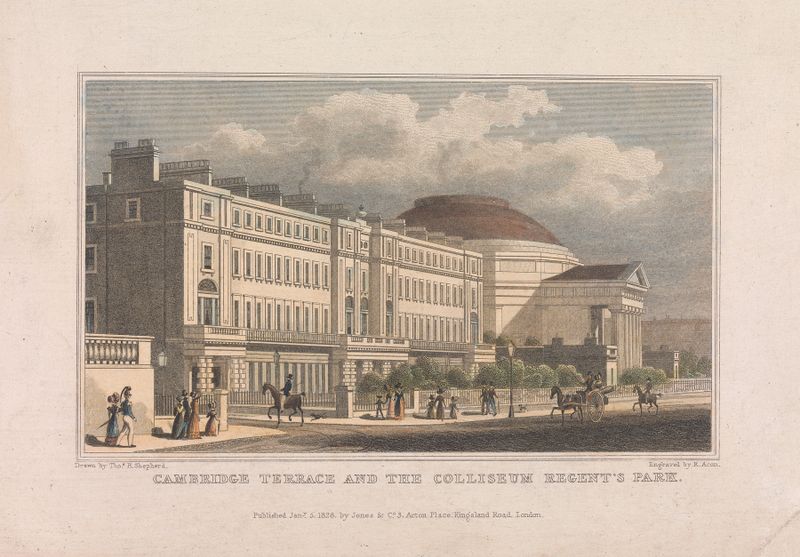
More Architecture Art
Browse all →
The statue of Liberty
Frédéric Auguste Bartholdi

View of Houses in Delft, Known as ‘The Little Street’
Johannes Vermeer

View of Houses in Delft, Known as ‘The Little Street’
Johannes Vermeer

The Cathedral in Rouen. The portal, Grey Weather
Claude Monet

The yellow house
Vincent van Gogh

The Church in Auvers-sur-Oise, View from the Chevet
Vincent van Gogh