Burgruine Schönecken in der Eifel — History & Facts
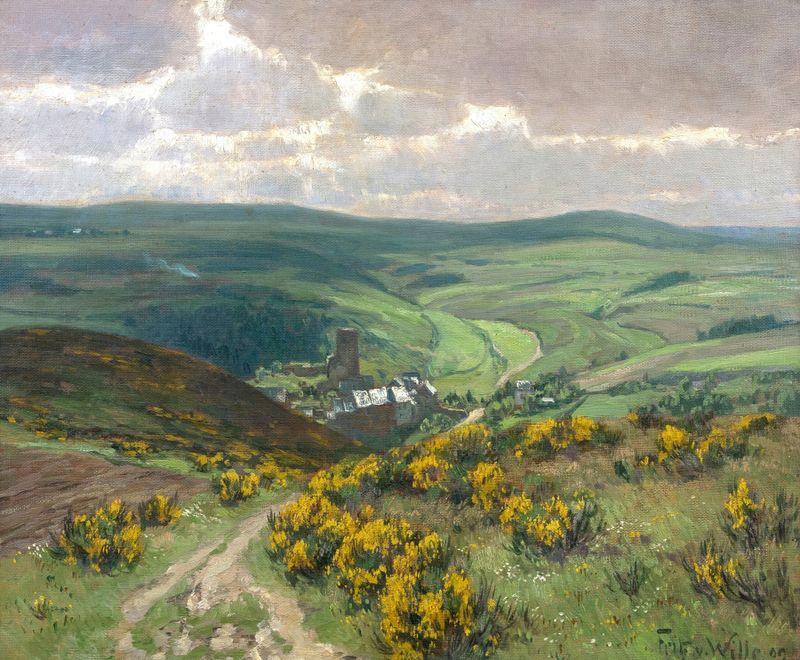
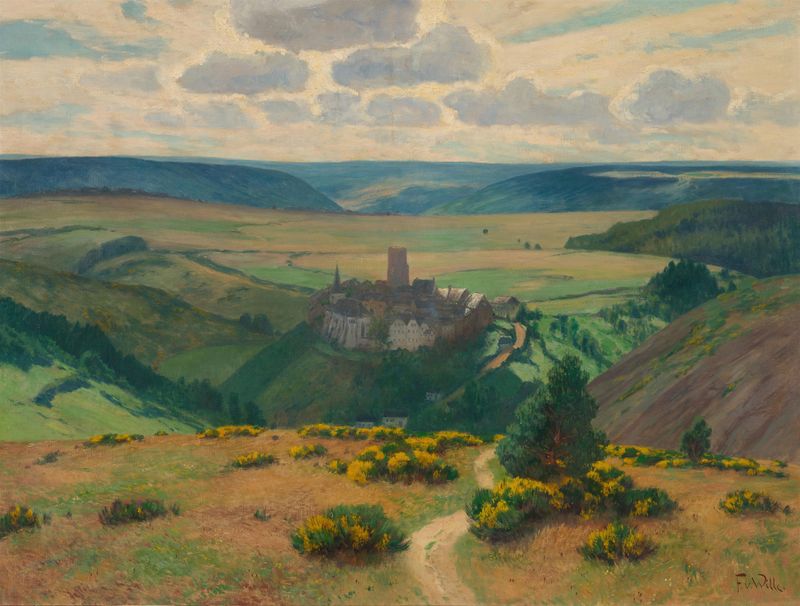
Fear lurks in the shadows, waiting to be unveiled in the quiet recesses of the mind. Look to the left at the imposing silhouette of the ruined castle, its crumbling stones standing resolute against the canvas. The muted greens and earthy browns create a sense of decay, while a soft mist envelops the landscape, shrouding it in mystery. Notice how the light filters through the trees, casting delicate patterns on the moss-covered ground, contrasting with the sturdy structure of the fortress.
This interplay of light and shadow invites a sense of contemplation about what lies hidden within the ruins. The artist captures the tension between the vibrant life of nature and the haunting remnants of human history. The juxtaposition of the lush foliage against the starkness of the castle suggests a narrative of survival amidst ruin. Each weathered stone seems to whisper tales of loss and memory, evoking both reverence and fear.
The delicate brushstrokes hint at the passage of time, emphasizing the impermanence of both nature and human endeavors. Fritz Von Wille painted Burgruine Schönecken in der Eifel in 1907 while living in Germany. At that time, he was exploring themes of landscape and history, often drawing inspiration from the romantic ruins dotted throughout the Eifel region. This period marked a growing movement towards expressing emotional depth through the natural world, reflecting both personal and societal transitions occurring in early 20th-century Europe.