Ginsterblüte bei Reifferscheid — History & Facts
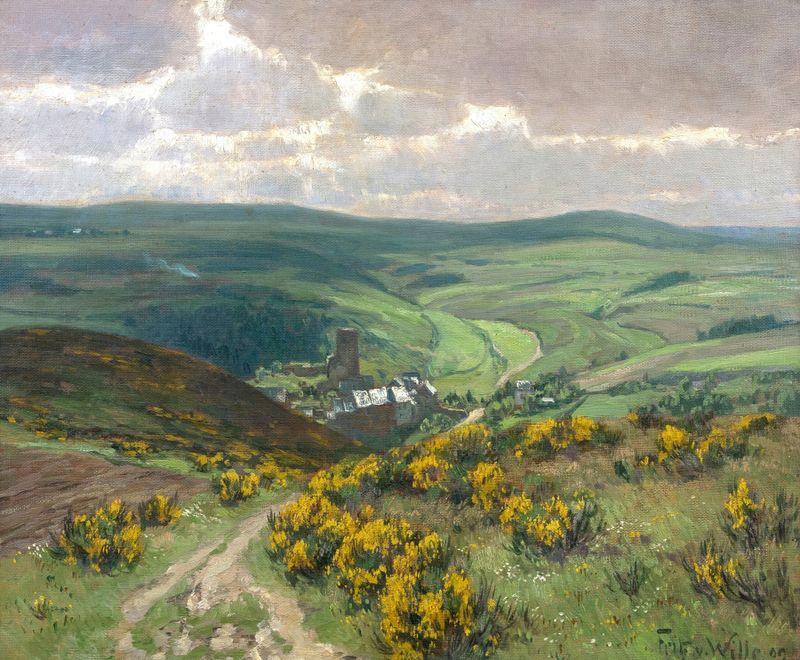
Did the painter know this moment would outlive them? The ephemeral beauty of nature, captured in vibrant hues, begs us to question the permanence of our fleeting experiences. Focus on the delicate interplay of colors as you first look to the foreground, where wildflowers burst forth with a joyful vibrancy, their yellows and greens a celebration of life. Notice how the brushstrokes radiate energy and movement, suggesting a gentle breeze that stirs these blossoms into a dance. The soft, dappled light falls across the scene, illuminating patches of ground and casting shadows that lend depth, inviting viewers to step closer and breathe in the freshness encapsulated within the canvas. Hidden within this idyllic scene are themes of transience and renewal.
The wildflowers symbolize resilience, thriving in the midst of uncertainty, while the subtle shifts of light evoke the passage of time — moments forever captured yet destined to fade. This tension between the beautiful and the ephemeral is mirrored in the surrounding landscape, offering both solace and a reminder of nature's cycles, pulling us into contemplation of our own fleeting existence. Created during the early 20th century, Ginsterblüte bei Reifferscheid reflects Fritz Von Wille's engagement with the natural world amidst a period of artistic experimentation in Germany. During these years, he sought to convey emotional resonance through vivid landscapes, using color and form to evoke the beauty and transience of life.
His work emerged from a time when many artists were challenging traditional conventions, exploring deeper connections with nature and the human experience.