
Ginsterblüte in der Eifel — History & Facts
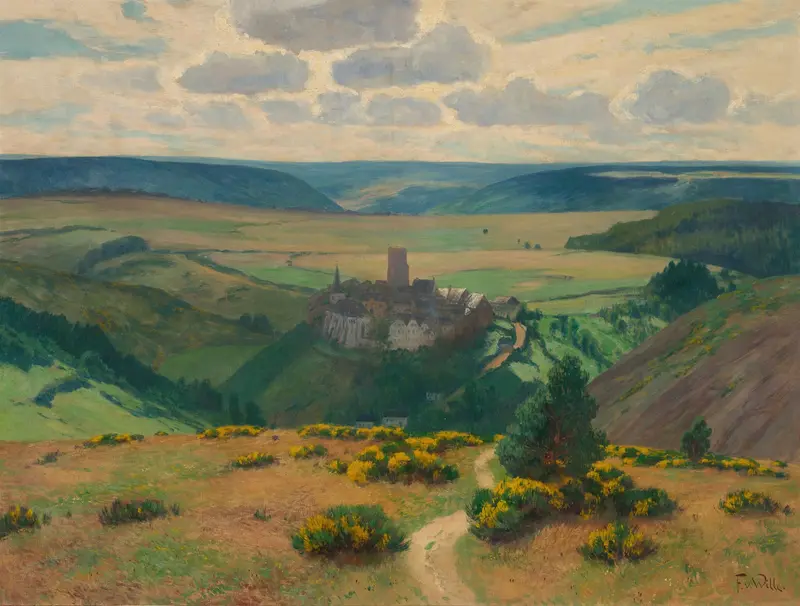
In the realm of art, the essence of rebirth captures the soul, offering a glimpse of nature’s resilient spirit. Focus on the vibrant yellows and greens that burst forth from the canvas, transporting you to a sunlit meadow. Notice how the delicate brushstrokes evoke the soft sway of ginster blossoms under the gentle caress of a spring breeze. The light dances across the scene, creating a radiant contrast that highlights the freshness of new life against the tranquil backdrop of the Eifel hills. Delve deeper into the lush composition, where the juxtaposition of the vivid flowers against the earthy tones hints at renewal after dormancy.
The artist’s choice of color not only brings warmth but also suggests an emotional interplay between joy and nostalgia, as if nature is celebrating its own resurgence. Each flower, meticulously painted, becomes a symbol of hope, whispering stories of survival and growth against the odds. Fritz Von Wille painted this work in 1909 while residing in Germany, a period marked by a resurgence of interest in landscape painting. At this time, he was exploring the beauty of his native Eifel region, drawing inspiration from its natural splendor.
This phase in his career reflects a shift towards the vibrant expressions of nature that would characterize much of his later work, mirroring the broader artistic movements of the early 20th century.
More Artworks by Fritz Von Wille
More Landscape Art

The Starry Night
Vincent van Gogh

View of Delft
Johannes Vermeer

Water Lilies
Claude Monet

The Grand Canal, Venice, looking north-west from the Ca' Corner to the Ca' Contarini degli Scrigni, with the campanile of Santa Maria della Carità
Canaletto

Windsor Castle
Canaletto

The Grand Canal looking North-East from the Palazzo Dolfin-Manin to the Rialto Bridge
Canaletto