California Nocturne — History & Facts
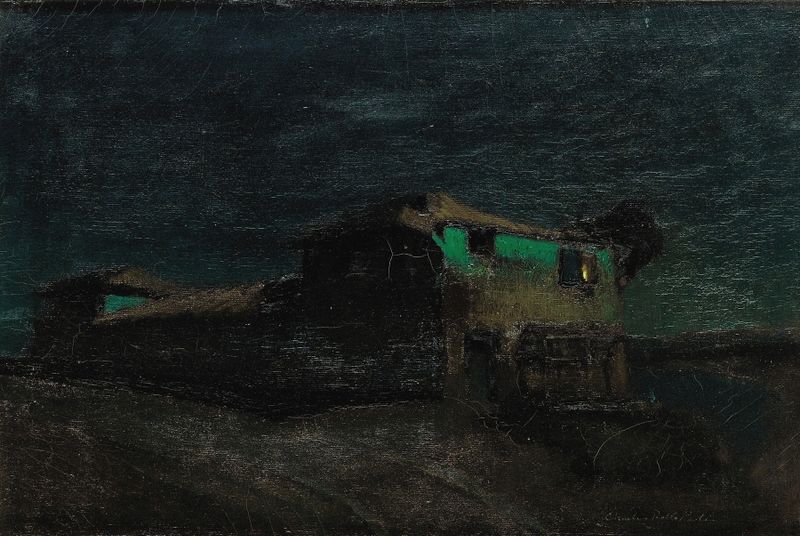
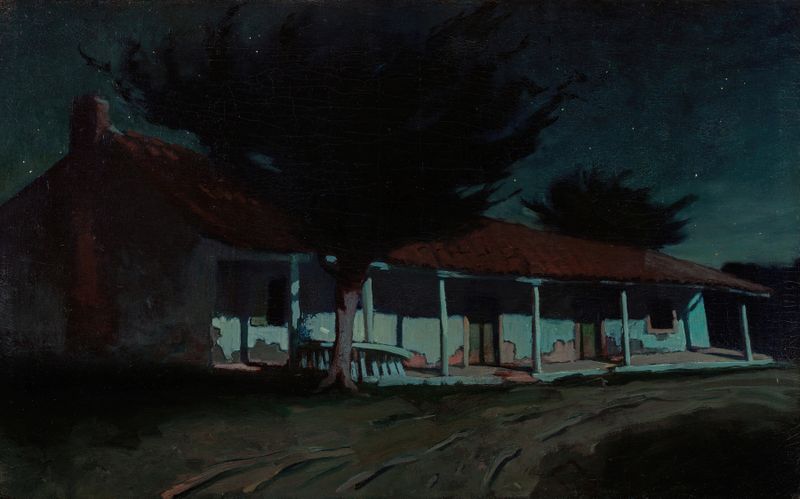
Could beauty survive in a century of chaos? In a world swirling with uncertainty, memories of serene landscapes become our refuge, a quiet reminder of nature's grace amidst turmoil. Focus first on the luminous sky, where deep blues and soft indigos meld seamlessly into one another. The light of the moon casts a silvery glow upon the tranquil waters, highlighting gentle ripples that seem to pulse with life. Look closely at the silhouettes of trees lining the shore; their dark forms provide a striking contrast against the illuminated background, evoking a sense of stillness and calmness.
The delicate brushwork invites you to lose yourself in the serene atmosphere, allowing an intimate connection with the peacefulness of the scene. Yet, beneath this tranquil veneer lies an intricate dialogue of memory and place. The glowing moon, a symbol of fleeting time, hints at the transience of beauty, suggesting that even the most idyllic moments are ephemeral. The interplay of light and shadow illustrates a tension between hope and melancholy, as the viewer is reminded that serenity often coexists with underlying chaos.
This piece encapsulates a longing for connection to nature, a yearning for moments that transcend the noise of life. Charles Rollo Peters created this evocative work during a period of artistic exploration in early 20th century America, when artists began turning their gaze toward the beauty of the natural world. Living in California, he was influenced by the unique landscapes and atmospheric phenomena of the region, reflecting a shift in the art world toward impressionism and the personal interpretation of light and color. This painting stands as both a testament to his mastery and a tribute to the enduring power of nature in a time marked by change.