California Spring Landscape — History & Facts
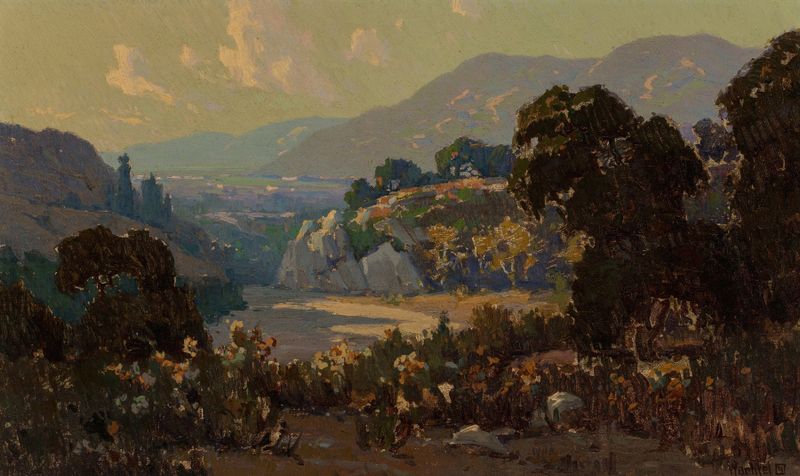
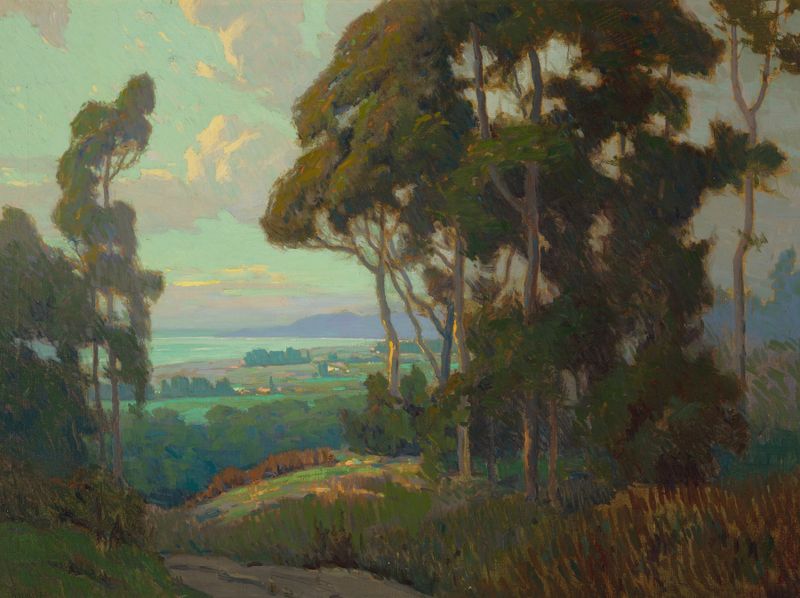
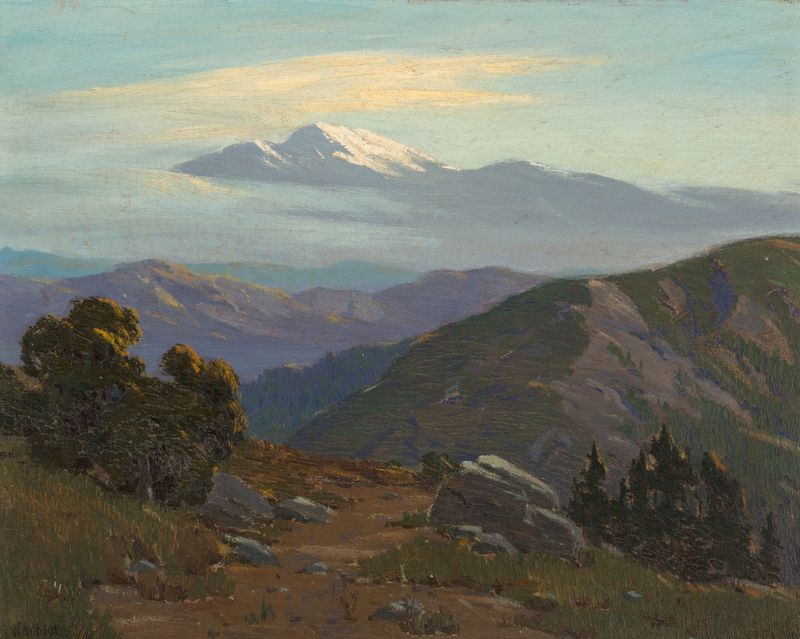
This thought lingers as you gaze at the vibrant hues of a spring landscape, evoking both serenity and unsettling undertones. Look to the left at the rolling hills, where golden sunlight bathes the wildflowers, illuminating their delicate petals with an ethereal glow. Notice how the artist skillfully blends warm yellows and soft greens, creating a sense of lush vitality that draws you in. The brushstrokes are both energetic and controlled, suggesting a harmony between nature’s exuberance and the artist’s thoughtful restraint. Yet, as you delve deeper into the composition, an anxiety creeps in between the radiant colors.
The surrounding shadows, lurking subtly in the underbrush, hint at a fragility that contrasts with the otherwise idyllic setting. Here, the juxtaposition of light and dark not only captures the fleeting beauty of spring but also evokes the underlying fears of impermanence and loss, turning a picturesque scene into a complex emotional landscape. In 1920, Elmer Wachtel painted this work during a time when the art world was gradually transitioning from Impressionism to a new era of modernism. Living in California amidst the flourishing arts community, he found inspiration in the state's natural beauty, yet also faced the anxieties of a world reeling from the impacts of World War I.
This duality of hope and fear permeates his work, revealing a nuanced perspective on nature that speaks to both joy and the vulnerability inherent in life.