The Road to the Sea — History & Facts
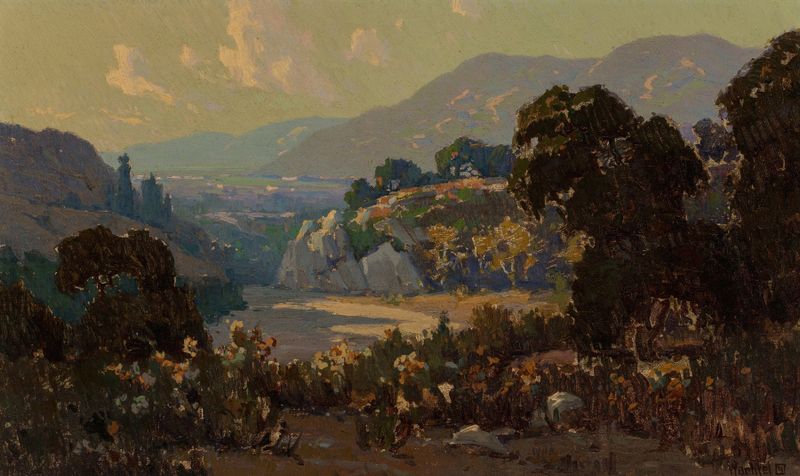
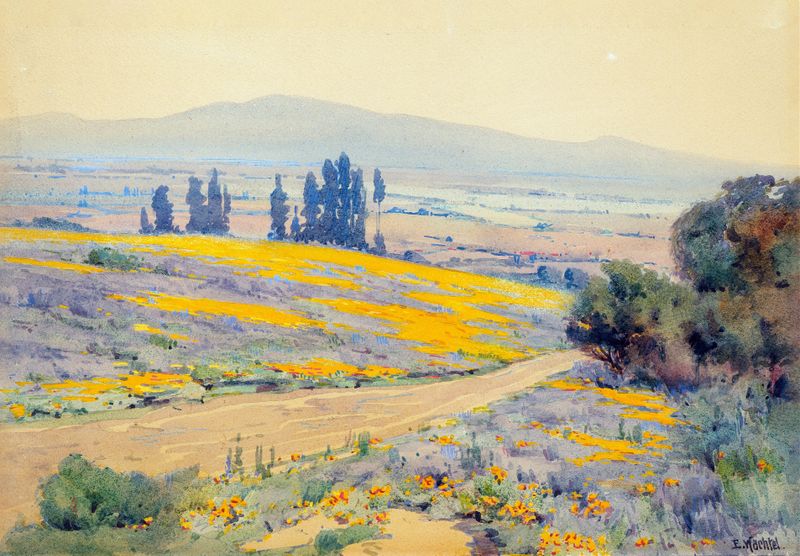
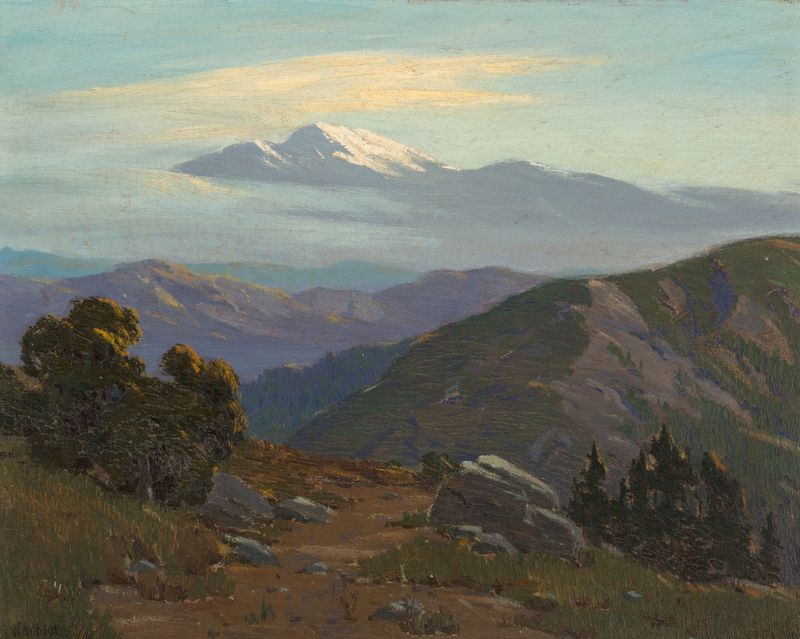
In the dance of light upon the canvas, Elmer Wachtel transforms the tumult of nature into a serene pathway, inviting us to journey along. Look to the foreground where a winding road, kissed by soft sunlight, draws your eye into the depths of the scene. Notice how the light spills over the verdant foliage, casting delicate shadows that hint at the emotional weight behind this tranquil moment. The pallette is a harmonious blend of greens and blues, reflecting the vibrancy of the landscape while creating a soothing balance that lulls the viewer into contemplation. Amidst this pastoral serenity lies the tension of the unseen—perhaps a sense of longing for the sea that beckons just beyond the horizon.
The juxtaposition of the bustling foliage and the quiet road suggests a journey both physical and spiritual, a passage from the familiar to the unknown. Each brushstroke resonates with a silent promise of discovery, coaxing emotions that linger between adventure and peace. Wachtel painted this piece at a time when Impressionism was blooming, capturing fleeting moments of beauty in the early 20th century. The artist, influenced by the natural world around him, sought to express the interplay of light and landscape during his time in California.
This work reflects both his personal exploration of light and his engagement with the artistic shift that celebrated the ephemeral nature of experience.