Campagnalandschaft — History & Facts
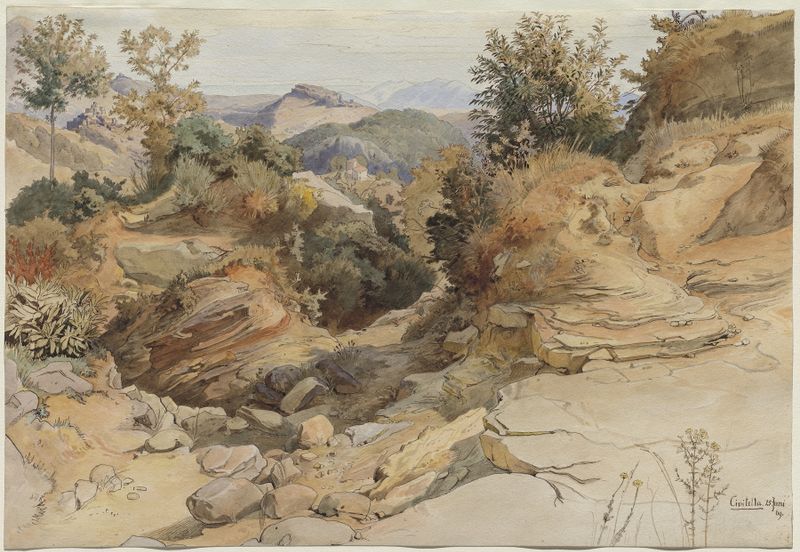
What if silence could speak through light? In Campagnalandschaft, hushed whispers of nature invite a profound rebirth, a moment suspended in time where the landscape breathes new life. Look to the horizon, where the soft gradients of greens and browns converge, inviting the eye to wander. Notice how the delicate brushstrokes create a sense of movement in the grasses as they sway under the gentle caress of a warm breeze. The play of light filtering through the clouds casts a golden hue over the scene, emphasizing the tranquility and vibrancy that coexist within this pastoral setting. Delve deeper into the painting, and you'll uncover emotional tensions embodied in the contrasting elements.
The serene land is juxtaposed with the heavy, looming clouds that hint at a forthcoming storm, emblematic of life's unpredictable nature. The untouched fields signify potential, a promise of growth and renewal, while the fleeting shadows evoke a transient beauty that underscores the fragility of existence itself. Victor Paul Mohn painted Campagnalandschaft during the late 1860s, a period marked by a growing interest in naturalism and landscape painting. Living in Germany, he was influenced by the Romantic movement, which sought to capture emotional truths in the beauty of the world.
The piece reflects his exploration of serene landscapes, representing not just a picturesque view, but a deeper connection to the cycles of nature and the complexities of life during a time of significant change in the art world.