Rocks and Oaks in the Serpentara — History & Facts
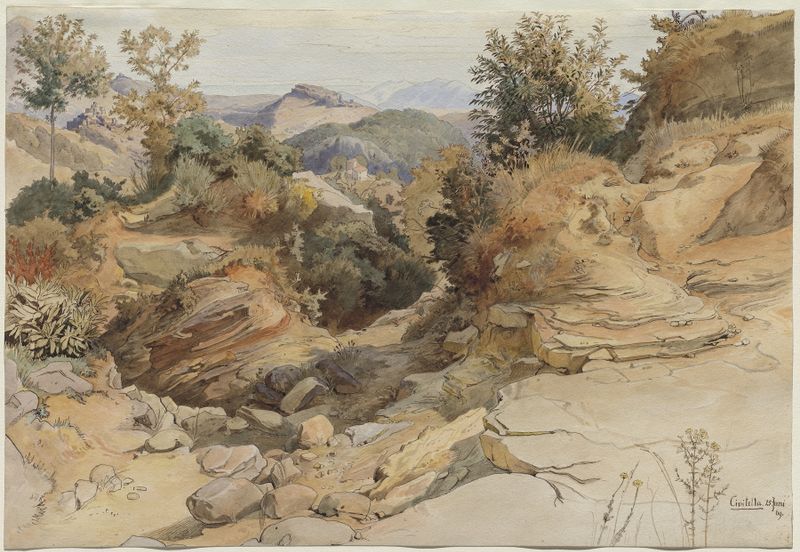
This artwork invites us to ponder the delicate equilibrium between nature and artistry, where every element resides in harmonious balance. Look to the left, where the ancient oaks stand tall, their gnarled branches reaching outward, a testament to endurance and strength. The artist employs a rich palette of greens and earthy browns, creating a sense of life while the dappled sunlight filters through the foliage, casting playful shadows on the ground. Focus on the rocks beneath the oaks; they are textured and rugged, grounding the composition and providing a counterpoint to the fluidity of the trees.
The interplay of light and shadow draws the eye, inviting us to explore the intricate details of bark and stone. This work embodies contrasts—strength against fragility, permanence against transience. The rocks, steadfast and immovable, juxtapose the fluidity of the trees swaying gently in the breeze. The layers of foliage create a visual symphony of colors, yet it is the stillness of the rocks that evokes a sense of quiet contemplation, revealing nature’s duality.
The careful placement of each element signifies a deeper exploration of balance in the natural world and within ourselves. In 1869, when this piece was created, Mohn was immersed in the burgeoning movement of the French landscape tradition. Living in France during a time of sociopolitical upheaval, he was influenced by the Romantic and Realist movements, blending their ideals to create his own vision of nature. This period marked a shift towards capturing the sublime aspects of the natural world, and Rocks and Oaks in the Serpentara stands as a testament to that transformative era.