The Sabine Hills and Rocca Santo Stefano, Seen from Civitella — History & Facts
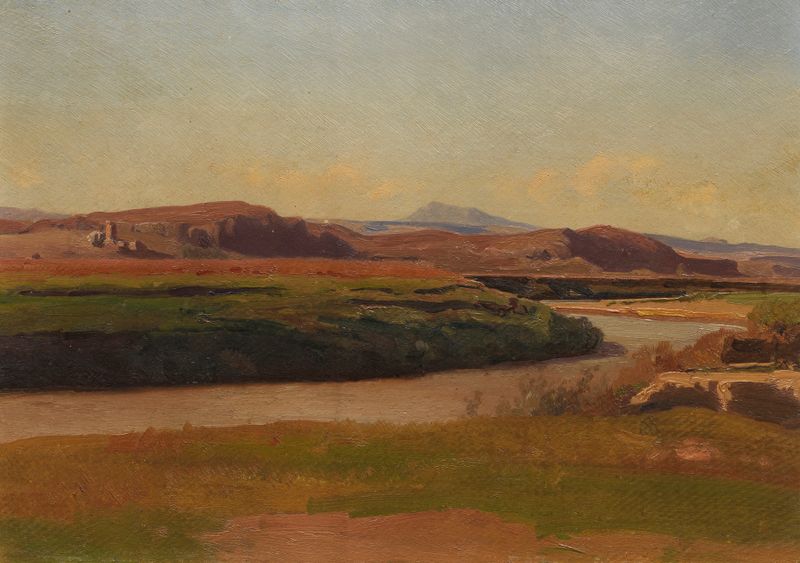
In the tranquil embrace of the Sabine Hills, a hidden narrative unfolds—one that whispers through the vibrant greens and earthy browns of a pastoral landscape, inviting contemplation and reflection. Look to the foreground, where rolling hills cascade gently beneath a delicate sky. The warm palette of ochres and soft greens is interspersed with dappled shadows that reveal the artist’s mastery of light. Notice how the distant mountains loom with an ethereal presence, their muted hues contrasting with the lively brushwork in the fields below.
The interplay between the sun-drenched land and the cool, shadowy recesses creates a dialogue that draws the viewer deeper into the scene, fostering an intimate connection with the landscape. The composition encapsulates a sense of peace, yet it teeters on the edge of nostalgia and loss. The gentle rise and fall of the hills evoke the passage of time, a reminder of the fleeting nature of beauty as it changes with the seasons. The lone structure of Rocca Santo Stefano stands resolute, a silent sentinel of history amidst the ever-shifting landscape.
Here, the artist captures not just the physicality of the hills but also the emotional weight they carry—each brushstroke a meditation on memory, permanence, and the truths entwined within nature. In 1869, while living in Italy, Victor Paul Mohn painted this piece during a period when Romanticism was giving way to more Impressionistic techniques in the art world. Mohn's works reflected a deepening fascination with capturing the effects of light and color, influenced by the natural beauty surrounding him. This painting exemplifies his dedication to representing the serene landscapes of the Sabine region, reflecting both personal and universal themes of tranquility and the passage of time.