Campement — History & Facts
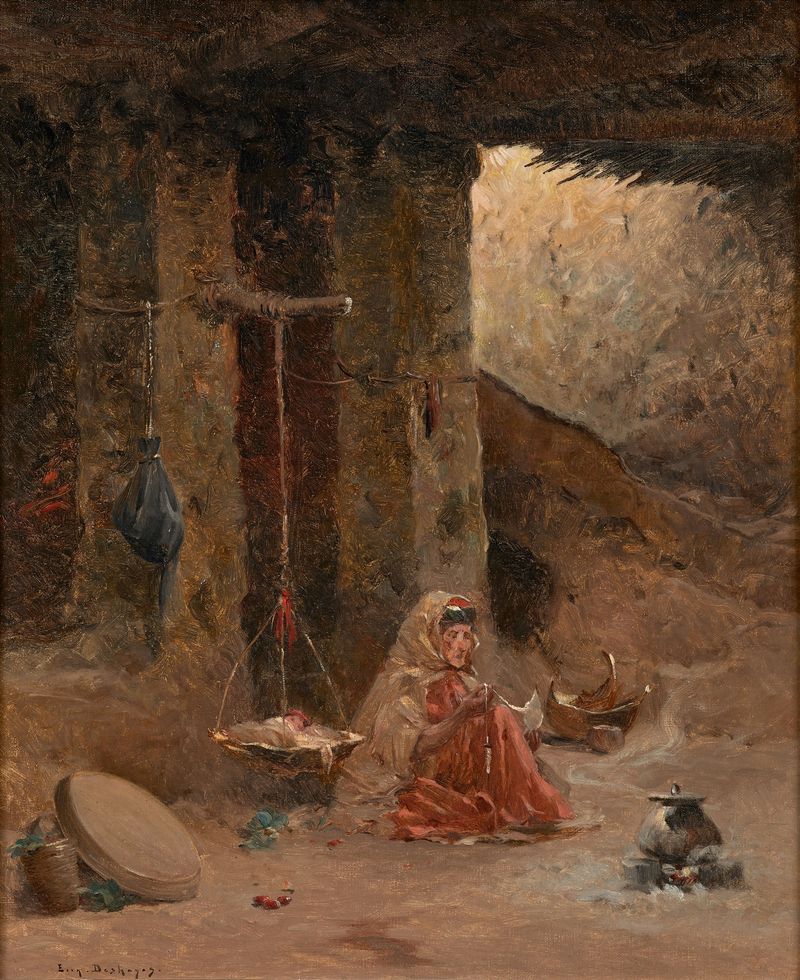
Could a single brushstroke hold eternity? In the delicate interplay of light and shadow, fear manifests, whispering beneath the surface of color. Look to the left at the figures encamped, their postures conveying a palpable tension that speaks volumes. The soft, muted palette wraps them in an air of uncertainty, while the interplay of light grazing their faces evokes the flicker of hope amidst anxiety. Notice how the ragged edges of the canvas mirror the disarray of their thoughts, as if each stroke holds their collective unease and fragile dreams. As you delve deeper, observe the subtle contrasts between the warmth of the campfire and the chilling dark of the encroaching night.
This juxtaposition embodies an emotional dichotomy; it’s a refuge of camaraderie set against a backdrop of impending isolation. Each detail—fingers clutching tightly to a shared blanket or the distant, uncertain horizon—whispers of a fear that lingers in the heart, suggesting that safety is only temporary, and the world outside remains unforgiving. Eugène Deshayes created Campement during a period marked by artistic exploration and personal introspection. The exact date of this piece remains elusive, but it stands as a testament to the tensions within the artist’s life and the broader art world, navigating the transition from Romanticism to a more introspective realism.
In this moment, Deshayes encapsulated human vulnerability, reflecting both his own uncertainties and the universal fears of his time.