Romantic Landscape with Fountain — History & Facts
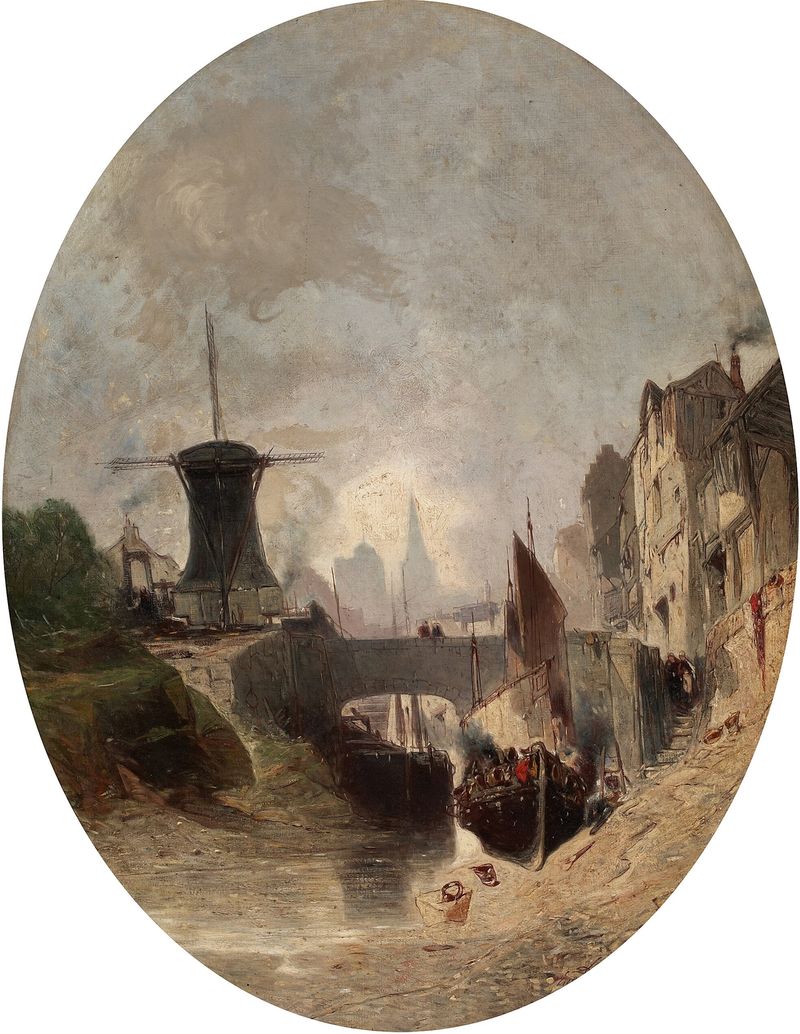
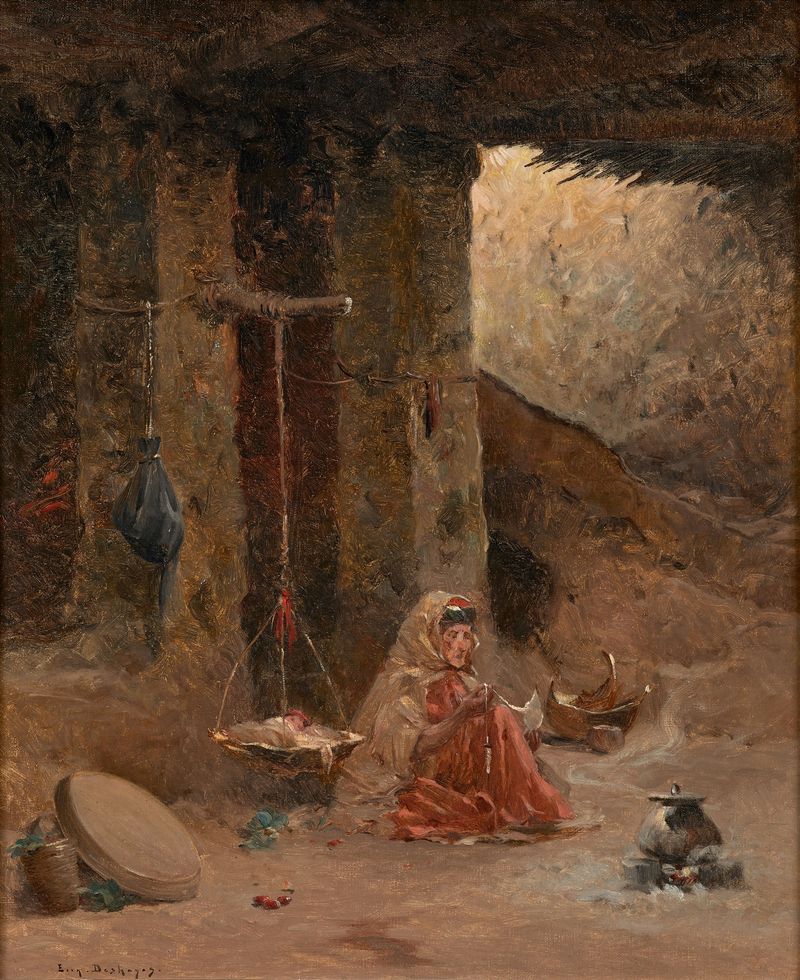
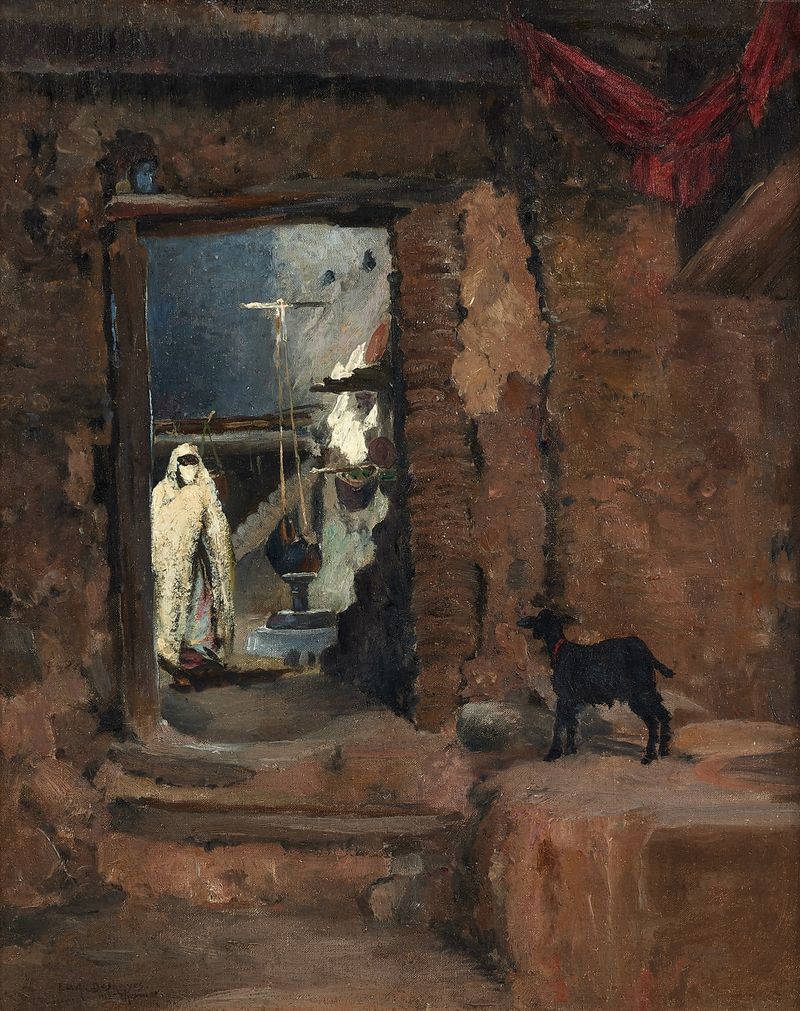
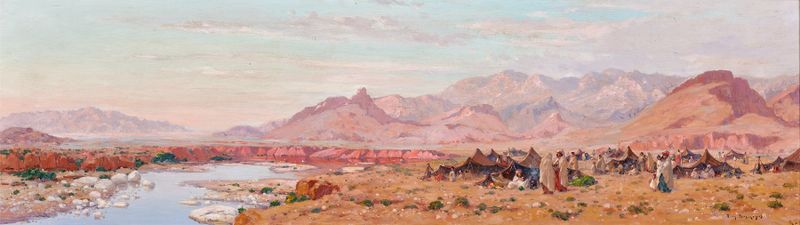
Is this a mirror — or a memory? In Romantic Landscape with Fountain, the boundary between reality and dream blurs, inviting reflection on the nature of truth in art and life. Begin by looking to the left, where a tranquil fountain spills its crystalline waters, a source of serenity amidst the verdant landscape. Notice how Deshayes has captured the softness of the light, infusing the scene with a warm, golden hue that dances across the trees and ripples off the water’s surface. The gentle arch of the fountain's spray creates a rhythmic movement, contrasting beautifully with the stillness of the surrounding nature.
The palette, a harmonious blend of greens and earth tones, evokes a sense of nostalgia, drawing the viewer deeper into this enchanting moment. As you explore further, consider the interplay of solitude and companionship in the painting. The solitary figures, seemingly lost in contemplation, suggest an intimate connection with the landscape, yet their distance from one another hints at unspoken tensions and secrets. The reflections in the water serve as a metaphor for memory, blurring the lines between past and present, reality and illusion, challenging the notion of what it means to truly see.
This duality speaks to the viewer's own experiences and the complexities of personal truths. In 1873, Deshayes was immersed in the Romantic movement, painting in a time when artists sought to express emotions and transcendence through nature. Living in France, he was influenced by the changing societal dynamics and the burgeoning art scene. This piece reflects his mastery of capturing an emotional landscape, emphasizing connection while inviting contemplation — a hallmark of his artistic legacy.