
Campiello s. Maddalena — History & Facts
Did the painter know this moment would outlive them? The essence of nostalgia weaves through Campiello s. Maddalena, capturing a fleeting glimpse of life suspended in time. It is a window into a world where every detail invites reflection, drawing viewers into a shared past that feels both tender and haunting. Look to the left at the shadowy figures huddled beneath the archway, their silhouettes softened by the golden hues of late afternoon light.
Notice how the artist skillfully balances the deep browns and warm yellows, creating a sense of warmth that contrasts with the coolness of the cobblestone path. Each brushstroke dances between realism and impressionism, lending the scene a vibrant, almost ethereal quality, as though the air itself holds stories yet untold. In the background, the subtle interplay between light and shadow evokes a sense of longing, as if the viewer craves to step into this scene. The distant buildings stand solid yet poignant, their facades worn with history, while the lively gestures of the figures suggest an ongoing narrative of connection and separation.
The artist's careful arrangement compels one to ponder the lives of those who once walked this path, anchoring the painting in a bittersweet contemplation of what remains and what has faded. Jan Bohuszewicz painted Campiello s. Maddalena in 1923 while living in Venice, a city steeped in artistic innovation and historical turmoil. During this period, the art world was grappling with the aftermath of World War I, which influenced many artists to reflect on themes of memory and identity.
Bohuszewicz, navigating the vibrancy of Venice and its complex heritage, infused his work with a sense of nostalgia, capturing the essence of a moment that resonates beyond his own time.
More Artworks by Jan Bohuszewicz
Browse all →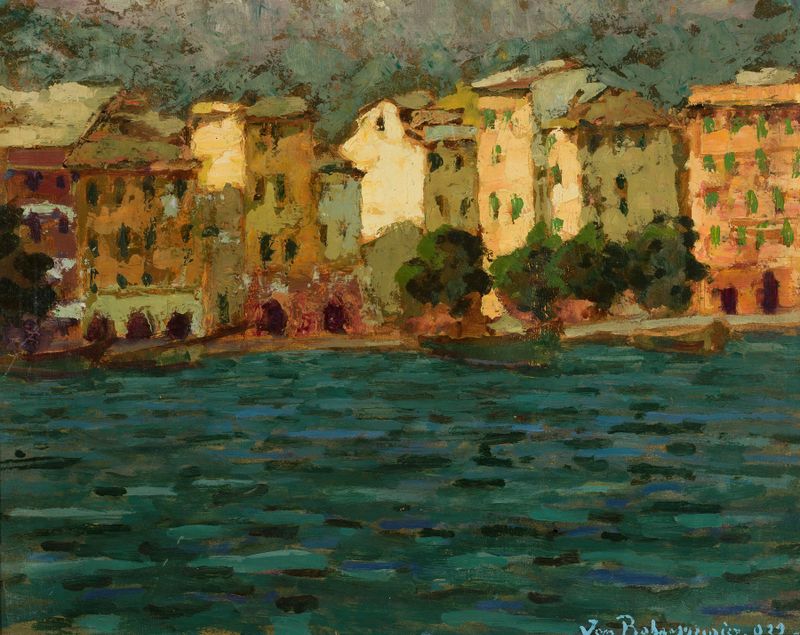
Port in the sunshine
Jan Bohuszewicz

Golden autumn
Jan Bohuszewicz

Larch Trees by the Lake in Dobiacco
Jan Bohuszewicz
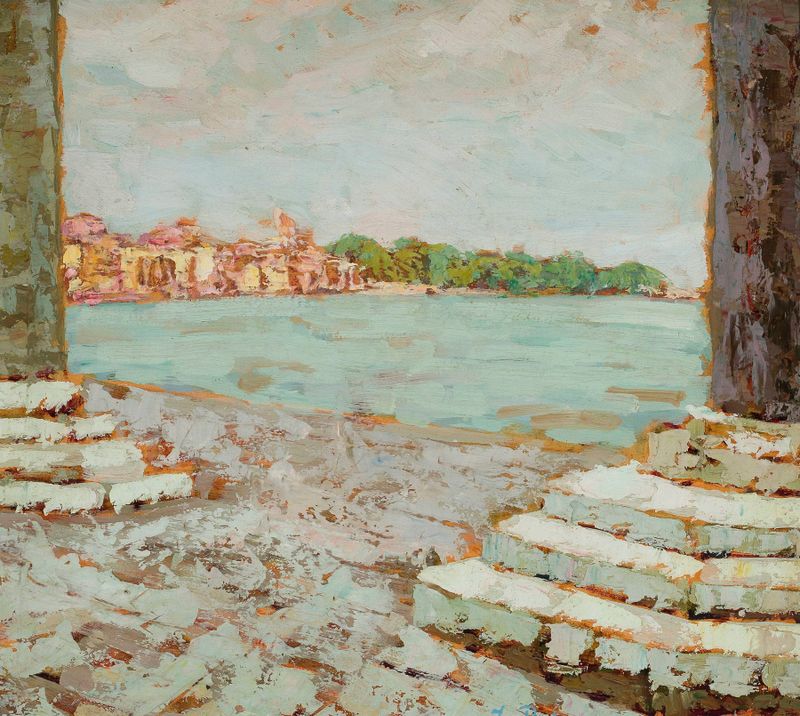
View from Piazzetta in Venice
Jan Bohuszewicz

Polish cottages
Jan Bohuszewicz
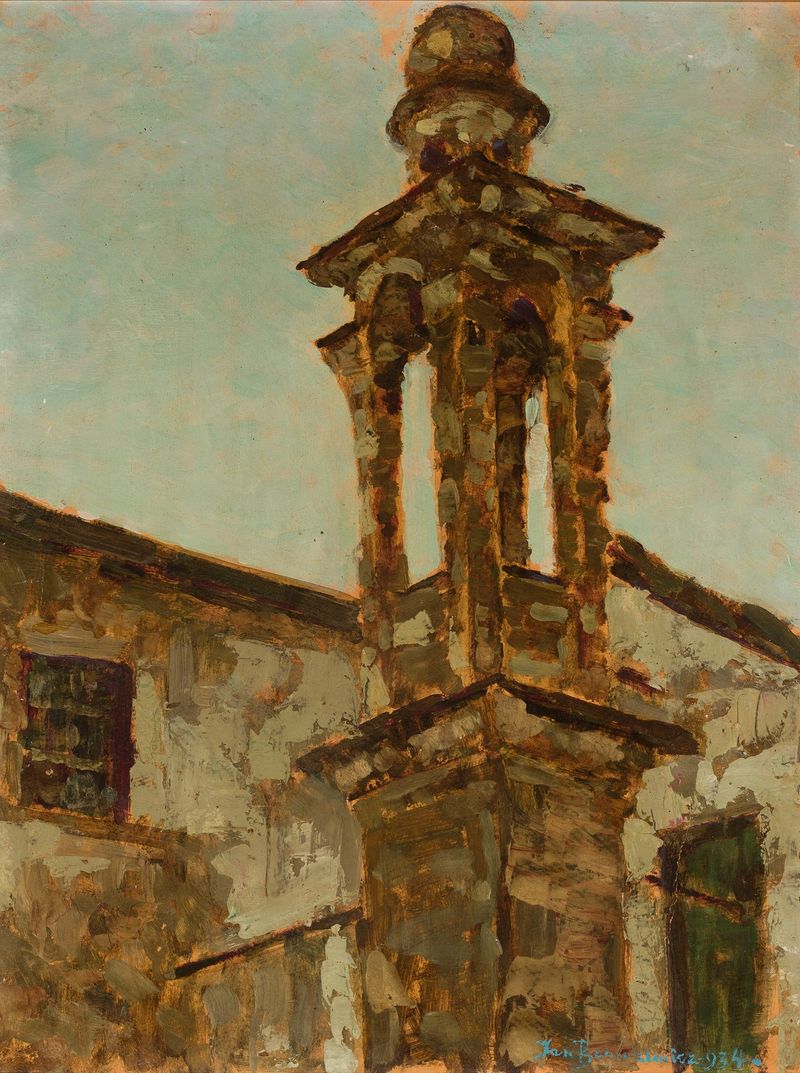
Old bell-tower
Jan Bohuszewicz
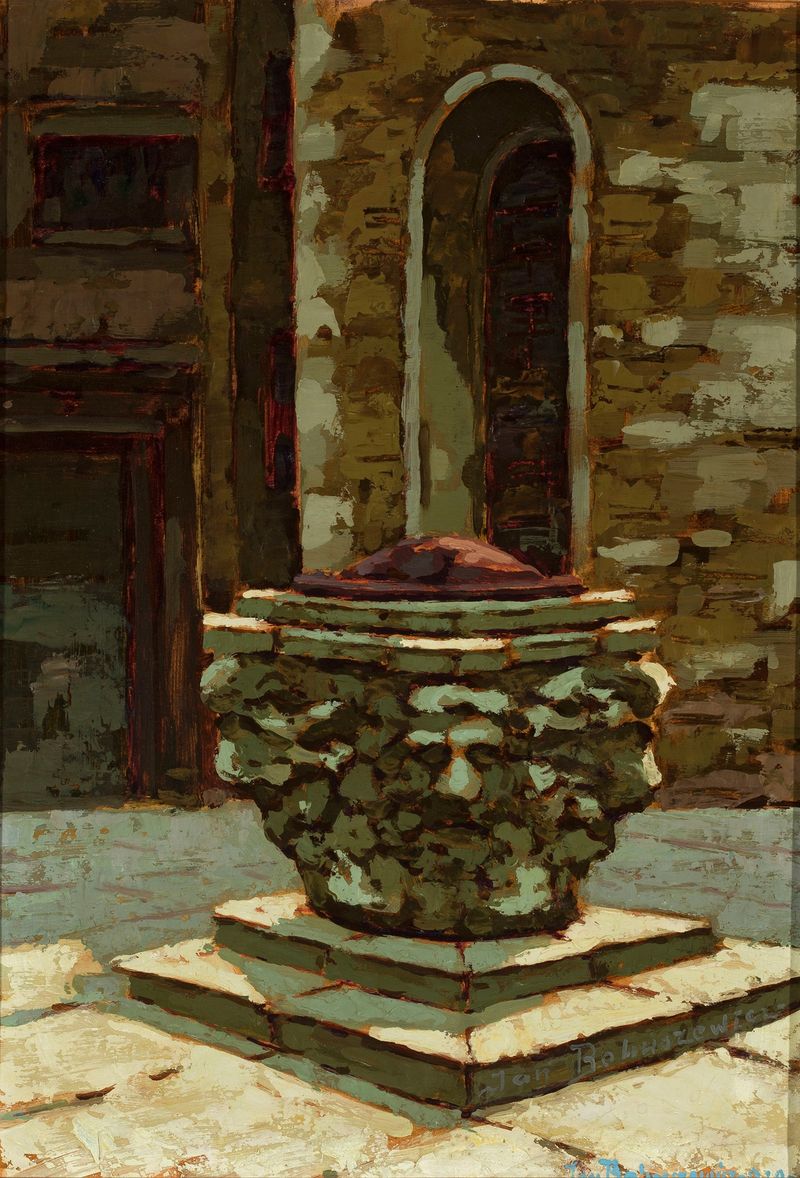
Small well in Venice in the sunshine
Jan Bohuszewicz
Old house with a porch
Jan Bohuszewicz

Shells
Jan Bohuszewicz
Platanus Trees at a Monastery Gate
Jan Bohuszewicz





