
Canal du Loing à Saint-Mammès — History & Facts
Did the painter know this moment would outlive them? In a world where time erodes all, the fleeting beauty of a tranquil canal scene captures a delicate balance between permanence and decay. Look to the left at the serene waters of the Canal du Loing, where reflections ripple softly beneath the weight of overhanging branches. The muted palette of greens and blues, infused with gentle splashes of sunlight, draws you into a harmonious embrace. Notice how the diagonal lines of the trees guide your gaze towards the horizon, creating a sense of depth and inviting exploration of the quiet landscape.
Here, Sisley's brushwork evokes a delicate impression of texture, allowing the viewer to almost feel the cool air and hear the whispers of nature. Yet, beneath this serene surface lies an undercurrent of tension. The aging trees, their gnarled branches stretching toward the heavens, speak of time's relentless passage, while the stillness of the water hints at the potential for decay lurking just beneath. The play of light and shadow reveals an ever-present dichotomy; beauty and transience coexist in Sisley’s world, illustrating the artist’s profound understanding of nature’s cycles.
The composition suggests a moment captured, yet also a reminder that all is ephemeral. During the years 1885-1886, Sisley was deeply immersed in the Impressionist movement while living in France, struggling with personal financial difficulties. This period was marked by a quest for authenticity in capturing fleeting moments, contrasting the tumultuous backdrop of modernity’s encroachment on nature. In Canal du Loing à Saint-Mammès, he paints not just a scene, but a testament to a transient beauty—one susceptible to the inevitable passage of time.
More Artworks by Alfred Sisley
Browse all →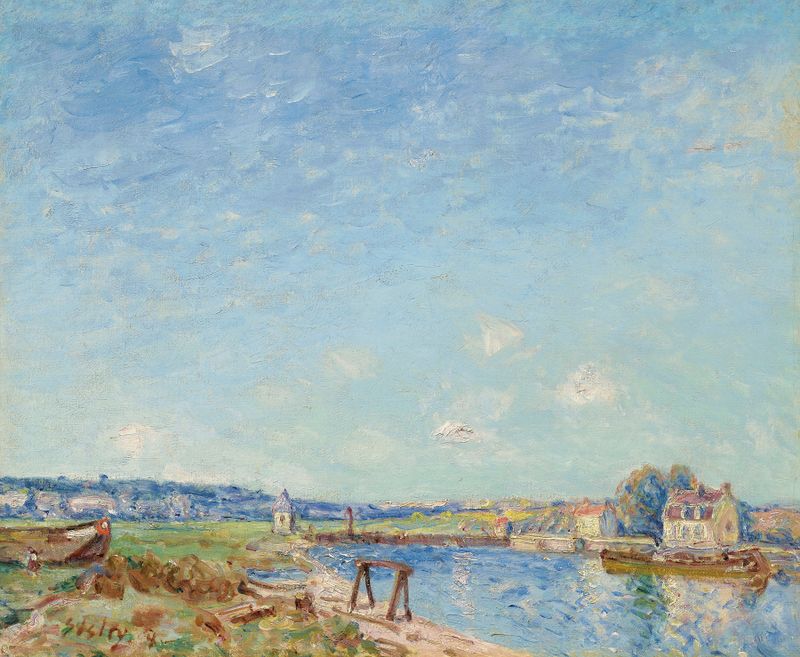
Le Loing à Saint-Mammès
Alfred Sisley
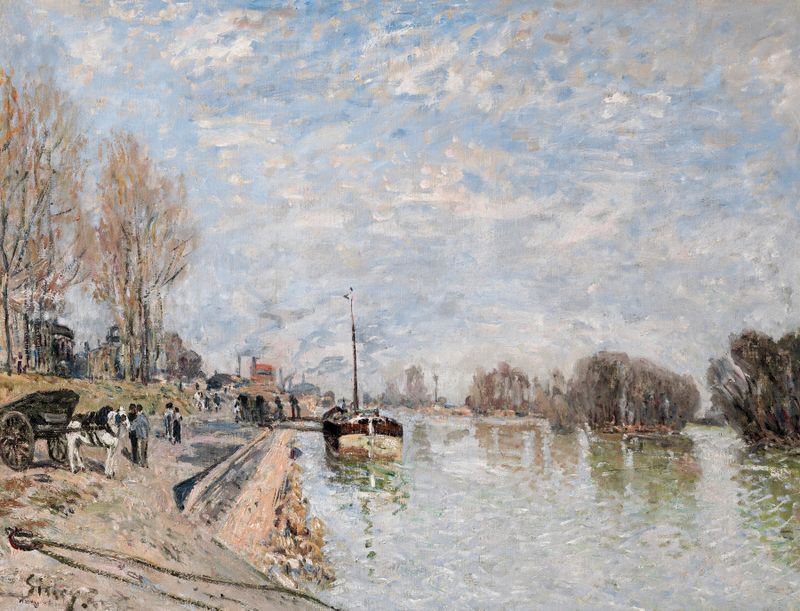
La Seine à Suresnes
Alfred Sisley
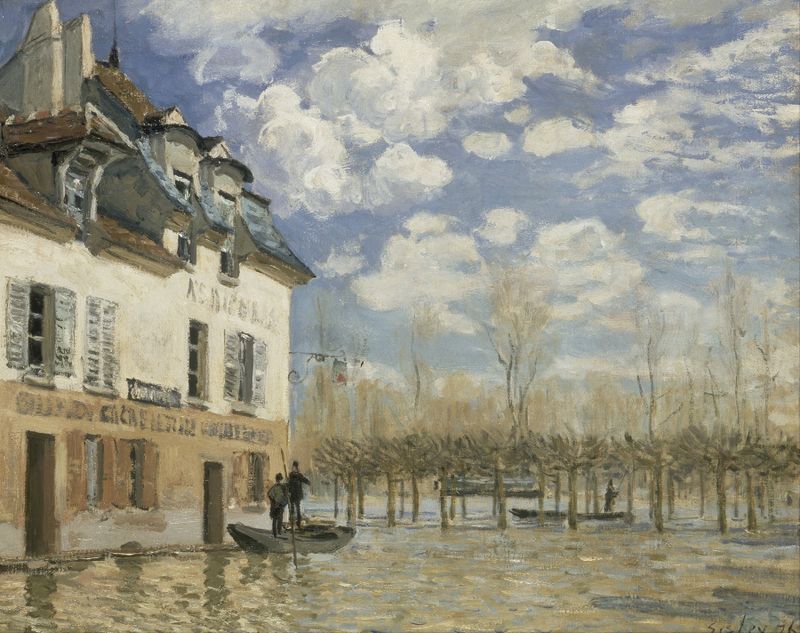
Boat in the Flood at Port Marly
Alfred Sisley
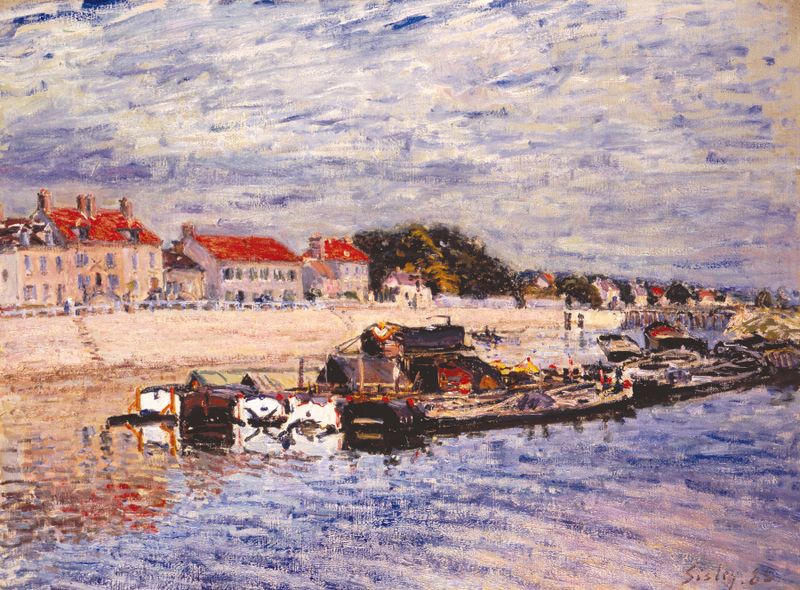
Barges on the Loing at Saint-Mammès
Alfred Sisley

L’allée des peupliers au bord du Loing
Alfred Sisley

Molesey Weir, Hampton Court
Alfred Sisley
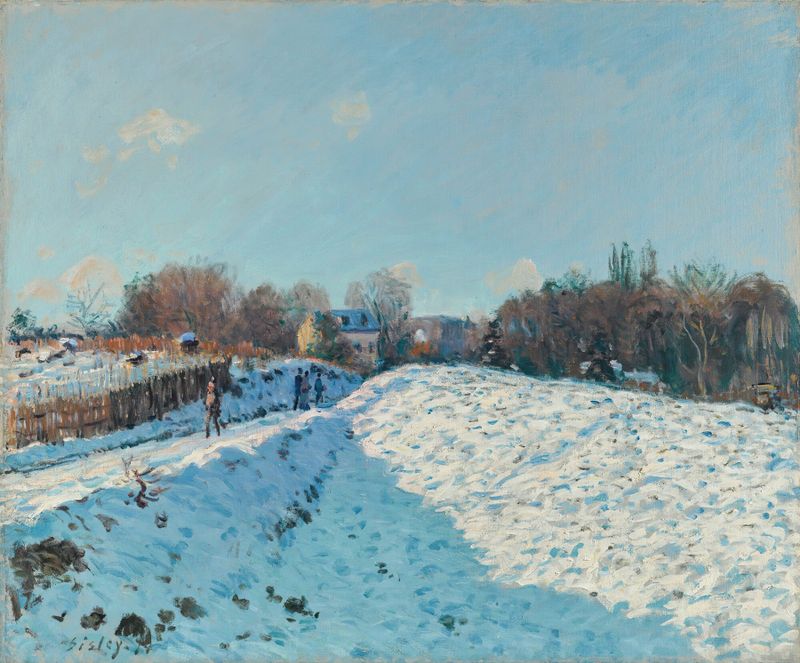
Effet De Neige À Louveciennes
Alfred Sisley
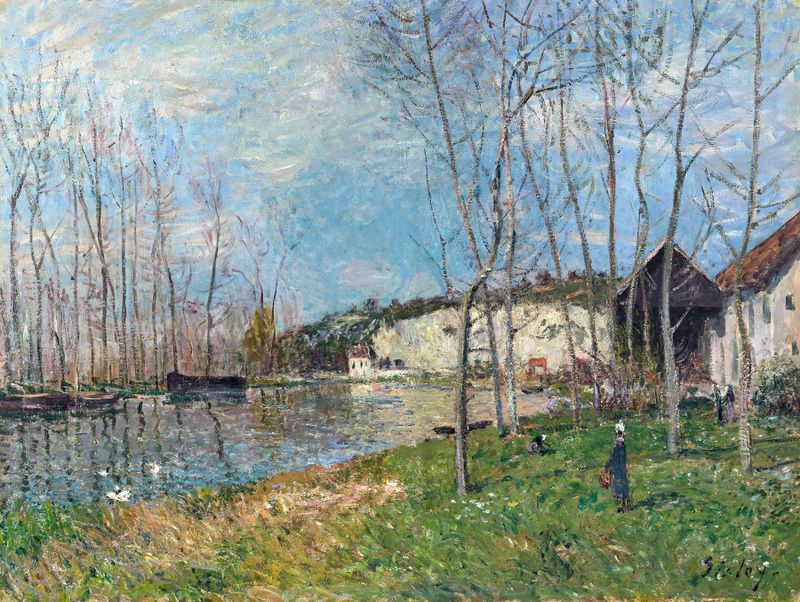
Printemps au bord du Loing
Alfred Sisley
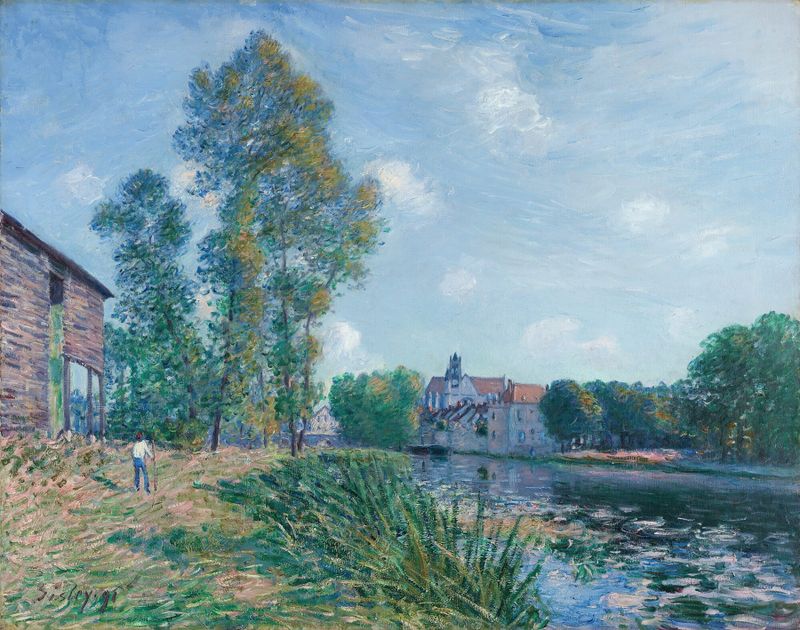
Le Loing À Moret, En Été
Alfred Sisley
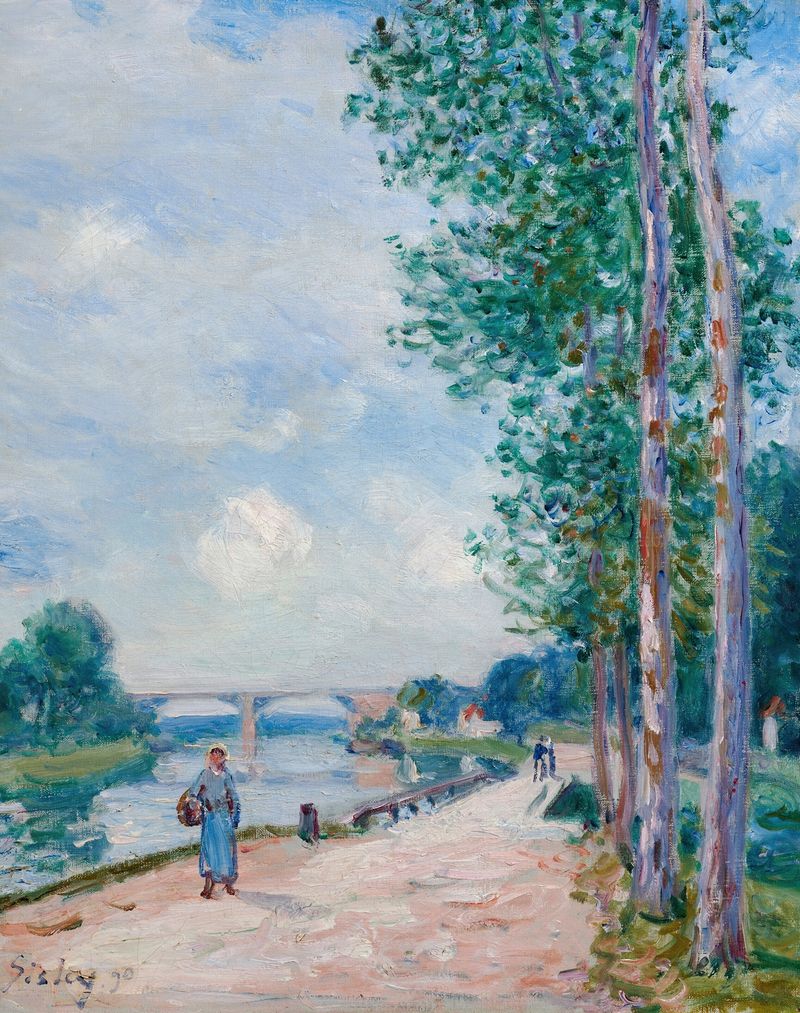
Les bords du Loing près de Moret
Alfred Sisley





