Canal, Venice — History & Facts
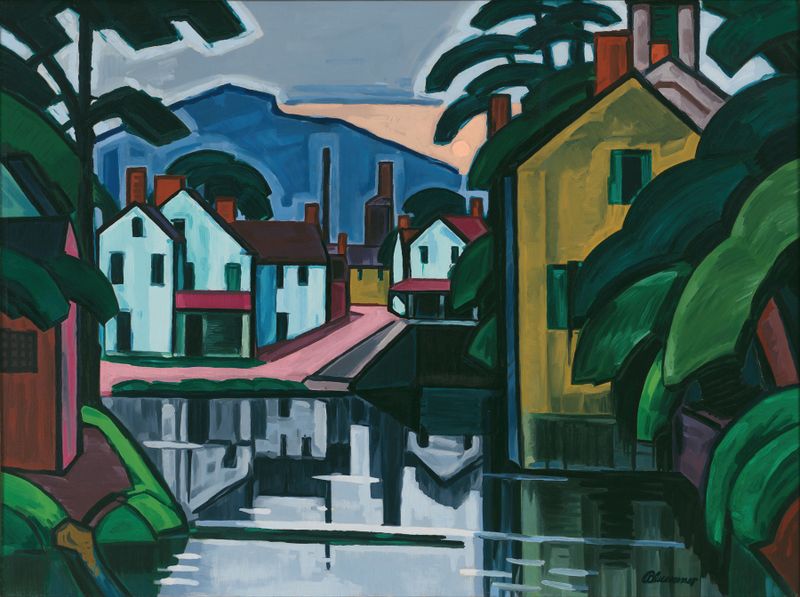
When did color learn to lie? As hues dance across the canvas, they carry whispers of emotion, beckoning viewers to reconsider their perceptions of reality. Look to the lower left corner where deep cerulean waters swirl, inviting the eye into a reflective embrace. Notice how the gentle brushstrokes suggest the ripples of the canal, a living entity beneath the vibrant structures that frame the scene. The juxtaposition of warm ochres and cool blues creates a visual tension, drawing you toward the harmonious balance between nature and manmade beauty.
The bold palette strikes a dialogue, as if the colors themselves are engaged in a conversation about the essence of place. Delving deeper, consider the thin, elongated shapes of the buildings set against the undulating water. They stand tall and firm, yet their reflections shimmer and distort, reminding us that perspective can shape truth. The pursuit of balance here is not merely aesthetic; it embodies the delicate relationship between the tranquility of the canal and the bustling life surrounding it.
This duality invites contemplation on our interactions with the world—how we often overlook the hidden depths beneath the surface. Created in 1912, this piece emerged during a transformative period for the artist, who was living in New York, drawing inspiration from the vibrant colors and forms of the city’s architecture. This was a time when Bluemner was deeply engaged in the avant-garde movements, exploring abstraction while still paying homage to the subjects that excited him. His experience in Europe and the burgeoning modernist ideals informed his approach, merging traditional themes with innovative expression.