Road Bend — History & Facts
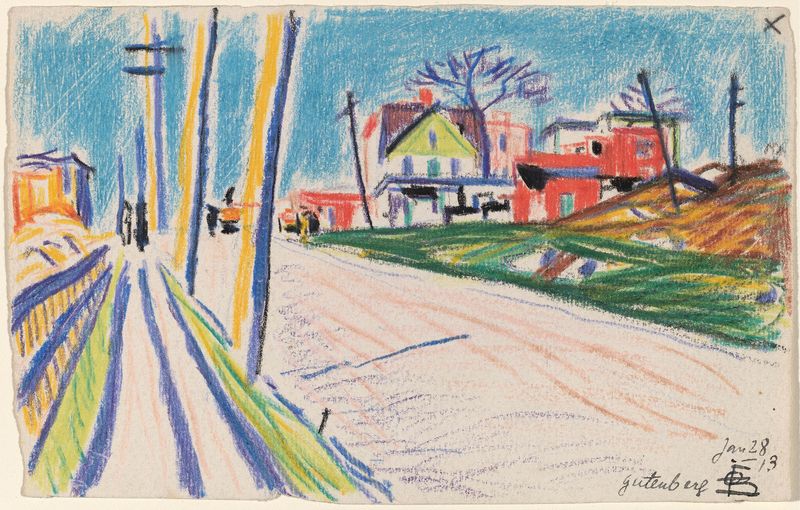
In the quiet corners of existence, where nature meets the passage of time, we find moments of rebirth that pulse with life and color. Look to the center of the canvas, where a winding road beckons the viewer's gaze, bending gracefully into the horizon. The rich, earthy tones of the landscape blend seamlessly with the vibrant hues of blue and green, creating a harmonious interplay of light and shadow. Notice the brushstrokes that dance across the surface, each stroke imbued with a sense of movement—inviting us to travel along that road, to explore the depths of the landscape and the heart. As you delve deeper, consider the contrast between the vibrant greenery flourishing alongside the road and the barren patches that hint at decay.
This duality suggests an ongoing cycle of life; the path represents choices and the potential for rebirth amidst adversity. The clouds above, swirling and dynamic, seem to echo the emotional tension of the journey, urging us to reflect on our own paths through the ebbs and flows of existence. In 1904, the artist created this piece during a transformative period in his life, having newly settled in New York after emigrating from Germany. At this time, he was deeply influenced by European modernism while developing a unique vision that celebrated the beauty of American landscapes.
Road Bend encapsulates his quest for identity and connection in a changing world, resonating with the themes of rebirth and resilience.