
Canterbury — History & Facts
Where does light end, and longing begin? In this work, the interplay of brightness and shadow evokes a delicate balance between the ethereal and the tangible, inviting viewers to traverse the distance between the seen and the unseen. Look to the left at the radiant expanse of sky, awash with a spectrum of warm hues—golden yellows and soft oranges that dance upon the horizon. The central figures stand silhouetted against this heavenly backdrop, their forms blurred yet resolute, merging with the landscape as they navigate the rugged terrain of Canterbury. Notice how Goodwin employs gentle brushstrokes and translucent layers of paint to create an atmosphere that breathes serenity, underscoring the harmonious convergence of nature and humanity. Hidden within this tranquil scene are the emotional tensions of aspiration and nostalgia.
The figures, seemingly in communion with the landscape, embody a yearning for something beyond their physical reach. Their outstretched arms could be interpreted as a longing for connection to the divine, while the surrounding natural elements suggest a fleeting moment of peace. This balance between the figures and their environment reflects the duality of existence—how one can feel deeply anchored yet eternally restless. In 1885, Albert Goodwin painted this piece in England, a time when the Pre-Raphaelite Brotherhood and the burgeoning Impressionist movement were redefining artistic expression.
Goodwin, influenced by the beauty of nature and the intricacies of light, sought to capture the essence of the world around him while reflecting his own artistic evolution. This period marked a significant shift in his style, as he embraced a more emotive and atmospheric approach, paving the way for a legacy that would continue to inspire future artists.
More Artworks by Albert Goodwin
Browse all →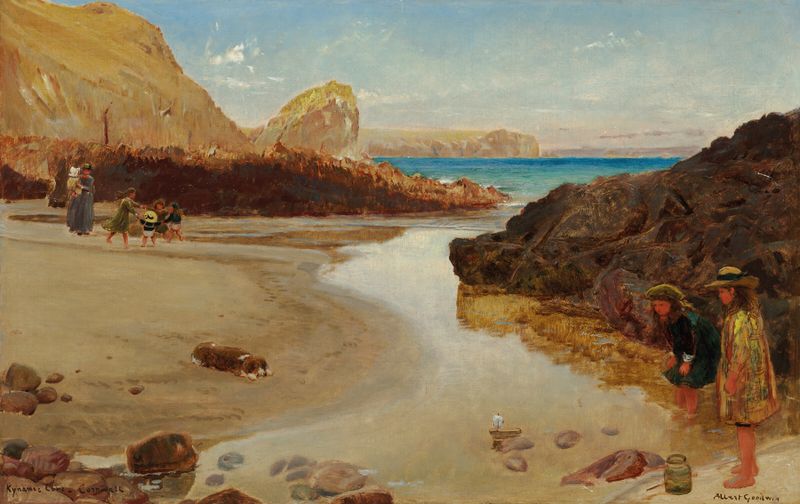
Kynance Cove, Cornwall
Albert Goodwin

Evening, St Hilda’s Abbey, Whitby, Yorkshire
Albert Goodwin

Sunset, Venice
Albert Goodwin
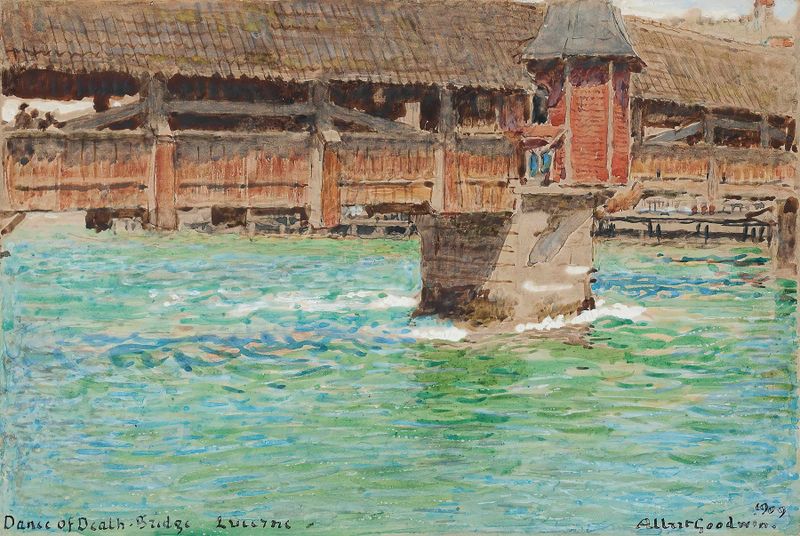
Dance Of Death Bridge, Lucerne
Albert Goodwin
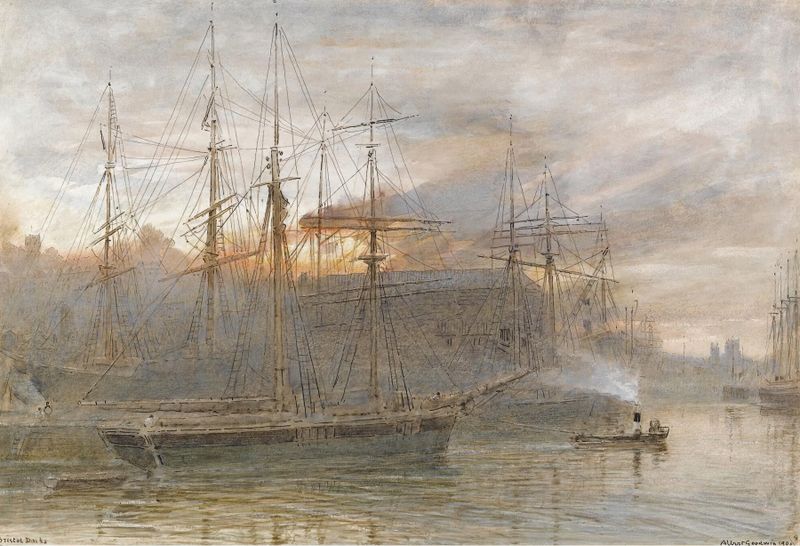
Bristol docks
Albert Goodwin

A view over Lake Lucerne
Albert Goodwin

Rockstone, Demerara, Guyana
Albert Goodwin

Autumn at Braunston, North Devon
Albert Goodwin

Night – faithful unto death
Albert Goodwin

Cabbage palms, Demerara, Guyana
Albert Goodwin





