
Capri — History & Facts
In that stillness, there lies an invitation to witness the rebirth of a moment captured in time, echoing through the layers of paint and emotion. What stories might emerge from this vibrant portrayal of an idyllic landscape, where nature reigns supreme and life unfurls in its purest form? Look to the left at the gentle curve of the coastline, where azure waves kiss the golden sands. Notice how the sunlight dances upon the water's surface, casting shimmering reflections that beckon your gaze deeper into the scene.
The sky, a rich tapestry of cerulean, blends seamlessly with the horizon, while vibrant greens and earthy tones breathe life into the foreground, creating a harmonious symphony of color that invites you to linger. Yet, within this peaceful vista, contrasts arise: the majestic cliffs loom over the tranquility below, symbolizing both the strength of nature and the fragility of life. The juxtaposition of the lush landscape against the vast sea reflects a duality — the permanence of the earth against the fluidity of water. Each brushstroke reveals an emotional tension between serenity and the inevitable change that comes with time, urging the viewer to consider their own journey through existence. In 1904, while crafting Capri, Paul Von Spaun found himself immersed in a world of artistic transformation.
Working in Germany, he was influenced by the emerging trends of Impressionism and its emphasis on light and color. This period marked a significant shift in his artistic direction, as he sought to capture not just a place, but the spirit of rebirth and renewal found in nature, a theme that resonated deeply during a time of change across Europe.
More Artworks by Paul Von Spaun
Browse all →
Meeresbrandung
Paul Von Spaun

Meeresbrandung
Paul Von Spaun

Küste bei Capri
Paul Von Spaun
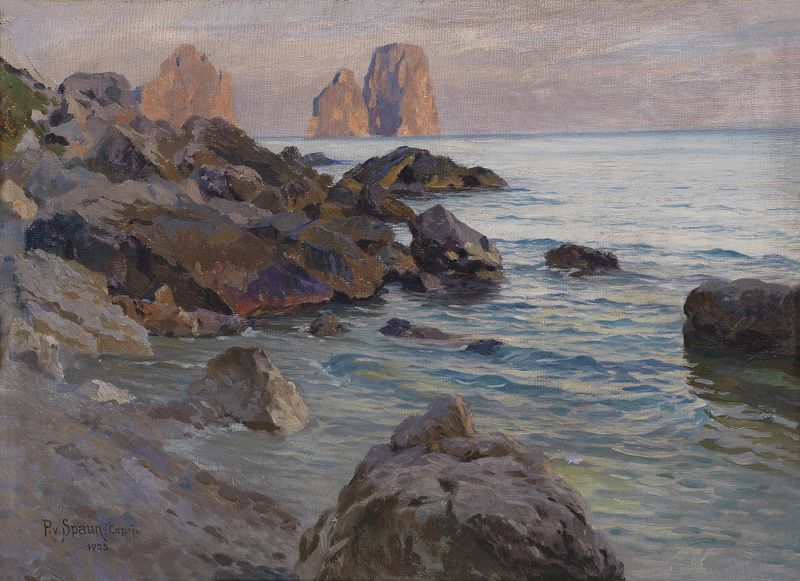
Farglioni-Felsen bei Capri
Paul Von Spaun

Capri, a view of the Faraglioni stacks
Paul Von Spaun

A Creek in Spring
Paul Von Spaun

The Pizzolungo on the Island of Capri
Paul Von Spaun
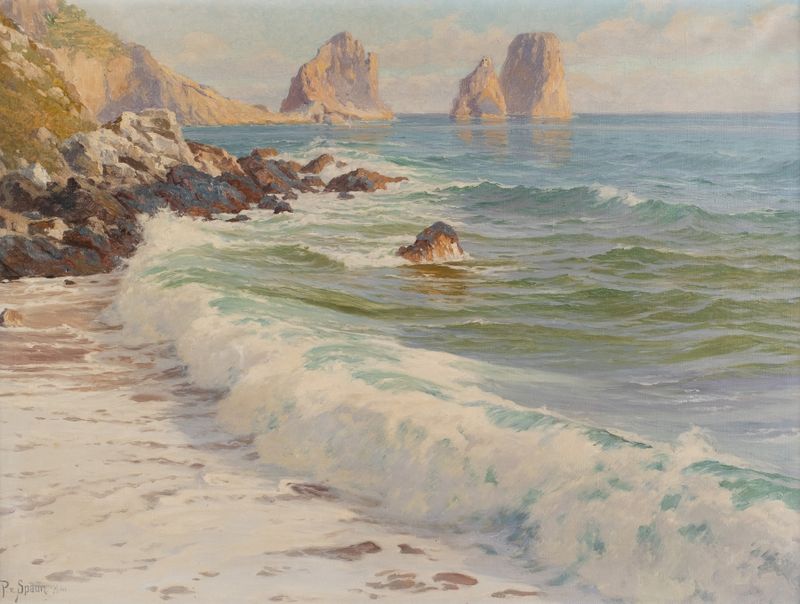
Coast at Capri with Faraglioni rocks
Paul Von Spaun

Breaking waves near the Amalfi coast
Paul Von Spaun
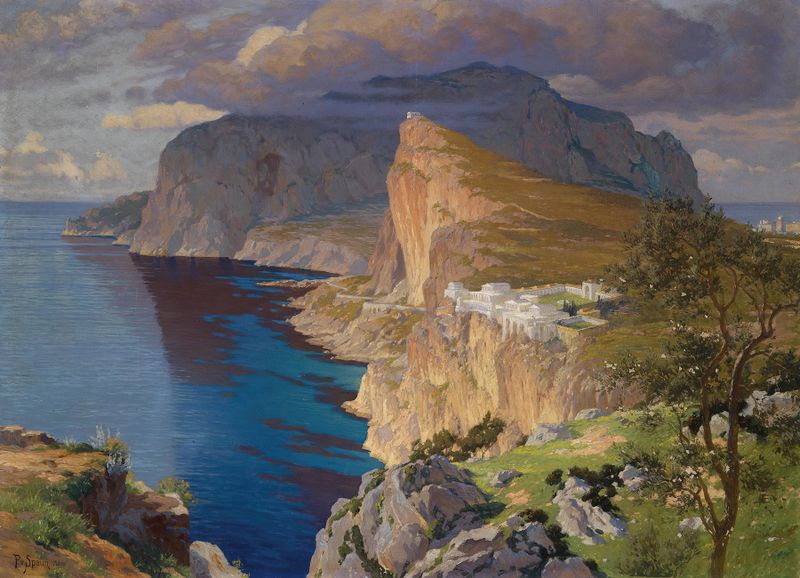
Idealisierte Ansicht der Villa Jovis auf Capri
Paul Von Spaun





