Caribou in the Mountains — History & Facts
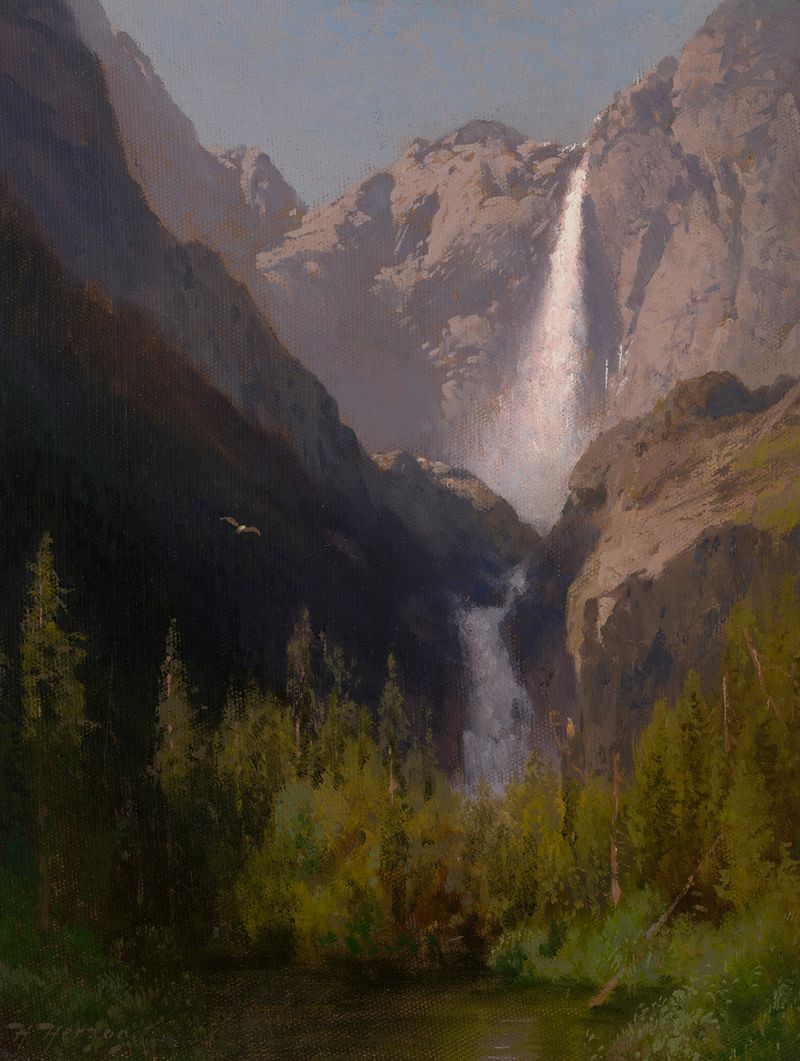
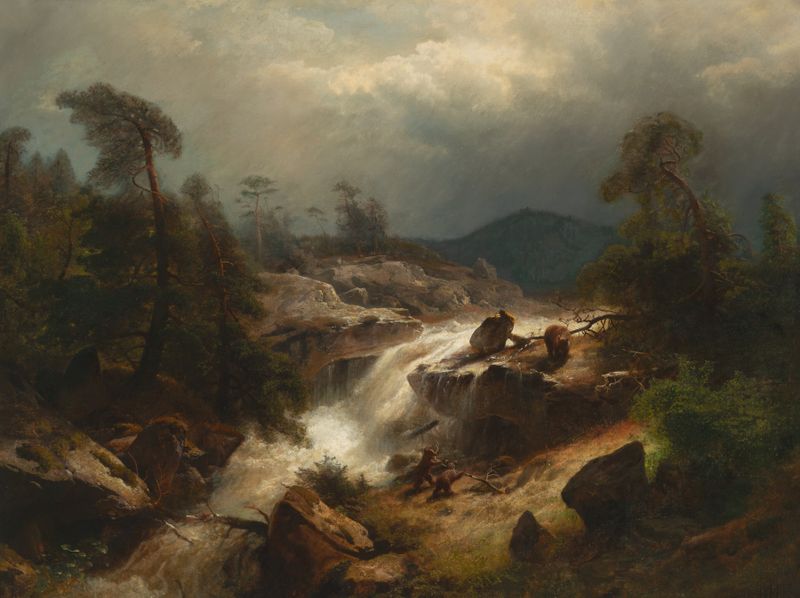
Could beauty survive in a century of chaos? The answer lies in the tranquil embrace of nature, where serenity and tension coexist. Look to the left of the canvas, where majestic mountains rise, their slopes awash in a cascade of cool blues and greys. Observe how the soft light glimmers on the icy peaks, inviting you to trace the contours of the rugged terrain. The caribou, peacefully grazing in the foreground, draws the eye—each antler poised elegantly, a silent testament to resilience amidst a vast wilderness.
The masterful brushwork captures both the delicate textures of fur and the roughness of rocky surfaces, creating a palpable sense of life within an expansive landscape. Yet, within this scene of breathtaking beauty lies an undercurrent of betrayal. The caribou, symbols of freedom, navigate a world that is both their sanctuary and an uncharted realm of danger. The stark contrast between the serene environment and the ever-looming threat of nature hints at the fragility of existence.
As the viewer, one is compelled to reflect on the duality of peace and peril; the caribou thrive in the mountains, yet their survival is constantly tested by the elements. In 1878, the artist captured this moment during a time of great change in the United States, with the Romantic movement still resonating in the art world. Herzog, an acclaimed landscape painter, found inspiration in the untamed beauty of the American wilderness. His commitment to portraying the natural world was a response to the rapid industrialization around him, seeking to preserve a vision of beauty that seemed increasingly threatened by the chaos of modern life.