Yosemite Falls, California — History & Facts
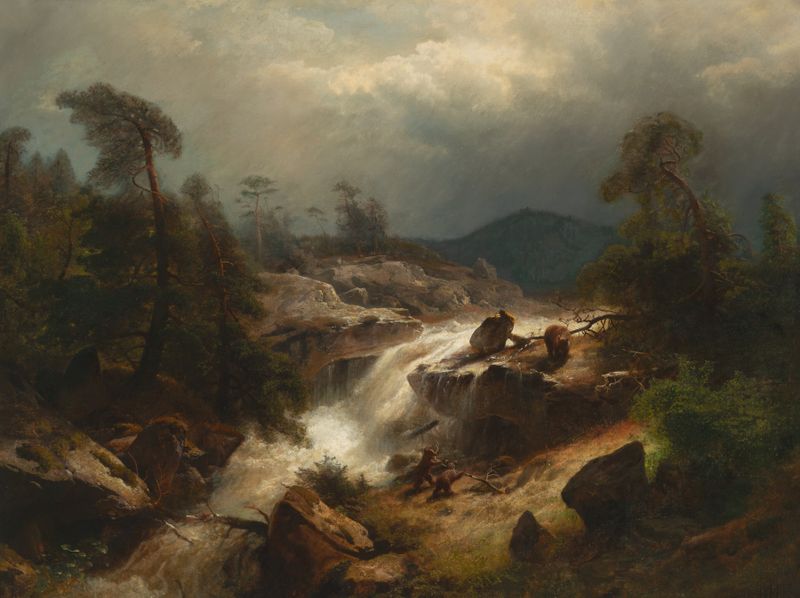
Can beauty exist without sorrow? The majestic cascade of Yosemite Falls pours forth, its brilliance illuminated by the shifting light, cradling whispers of nature’s duality. Look to the center, where the waterfall plunges gracefully into the abyss below, framed by rugged granite cliffs that stand resolute against the sky. Herzog’s masterful brushwork captures the shimmering white water with a luminous glow, while the surrounding greens and browns create a rich tapestry of life. The interplay of light across the scene not only highlights the waterfall but also imbues the landscape with a sense of awe and reverence.
Take a moment to notice how the delicate strokes breathe vitality into the foliage, creating an intimate connection between the viewer and the untamed wilderness. Delve deeper into the contrasts present here: the serenity of the landscape against the ferocity of the rushing water, the stillness of the trees bearing witness to nature’s relentless power. The play of light suggests the fleeting nature of beauty, hinting at the ephemeral moments that define existence. Each brushstroke serves as a reminder that joy often coexists with a sense of melancholy, capturing the heart of nature's drama. Herzog painted this piece during the late 19th century, a time when the American landscape was becoming a subject of great fascination for artists and the public alike.
He found inspiration in the majesty of Yosemite as he explored the natural wonders of California. This period marked a shift in artistic focus, as many began to turn away from the confines of academic painting, seeking instead to express the sublime essence of the wilderness.