Two Cubs and Their Mother by a Waterfall — History & Facts
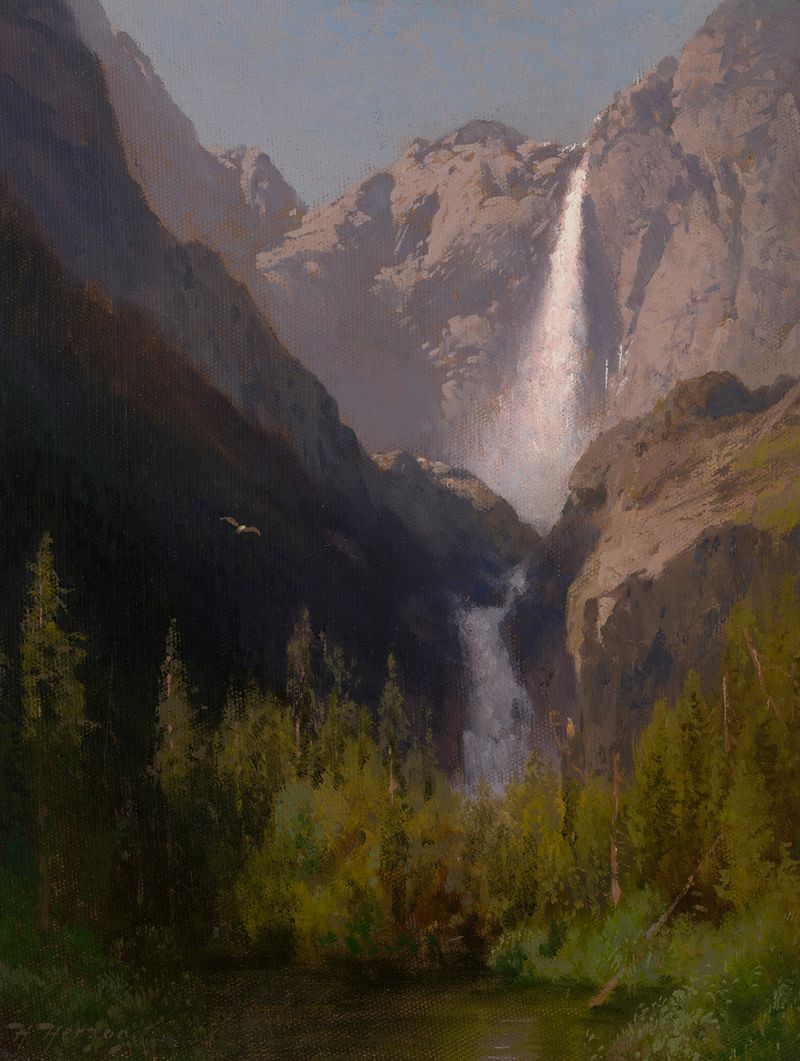
Can paint confess what words never could? In Hermann Herzog's Two Cubs and Their Mother by a Waterfall, a sense of longing permeates the canvas, inviting the viewer to explore the intimate bond of nature. Look to the left at the gentle cascade of the waterfall, where light dances off the surface, creating a shimmering veil that softens the scene. The two cubs, nestled close to their mother, draw your gaze with their delicate fur, painted in warm earth tones that contrast beautifully with the vibrant greens of the foliage surrounding them. The composition is masterfully balanced, with the flowing water guiding your eyes toward the tender moment shared among the trio. As you linger on the subtle expressions of the bears, the work reveals deeper emotional tensions; the protective stance of the mother juxtaposes the playful innocence of her cubs, embodying the duality of safety and adventure.
The scene speaks to a fleeting moment in time—a desire for connection amidst the wild, highlighting both the fragility and strength of familial bonds within the natural world. The gentle flow of water symbolizes the passage of time, reminding us of the impermanence of such moments. In 1867, Herzog painted this piece during a period of artistic exploration, deeply influenced by the Romantic movement. He was immersed in the stunning landscapes of America, where the majesty of nature fueled his creativity.
At this time, the art world was seeking to express emotional depth and connection to the natural world, which Herzog captured with profound sensitivity in this work.