
Castel Nuovo — History & Facts
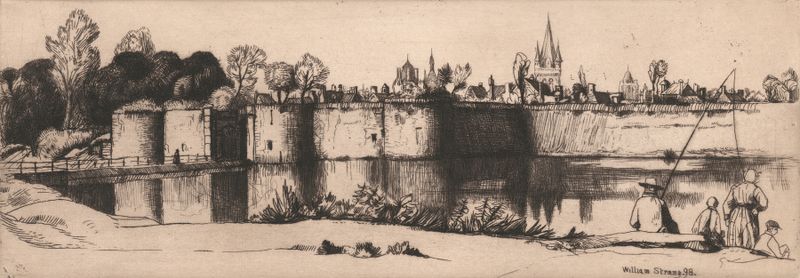
In moments of stillness and reflection, we encounter the ecstasy of creation and the depth of human experience. Look to the left at the towering fortress that dominates the canvas, its stone walls imbued with a rich palette of earthy browns and vibrant greens. Notice how the light dances across the surfaces, creating a play of shadow that accentuates the raw texture of the structure against the soft, rolling hills. The composition draws your eye upward, inviting exploration of both the fortress and the vast sky that envelops it, where ethereal whites and blues converge in a delicate embrace. As you delve deeper into the scene, consider the contrast between the solidity of the castle and the ephemeral nature of the surrounding landscape.
This juxtaposition evokes a tension between strength and vulnerability, a reminder of the human spirit's quest for permanence amid the transient beauty of life. The viewer is left to ponder the stories contained within those ancient walls, whispers of joy, sorrow, and the ecstasy of existence itself. William Strang created Castel Nuovo during a time when his art was evolving, and he was deeply influenced by the Symbolist movement. The exact date remains unspecified, but his work from this period reflects his fascination with architectural forms and their emotional resonance.
As he painted, the world was witnessing rapid changes, with modernity encroaching on traditional forms, a tension that resonates in the strands of nostalgia woven throughout this piece.
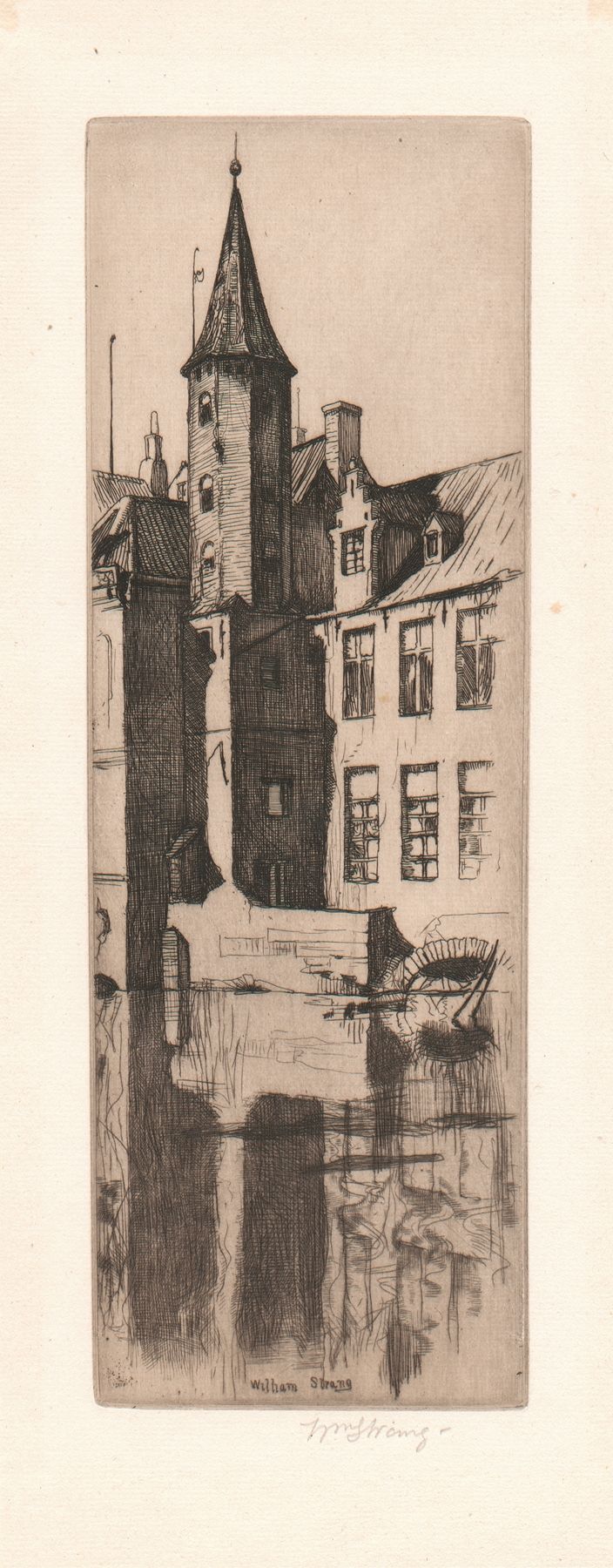
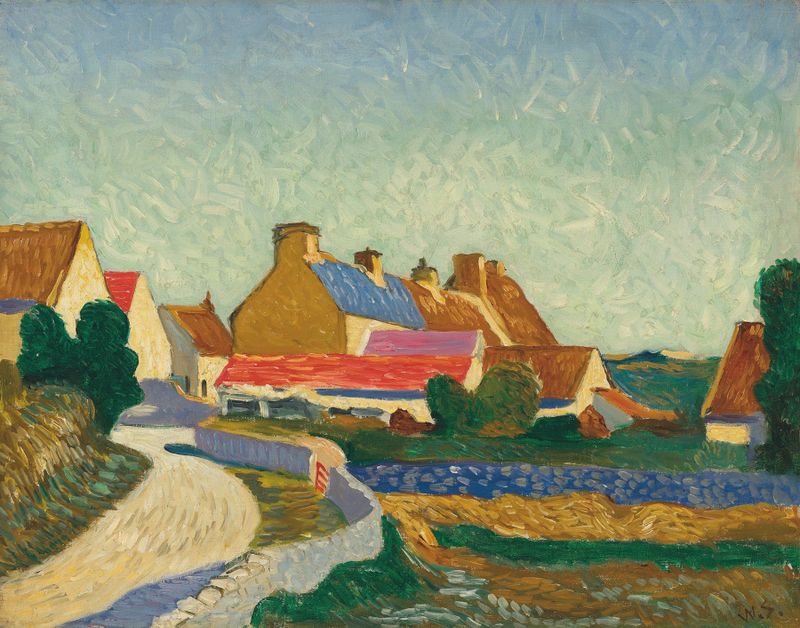
More Artworks by William Strang
Browse all →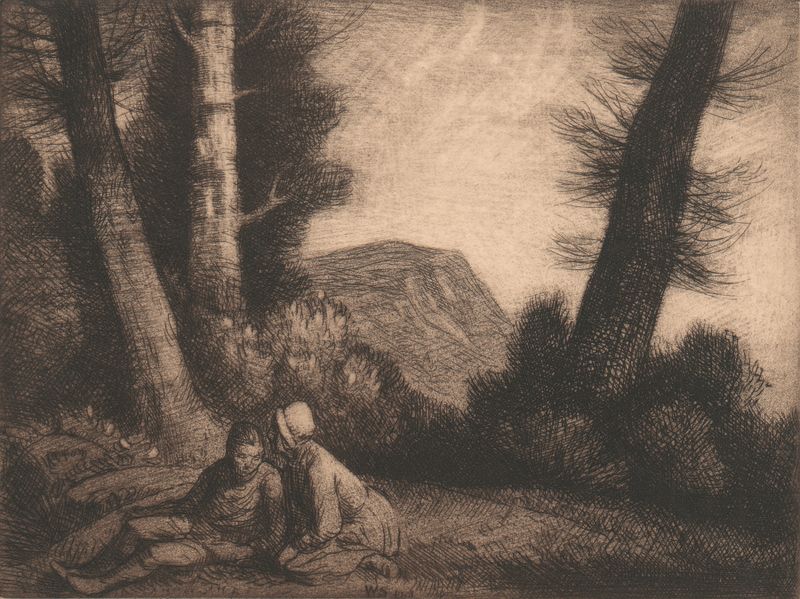
More Architecture Art
Browse all →
The statue of Liberty
Frédéric Auguste Bartholdi

View of Houses in Delft, Known as ‘The Little Street’
Johannes Vermeer

View of Houses in Delft, Known as ‘The Little Street’
Johannes Vermeer

The Cathedral in Rouen. The portal, Grey Weather
Claude Monet

The yellow house
Vincent van Gogh

The Church in Auvers-sur-Oise, View from the Chevet
Vincent van Gogh