From the Flemish Set; Quay of the Rosary, Bruges — History & Facts
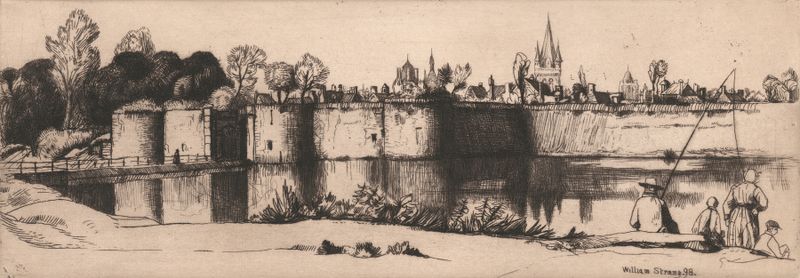
Did the painter know this moment would outlive them? A stillness hangs over the Quay of the Rosary, as if time itself pauses to breathe in the serenity of Bruges. Focus on the gentle ripples that trace the surface of the water, the soft luster of the canal reflecting the muted tones of the old buildings. Notice how the light dances over the scene, creating a delicate interplay of shadow and illumination that beckons the viewer closer. The composition, with its careful balance of shapes and lines, draws the eye from the arching bridge at the forefront to the distant spires that punctuate the horizon. Beneath this tranquil facade lies a tension between permanence and ephemerality.
The enduring architecture stands stoically against the flowing water, embodying both the fleeting nature of life and the everlasting beauty of human creation. The quiet figures scattered throughout the scene suggest a collective pause, inviting contemplation of their stories and the unspoken connections that bind them to this place. William Strang painted this piece during a time of profound change in the art world, at the turn of the 20th century. He was influenced by the Symbolist movement, which sought to express the intangible and emotional.
While specific details of this work's creation remain elusive, the artist's dedication to capturing the essence of a moment in history reflects a broader longing for tranquility amidst the turbulence of modernity.