
Castel Sant’Angelo, Rome — History & Facts
What if silence could speak through light? In John Inigo Richards' Castel Sant’Angelo, Rome, shadows weave a dialogue of their own, hinting at both history and presence. Look to the left at the craggy base of the castle, where the play of light and shadow creates a striking contrast, highlighting the fortress's formidable structure against a soft, washed-out sky. The artist employs a muted palette, with earthy browns and pale grays, capturing the essence of a sunlit afternoon in Rome. Each brushstroke resonates with the solidity of stone, yet simultaneously, the light dances across its surface, breathing life into the scene. The juxtaposition of light and shadow serves as a metaphor for the passage of time, whispering secrets of the past while inviting contemplation of the present.
The calm water below mirrors the castle, but the slight ripples disrupt the perfect reflection, suggesting a world in motion despite the stillness above. A solitary figure can be seen in the foreground, adding a human element that speaks to solitude and reflection, embodying the weight of history that envelops this ancient site. In 1776, Richards found himself in Rome, captivated by its architectural grandeur. At this time, European art was experiencing a shift toward romanticism, with artists increasingly drawn to emotional expression and nature.
The artist's interest in capturing the interplay of light and shadow would ultimately place him among the significant landscape painters of his era, while his work reflects the broader cultural fascination with the sublime beauty of the classical world.
More Artworks by John Inigo Richards
Browse all →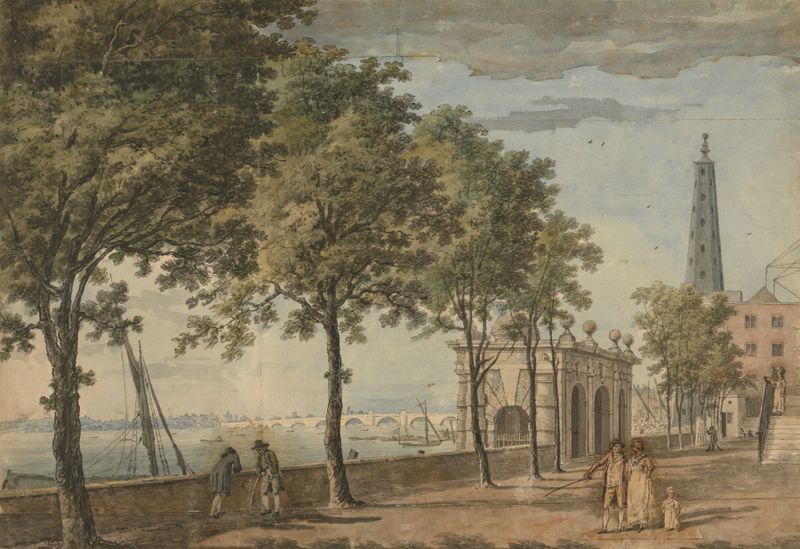
York Watergate and Westminster Bridge
John Inigo Richards
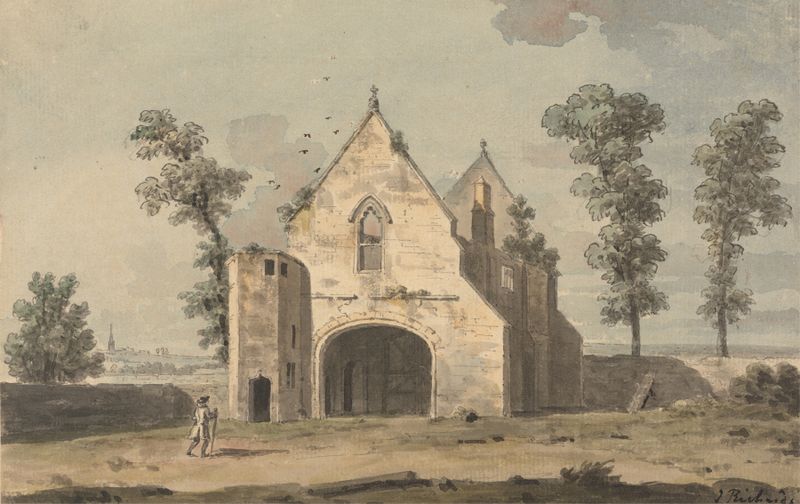
Maxstoke Priory, Warwickshire
John Inigo Richards

Corfe Castle, Dorset
John Inigo Richards
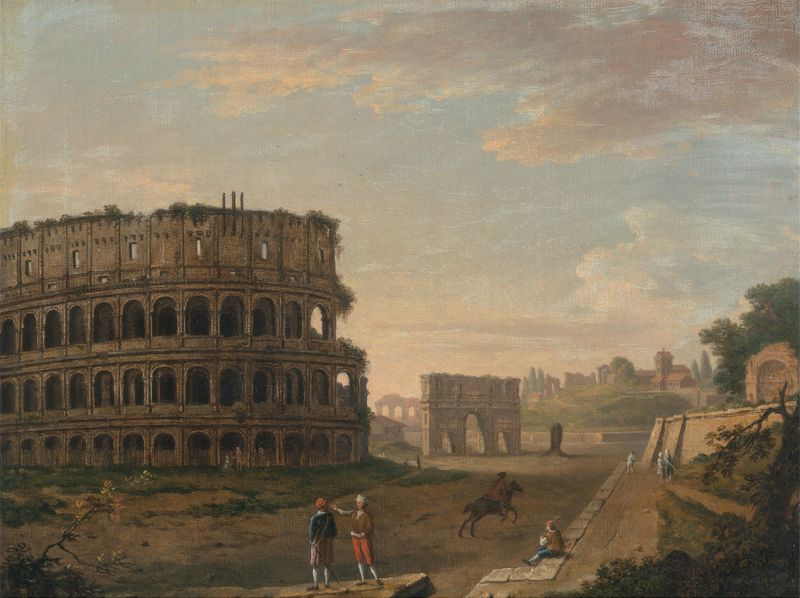
The Colosseum
John Inigo Richards

Chester Castle
John Inigo Richards

A River Landscape, possibly a View from the West End of Rochester Bridge
John Inigo Richards

Brougham Castle
John Inigo Richards

The Salmon Leap at Leixlip, Ireland
John Inigo Richards

Thornbury Castle, Gloucestershire
John Inigo Richards
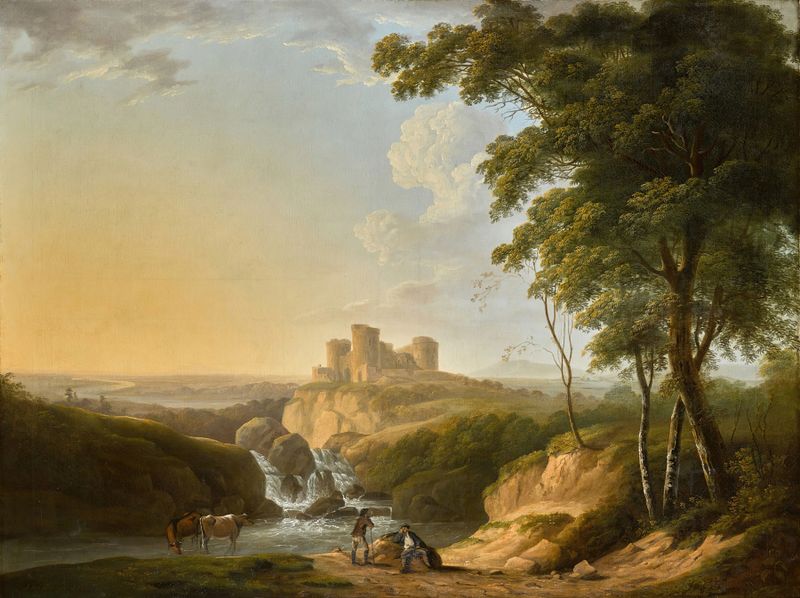
An extensive landscape with a view of Chepstow Castle on a hill beyond
John Inigo Richards
More Architecture Art
Browse all →
The statue of Liberty
Frédéric Auguste Bartholdi

View of Houses in Delft, Known as ‘The Little Street’
Johannes Vermeer

View of Houses in Delft, Known as ‘The Little Street’
Johannes Vermeer

The Cathedral in Rouen. The portal, Grey Weather
Claude Monet

The yellow house
Vincent van Gogh

The Church in Auvers-sur-Oise, View from the Chevet
Vincent van Gogh