
Corfe Castle, Dorset — History & Facts
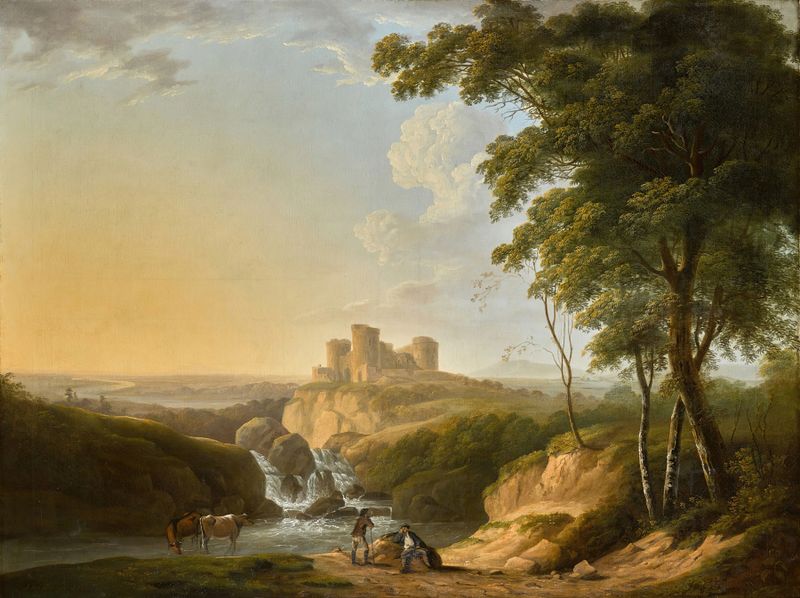
What if silence could speak through light? In John Inigo Richards's Corfe Castle, Dorset, the stillness of decay whispers tales of a once-mighty fortress, its crumbling walls yearning for the echo of history. Look to the center of the canvas, where the remnants of the castle rise like silhouettes against the soft embrace of the sky. The painter's brush captures the delicate interplay of light and shadow, illuminating the weathered stones while allowing the surrounding landscape to cradle the ruins in a muted palette of greens and browns. Notice how the gentle gradients of the sunset reflect off the surfaces, imbuing the scene with a sense of nostalgia and melancholy.
This masterful use of chiaroscuro not only highlights the architecture but also evokes a deeper emotional resonance with nature's relentless passage of time. The artwork contrasts the solidity of the castle’s structures with the undulating hills and clouds, suggesting a dialogue between permanence and transience. The decaying spires are a testament to both human achievement and inevitable decline, reminding viewers of the fragility of legacy. Further, the distant horizon invites contemplation, its vastness a poignant metaphor for the expanse of history that surrounds us, while the castle remains as a solitary guardian of past glories. In 1764, Richards painted Corfe Castle during a period of romantic fascination with the English landscape, part of a broader trend among artists to capture the sublime beauty of nature intertwined with human creations.
Living primarily in London, he became known for his landscapes that often showcased historical ruins, responding to a growing interest in the picturesque and the sublime, which defined much of the 18th-century artistic ethos.
More Artworks by John Inigo Richards
Browse all →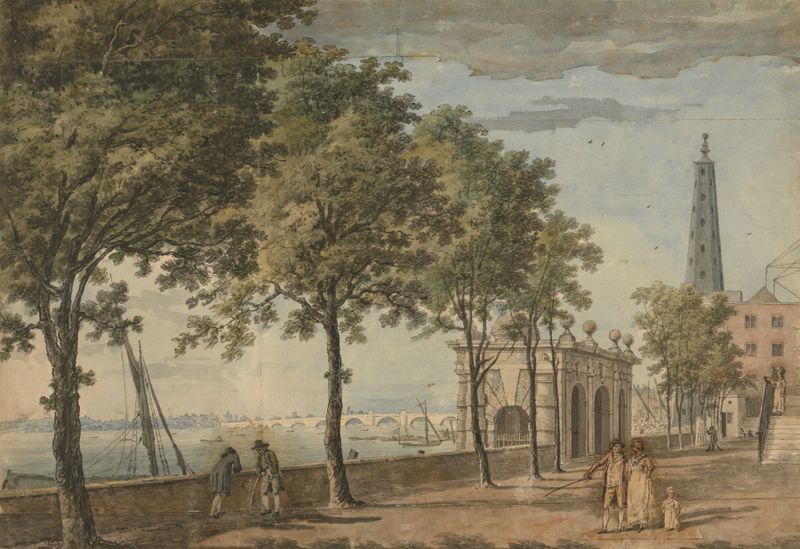
York Watergate and Westminster Bridge
John Inigo Richards
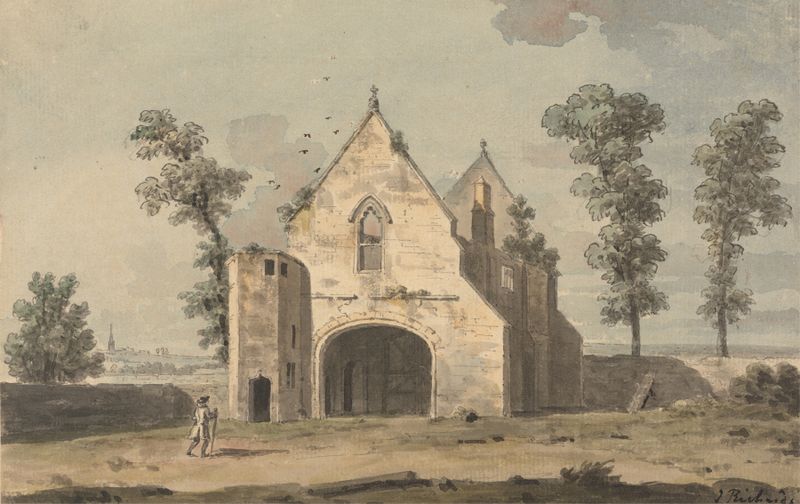
Maxstoke Priory, Warwickshire
John Inigo Richards
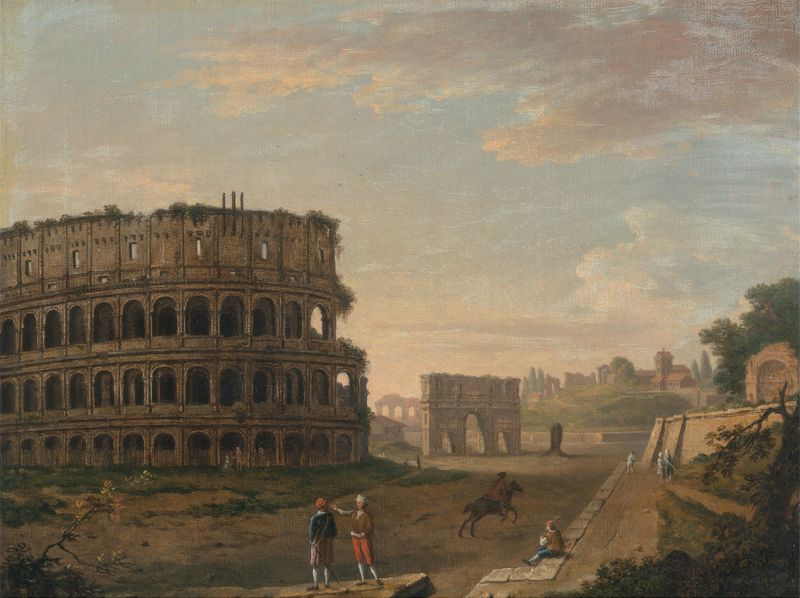
The Colosseum
John Inigo Richards

Chester Castle
John Inigo Richards

A River Landscape, possibly a View from the West End of Rochester Bridge
John Inigo Richards

Brougham Castle
John Inigo Richards
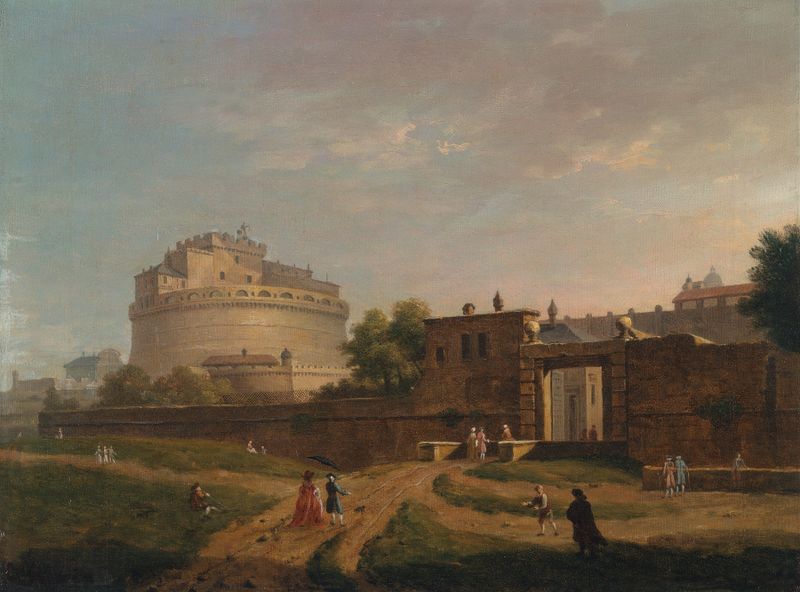
Castel Sant’Angelo, Rome
John Inigo Richards

The Salmon Leap at Leixlip, Ireland
John Inigo Richards

Thornbury Castle, Gloucestershire
John Inigo Richards
An extensive landscape with a view of Chepstow Castle on a hill beyond
John Inigo Richards





